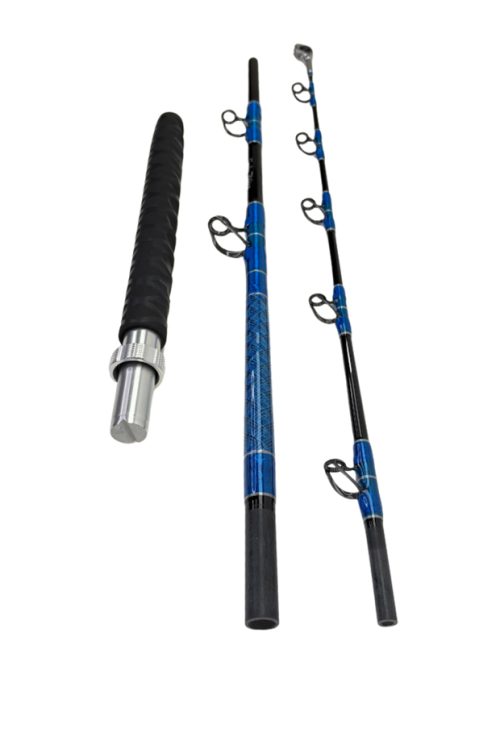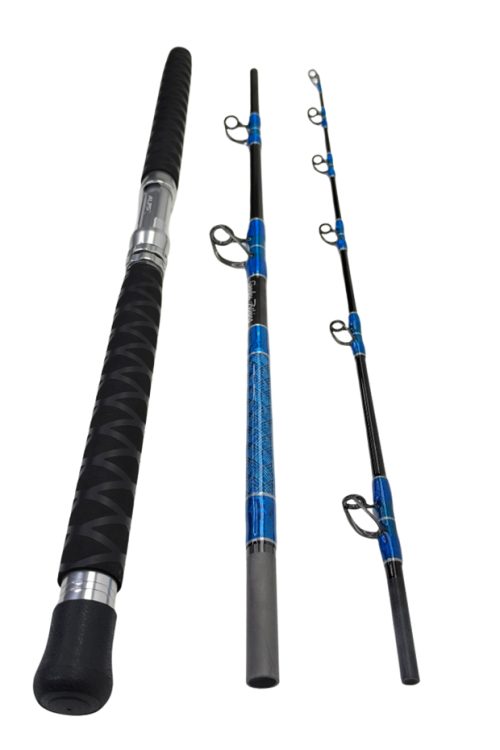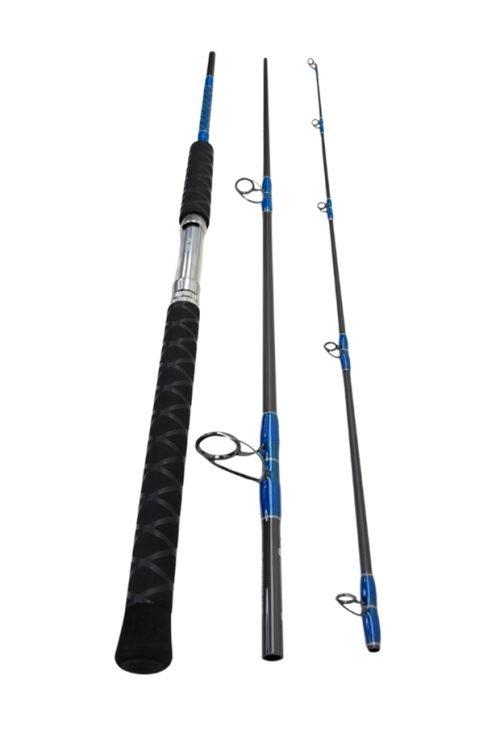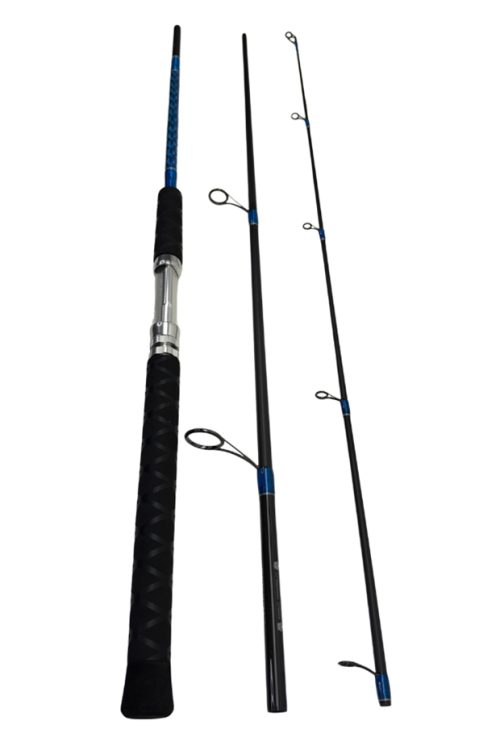

Slow pitch jigging looks a little strange the first time you see someone doing it correctly.
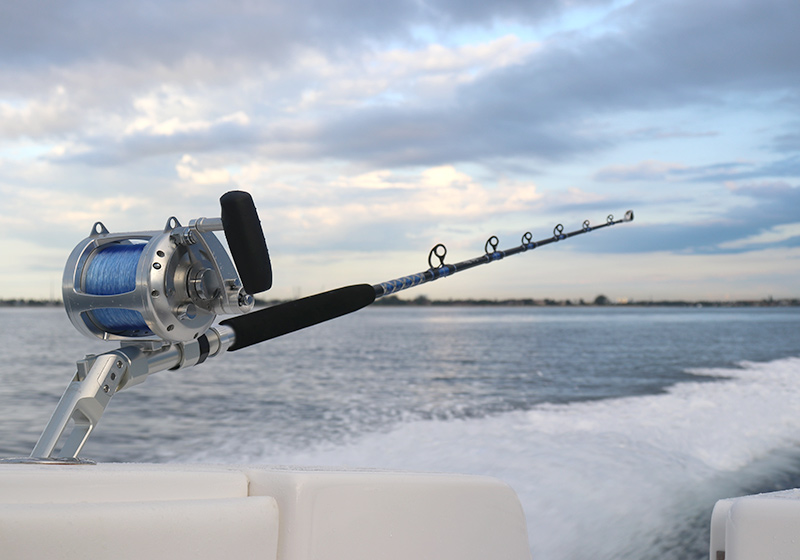
The rods are thin.
They’re light.
They bend far more than the traditional bottom fishing rods many offshore anglers grew up using.
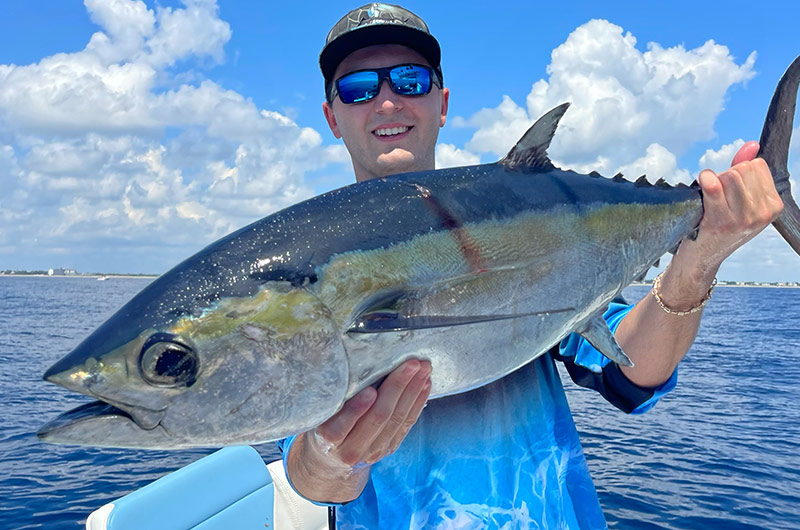
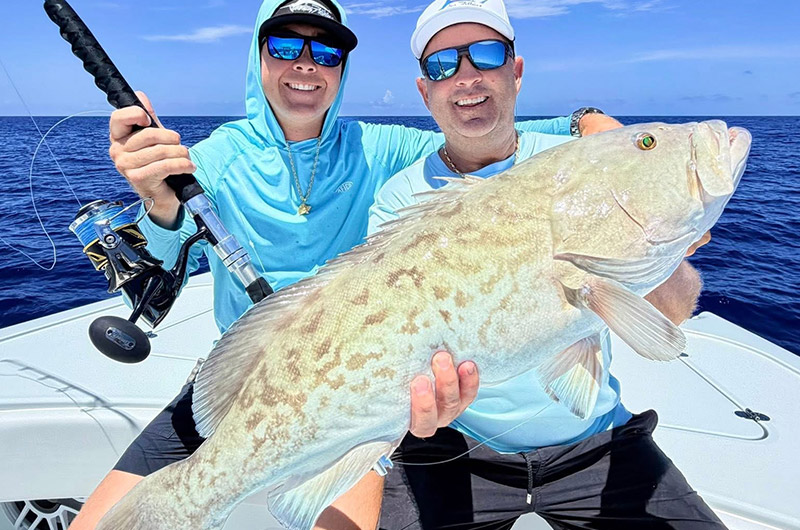
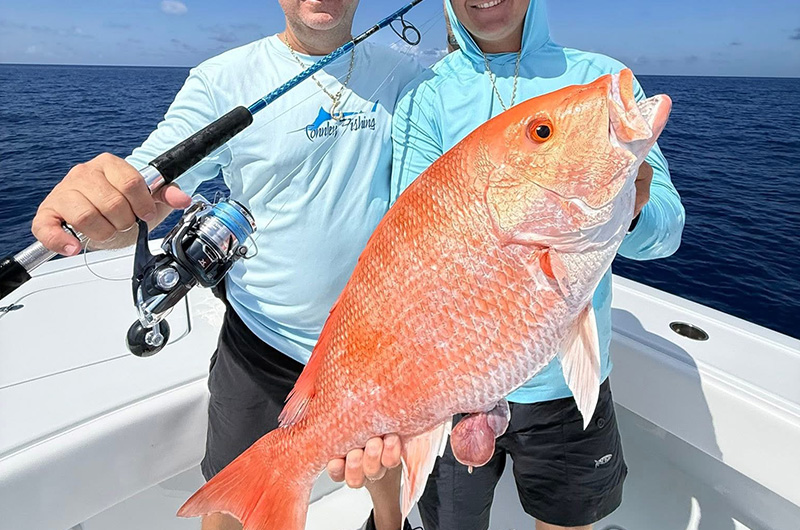
Then someone hooks a grouper, snapper, amberjack or blackfin tuna on one and suddenly that little rod doesn’t look quite so delicate anymore.
That’s because a slow pitch jigging rod isn’t designed around brute force.
It’s designed around action.
The rod loads, unloads and springs the jig through the water. Instead of relying entirely on the angler to physically rip a heavy jig up and down, you’re using the characteristics of the blank to help create the movement that makes slow pitch jigging so effective.
That also means choosing the right slow pitch jigging rod requires a different mindset than choosing a traditional bottom fishing rod.
At Connley Fishing, the three things we’d look at first are:
Jig weight.
Water depth.
Current.
Those factors tell us a lot about how much weight you’ll need to fish effectively. From there, we can consider your target species, reel and how light or heavy you personally like your setup to feel.
Let’s break down how we choose one.
What Is a Slow Pitch Jigging Rod?
A slow pitch jigging rod is a lightweight, highly responsive rod designed to load and release energy as the angler works a jig vertically through the water column.
Compared with a traditional bottom fishing rod, a slow pitch rod is generally:
Thinner.
Lighter.
More flexible.
More responsive through the blank.
Designed specifically around working a jig.
That flexibility is intentional.
With traditional heavy bottom fishing, anglers often think in terms of backbone and pulling power. Put a bait down, hook a fish and use the rod to help bring it up.
Slow pitch jigging asks the rod to do another job before the fish ever eats.
The rod helps work the lure.
As you lift and manipulate the rod, the blank loads. When that energy releases, it helps spring the jig through the water.
That movement is a major part of the presentation.
If the rod is too stiff to load correctly, you’re taking away one of the things that makes the technique work.
Why Are Slow Pitch Jigging Rods So Flexible?
This is probably the characteristic that surprises traditional offshore anglers the most.
Pick up a slow pitch rod and it may feel considerably softer than what you’re accustomed to using for bottom fishing.
That doesn’t mean somebody forgot to put backbone in the rod.
The flexibility is part of the system.
A slow pitch rod needs enough action to load and spring the jig properly. You’re letting the rod help create movement instead of relying on brute force from your arms and shoulders.
Think of the blank almost like a spring.
You load it.
The rod stores that energy.
Then the rod releases it into the jig.
That interaction is why trying to slow pitch with a heavy conventional bottom rod usually doesn’t give you the same experience.
You may still be able to move a jig up and down.
But you’re doing much more of the work yourself.
Why We Prefer a Dedicated Slow Pitch Jigging Rod
We’re big believers in versatile fishing rods.
There are plenty of situations where one good offshore rod can perform several jobs extremely well.
Slow pitch jigging isn’t one where we’d try too hard to make that happen.
If you enjoy slow pitch jigging, we’d rather see you own a rod specifically designed for the technique than try to make one rod slow pitch, bottom fish and handle several unrelated jobs.
The reason is simple.
A slow pitch rod is designed around working the jig correctly.
Once you start compromising that action to make the rod better at traditional bottom fishing or another technique, you’re changing one of the fundamental characteristics that makes it a good slow pitch rod in the first place.
Specialized equipment isn’t necessary for every type of fishing.
Here, it makes sense.
What Determines the Right Slow Pitch Jigging Rod?
When someone asks us which slow pitch rod they need, we don’t start by asking for the biggest fish they hope to catch.
We start with how they’re going to fish.
The three biggest factors are:
1. Jig Weight
The rod needs to match the weight range of the jigs you’re actually going to use.
Too much jig for the rod and the blank can become overloaded.
Too little jig and you may not load the rod effectively enough to create the action you’re looking for.
That’s why slow pitch rods are commonly discussed in grams.
The jig and rod need to work together.
2. Water Depth
As you move deeper, maintaining control of your presentation becomes more difficult.
You’re dealing with more line in the water, and depending on the conditions, you may need additional jig weight to reach and stay in the zone you’re trying to fish.
That can push you toward a heavier slow pitch setup.
3. Current
Current can change everything.
Two anglers could fish the same depth on different days and need very different jig weights simply because the current changed.
If the current is moving hard enough that your jig won’t stay where you need it, you’ll probably have to add weight.
And once the jig gets heavier, the rod needs to match it.
This is why we don’t like choosing slow pitch rods based on depth alone.
Jig weight, depth and current all work together.
What About the Target Species?
Target species still matters.
It just isn’t necessarily the first question we’d use to choose the rod.
Once we understand the jig weight, depth and current, we’ll consider what you’re likely to hook.
Here in South Florida, that might include:
Amberjack.
Other offshore bottom fish.
That helps us fine-tune the recommendation.
But we don’t want an angler buying an unnecessarily heavy slow pitch rod simply because there’s a possibility of hooking a big fish.
The rod still needs to work the jig properly.
The Best All-Around Slow Pitch Setup for South Florida
For most South Florida anglers, our 200-300g slow pitch setup is probably the best place to start.
It gives you a useful balance for the depths and current we commonly fish while keeping the setup light and enjoyable.
That’s important.
One of the great things about slow pitch jigging is that you don’t need to spend the entire day wrestling an oversized rod and reel.
The setup can remain compact and comfortable while still giving you enough capability for some very respectable offshore fish.
For someone getting into slow pitch jigging who wants a setup that can cover a broad range of South Florida conditions, the 200-300g rod option is where we’d look first.
When Should You Step Up to a 300-400g Slow Pitch Rod?
There are three situations where we’d start looking harder at our 300-400g setup:
Deeper water.
Heavier current.
Heavier jigs.
Notice that all three are related.
If you’re fishing deeper and the current is moving, you’re probably going to need more jig weight to stay down and maintain control of the presentation.
At that point, the heavier rod starts making sense.
This is why we’d rather know where and how you’re fishing than simply sell you the biggest slow pitch rod available.
If the 200-300g setup does everything you need, adding more rod doesn’t automatically improve the experience.
Use enough rod to properly fish the jig and conditions.
How Current Can Change Your Slow Pitch Setup
Current deserves extra attention because anglers sometimes underestimate how much it affects vertical jigging.
Imagine fishing a productive piece of structure in moderate depth.
On a calm day with manageable current, you may be able to stay relatively vertical and work a lighter jig effectively.
Come back when the current is ripping and the same jig may sweep away from the boat before you can properly work the zone.
Now you need more weight.
More jig weight changes how the rod loads.
That may mean changing rods.
This is one of the reasons serious jigging anglers eventually end up with more than one setup.
They’re not necessarily buying several rods to target several species.
They’re preparing for different conditions.
What Reel Should You Pair With a Slow Pitch Jigging Rod?
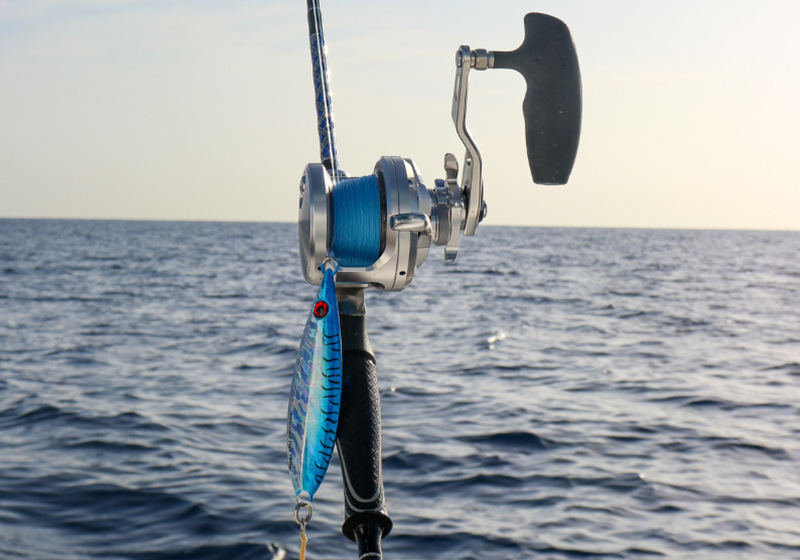
We generally like a small conventional reel with plenty of drag and line capacity.
The goal is balance.
Putting a giant conventional reel on an extremely light slow pitch rod defeats one of the biggest advantages of the setup.
We want enough reel to handle the fish, line and depth without making the combination unnecessarily heavy.
Ideally, the entire setup should feel compact and comfortable in your hands.
Remember, you’re actively working this equipment.
You’re not dropping it into a rod holder and waiting for something to happen.
If you’re jigging throughout the day, every unnecessary ounce becomes something you’re repeatedly lifting and moving.
A properly balanced slow pitch setup lets you concentrate on the jig instead of fighting your equipment.
Keep the Entire Slow Pitch Setup Light
This is one of the themes we’d emphasize when putting the combination together.
The rod is light.
The reel should make sense on that rod.
The components should work together.
You still need enough drag and line capacity for the fish you’re targeting, but there is no advantage in adding unnecessary size and weight.
That’s particularly important when you’re targeting species like grouper, snapper, amberjack and blackfin tuna.
These aren’t tiny fish.
A lightweight setup doesn’t mean an incapable setup.
Modern equipment allows us to build something that feels surprisingly light in your hands while still giving you plenty of capability once a serious fish eats.
And that’s a big part of what makes slow pitch jigging so much fun.
Do You Need Different Slow Pitch Rods for Different Species?
Not necessarily.
This is where we come back to the importance of choosing the rod around the jig and conditions instead of looking only at the name of the fish.
Here in South Florida, the same properly matched slow pitch setup can put you in the game for several species, including grouper, snapper, amberjack and blackfin tuna.
That doesn’t mean target species is irrelevant.
It means we’d rather understand the complete situation.
If you’re fishing a certain jig weight at a certain depth in a certain amount of current, those conditions are already telling us a lot about the rod you’ll need.
Then we can consider the fish you’re likely to encounter and make sure the complete setup makes sense.
It’s a better way to choose equipment than saying, “I need a grouper rod,” and immediately jumping to something heavy.
Should Beginners Start With a 200-300g Slow Pitch Rod?
For most anglers getting into slow pitch jigging in South Florida, that’s where we’d start the conversation.
Our 200-300g setup covers a useful range of typical conditions without making the outfit unnecessarily heavy.
More importantly, it lets you experience what makes slow pitch jigging different.
The rod remains light and responsive.
You can feel it load.
You can feel what the jig is doing.
And you aren’t fighting oversized equipment all day.
If your fishing regularly takes you into deeper water, stronger current or heavier jigs, that’s when we’d start discussing the 300-400g.
You don’t need to start heavy simply because a heavier option exists.
When Does Owning Two Slow Pitch Jigging Rods Make Sense?
Once you start fishing the technique regularly, owning two different setups can make a lot of sense.
The reason isn’t necessarily that you need one rod for snapper and another for grouper.
It’s because offshore conditions change.
One day, a lighter jig may work perfectly.
The next day, the current may force you to add considerably more weight to reach the same area effectively.
That’s where having something like a 200-300g setup and a 300-400g setup gives you options.
You can choose the rod around the conditions rather than trying to force one setup to do everything.
For the occasional slow pitch angler, one well-chosen rod may be plenty.
For someone who enjoys jigging throughout the day and fishes a wider range of depths and current, having both gives you much more flexibility.
Common Mistakes When Choosing a Slow Pitch Jigging Rod
Interestingly, we don’t see a huge list of mistakes with slow pitch jigging.
It’s a fun technique, and anglers who get into it tend to enjoy experimenting with different jigs and setups.
But there are a few things we’d avoid.
Buying Too Heavy Just Because You're Offshore
The biggest rod isn’t automatically the best rod.
If your jig weight and conditions don’t require the heavier setup, you’re adding equipment you don’t necessarily need.
Ignoring Current
Depth alone doesn’t determine your jig weight.
Current can completely change what you need to stay down and work the jig properly.
Putting Too Much Reel on a Light Rod
You need enough drag and line capacity, but the goal is still to keep the overall setup light and balanced.
Trying to Make a Traditional Bottom Rod Do the Same Job
A traditional bottom fishing rod may be excellent at what it was designed to do.
That doesn’t make it a slow pitch jigging rod.
The action of the blank is part of what works the jig.
Trying to Make One Rod Do Everything
This is probably the biggest recommendation we’d make.
If you’re serious about slow pitch jigging, get a dedicated setup.
Don’t compromise the characteristics that make the technique work just so the rod can also handle several unrelated jobs.
The Connley Advantage
We build and recommend a lot of versatile offshore rods.
Slow pitch jigging is one of the situations where we’d tell you not to chase versatility too hard.
We want the rod to do its specific job well.
That means starting with the jig weight, depth and current.
For most South Florida anglers, our 200-300g setup gives you an excellent all-around starting point.
When deeper water, stronger current or heavier jigs enter the equation, we’d look at the 300-400g.
From there, we’ll consider the target fish, reel and how you personally like the setup to feel.
The reel doesn’t need to be huge.
We prefer a small conventional reel with enough drag and line capacity to handle the fishing you’re doing while keeping the overall combination lightweight.
That’s the balance we’re looking for.
A slow pitch setup should feel light and comfortable enough that you can enjoy working it throughout the day while still giving you the capability to handle serious South Florida fish.
Final Thoughts
Slow pitch jigging rods look different because they’re designed to fish differently.
They’re thin, lightweight and flexible on purpose.
The rod isn’t simply there to fight the fish after the bite. Its action helps create the presentation that gets the bite in the first place.
That’s why choosing the right setup starts with:
Jig weight.
Water depth.
Current.
Then we look at the species you’re targeting, the reel you’re pairing with the rod and how you personally want the setup to feel.
For most South Florida anglers, we’d start with a 200-300g slow pitch setup.
If you’re regularly dealing with deeper water, heavier current or heavier jigs, stepping into a 300-400g setup makes sense.
And if slow pitch jigging becomes something you really enjoy, owning both gives you the ability to adjust as offshore conditions change.
The biggest thing we’d tell you is not to overcomplicate it.
Get a dedicated slow pitch rod.
Match it to the jigs and conditions you actually fish.
Pair it with a compact conventional reel with enough drag and line capacity.
Then go fish it.
Frequently Asked Questions
What is a slow pitch jigging rod?
A slow pitch jigging rod is a thin, lightweight and highly flexible fishing rod designed to help work a vertical jig through the water. The blank loads as the angler works the rod and then releases that energy, helping spring the jig and create its movement.
That’s one of the biggest differences between a slow pitch rod and a traditional bottom fishing rod. The rod isn’t simply being used to fight the fish after it eats. Its action is an important part of the presentation before the bite ever happens. That’s why slow pitch rods can look surprisingly light and flexible compared with the heavier conventional rods many offshore anglers are accustomed to using.
How do I choose the right slow pitch jigging rod?
We’d start with three factors: jig weight, water depth and current.
Those factors are closely connected. Deeper water or stronger current may require a heavier jig to reach and stay in the zone you’re trying to fish. As jig weight increases, you need a rod designed to properly load and work that weight.
After that, we’d consider your target species, reel and personal preference. We don’t recommend automatically choosing the heaviest rod because you’re targeting a powerful fish. The rod still needs to properly work the slow pitch jigs you’re actually fishing.
What slow pitch rod is best for South Florida?
For most South Florida anglers, we like our 200-300g slow pitch setup as the all-around starting point.
It provides a good balance for the depths and current we commonly encounter while keeping the overall setup light and enjoyable to fish. It can give you plenty of capability for species such as grouper, snapper, amberjack and blackfin tuna.
If you’re regularly fishing deeper water, stronger current or heavier jigs, we’d step up to our 300-400g setup.
When should I use a 300-400g slow pitch jigging rod?
We’d move toward a 300-400g rod when the conditions require heavier jigs.
That typically happens when you’re fishing deeper water, dealing with stronger current or simply need additional jig weight to maintain the presentation.
The important thing is not to choose the heavier rod just because it sounds more capable. If your conditions and jig weight work well with a 200-300g setup, adding more rod isn’t necessarily an advantage. Match the rod to the weight you’re actually fishing.
What reel should I use for slow pitch jigging?
We generally prefer a small conventional reel with plenty of drag and line capacity for the fishing you’re doing.
The key is keeping the complete setup balanced. A huge conventional reel can make a lightweight slow pitch rod feel unnecessarily cumbersome, especially when you’re actively working the jig throughout the day.
You want enough reel to handle the fish, depth and line requirements without adding unnecessary weight. A properly matched rod and reel should feel compact, comfortable and capable.
Can I use a regular bottom fishing rod for slow pitch jigging?
You can move a jig with many different fishing rods, but that doesn’t mean they’ll perform like a dedicated slow pitch setup.
A slow pitch rod is specifically designed to load and release energy as you work the jig. That action is part of the presentation.
A heavier traditional bottom rod may require you to do considerably more of the work yourself and may not give the jig the same movement.
If slow pitch jigging is something you plan to do regularly, we’d rather see you use a rod specifically designed for the technique than compromise with a rod trying to perform several unrelated jobs.
Do I need more than one slow pitch jigging rod?
Not when you’re getting started.
For many South Florida anglers, one well-chosen 200-300g setup may cover a lot of fishing.
Owning a second setup starts making more sense when you’re regularly encountering a wider range of depths, current and jig weights. For example, having both a 200-300g and a 300-400g setup lets you adjust when conditions require a significantly heavier jig.
The reason for owning multiple slow pitch rods isn’t necessarily to have one for every species. It’s to have the right rod for the different conditions and jig weights you actually fish.