
Walk into almost any offshore tackle shop and you’ll find anglers who strongly prefer spinning gear and others who wouldn’t think of leaving the dock without conventional reels.
Both sides have their reasons.
Some anglers love spinning equipment because it’s easy to cast, comfortable to fish, and versatile enough for a wide range of techniques. Others prefer conventional setups for trolling, fishing heavy tackle, and applications where line capacity and reel configuration are especially important.
But here’s what we’ve learned after building custom offshore fishing rods for anglers with very different fishing styles.
Neither spinning nor conventional rods are automatically better.
The right choice depends on what you’re targeting, how you’re fishing, and the reel you plan to use.
At Connley Fishing, we build both spinning and conventional rods because each style has advantages. Sometimes one is clearly better suited to the application. Other times, either can work extremely well.
Let’s break down the differences, clear up a few misconceptions, and explain how we’d choose between them for different offshore fishing techniques.
What's the Difference Between Spinning and Conventional Fishing Rods?
The most obvious difference is the type of reel each rod is designed to accommodate.
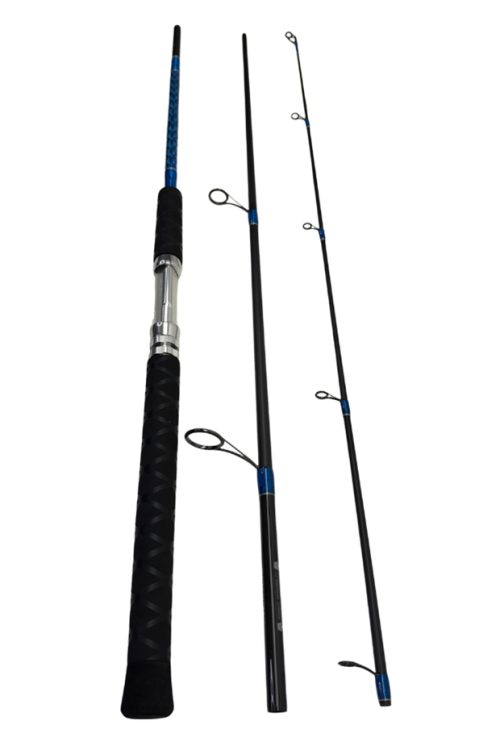
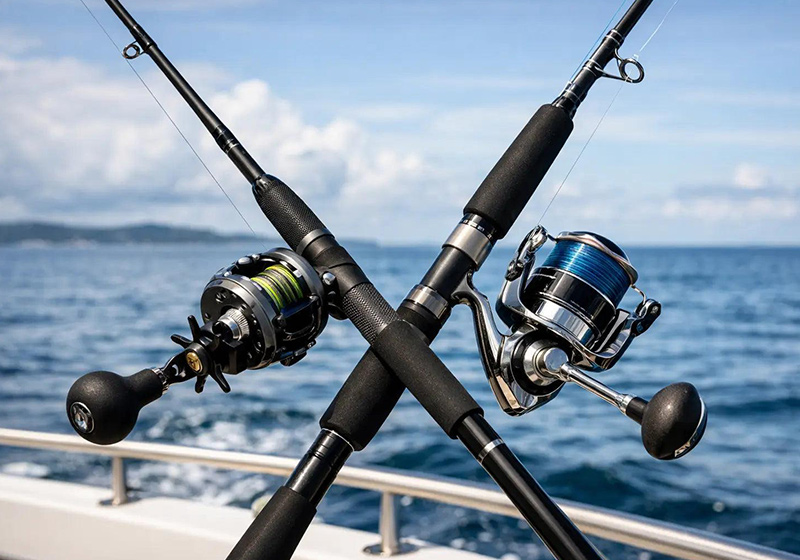
A spinning rod is built to work with a spinning reel mounted underneath the rod. A conventional rod is designed for a conventional reel mounted above it.
That difference affects more than where the reel sits.
The rod’s guide layout, reel seat configuration, and intended performance are designed around the reel style.
Spinning Rods
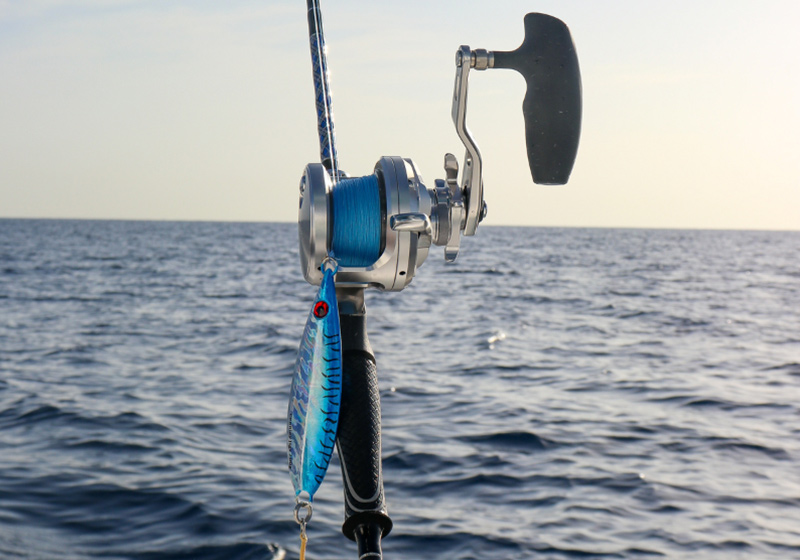
Spinning rods are paired with spinning reels, which have a fixed spool and release line in coils during a cast.
That design makes spinning equipment particularly useful when an angler needs to cast or pitch a bait accurately.
Offshore spinning rods are commonly used for:
Casting artificial lures.
Pitching live baits to visible fish.
Targeting mahi-mahi around floating debris.
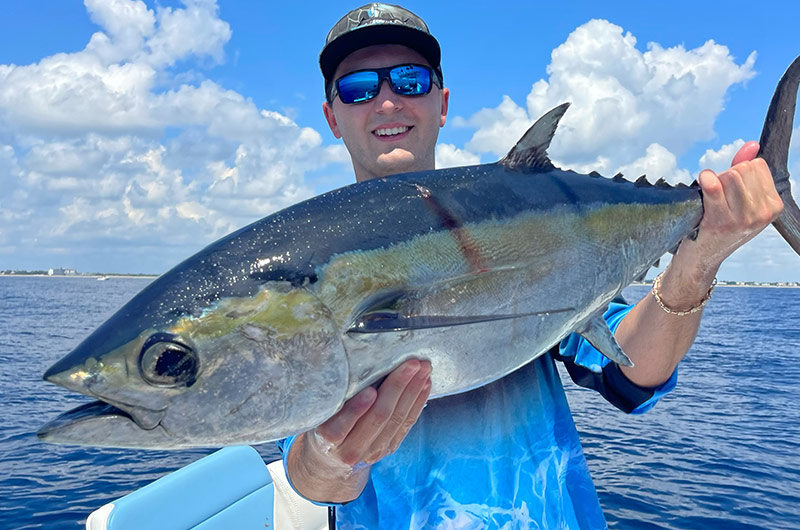
Casting to tuna and other surface-feeding fish.
Certain live bait and bottom fishing applications.
Vertical jigging when paired with suitable equipment.
Modern offshore spinning equipment is capable of handling substantial fish when properly matched to the application.
It’s a mistake to assume spinning rods are only intended for light tackle or smaller species.
Conventional Rods
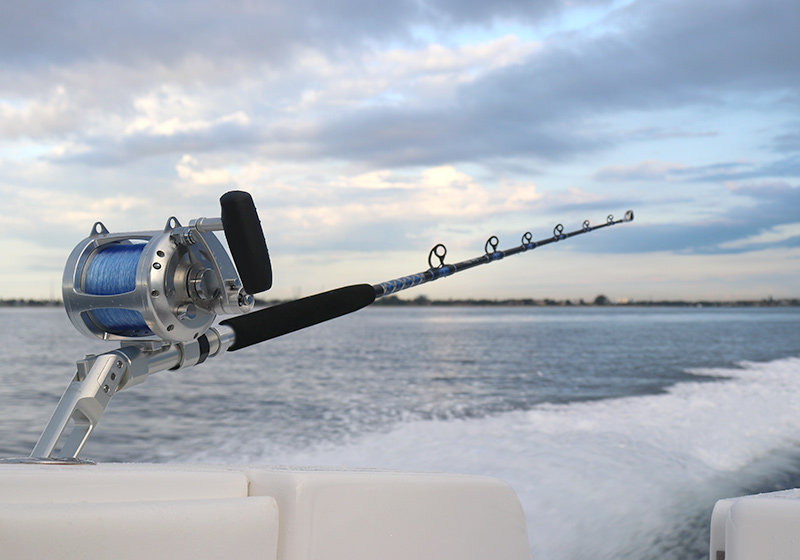
Conventional rods are designed to work with reels mounted on top of the rod.
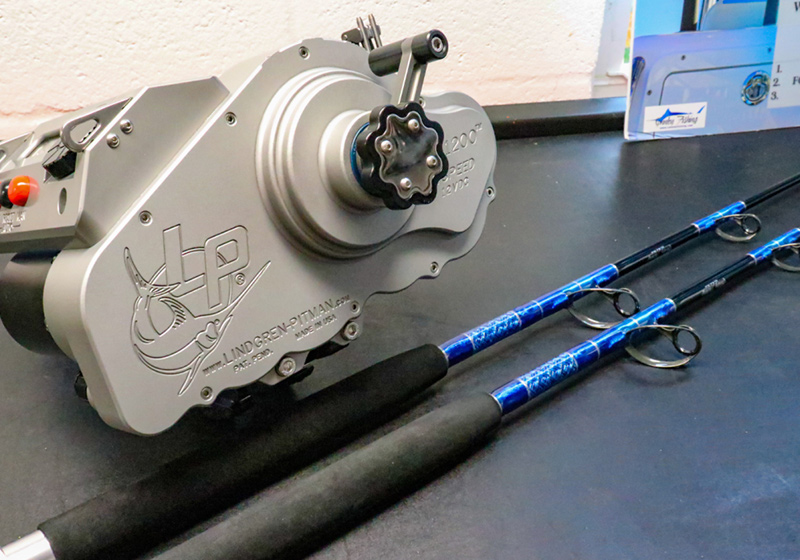
These reels are available in a wide range of configurations, from compact jigging reels to large offshore trolling reels and electric reels used for deep dropping.
Conventional rods are especially common for:
Offshore trolling.
Deep drop fishing.
Kite fishing.
Planer fishing.
Heavy offshore applications.
Certain bottom fishing and jigging techniques.
One reason conventional equipment is so popular offshore is the variety of reel configurations available for specialized techniques.
A trolling setup built around a large conventional reel serves a very different purpose than a spinning rod intended for pitching baits to mahi-mahi.
Neither is necessarily more capable in every situation.
They’re simply designed for different jobs.
Spinning vs. Conventional Rods: A Quick Comparison
| Fishing Application | Spinning Rods | Conventional Rods |
|---|---|---|
| Casting lures | Excellent choice | Possible with suitable tackle |
| Pitching live bait | Excellent choice | Can work, depending on technique |
| Offshore trolling | Less commonly preferred | Generally preferred |
| Deep drop fishing | Not our typical recommendation | Preferred, especially with electric reels |
| Kite fishing | Not our typical recommendation | Generally preferred |
| Planer fishing | Not our typical recommendation | Preferred for dedicated planer setups |
| Bottom fishing | Very capable | Very capable |
| Live bait fishing | Very capable | Very capable |
| Vertical jigging | Very capable | Very capable |
This comparison is a starting point, not a rulebook.
For several techniques, either style can perform extremely well when the rod and reel are properly matched.
The deciding factors are often the target species, the way the angler wants to fish, and personal preference.
When We'd Recommend an Offshore Spinning Rod
There are plenty of situations where we’d reach for a spinning rod first.
The biggest advantage is usually how well spinning equipment works for casting and pitching.
Casting to Mahi-Mahi and Other Offshore Fish
Picture yourself offshore when you come across floating debris holding mahi-mahi.
You may want to quickly cast a lure or pitch a bait toward fish moving around the structure.
That’s a situation where a spinning rod makes a lot of sense.
Spinning equipment makes it relatively straightforward to deliver a bait or lure without the spool control required by many conventional casting setups.
For anglers who regularly target mahi-mahi, tuna, or other fish by casting, a properly matched offshore spinning rod can be one of the most useful pieces of equipment on the boat.
The important thing is choosing a rod and reel combination appropriate for the size of fish you’re targeting.
Pitching Live Baits
Spinning rods are an excellent choice for pitching live baits, especially when fish appear near the boat and you need to deliver a bait quickly.
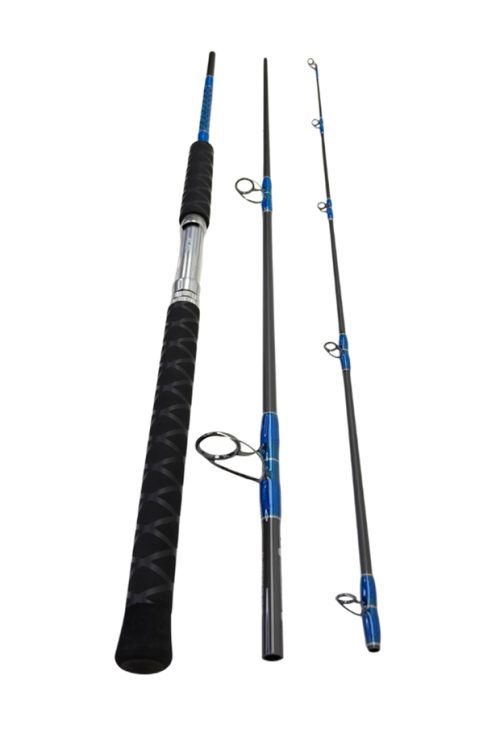
Our Platinum 700L Spinning 15-40# is one example of a versatile offshore spinning rod we like for pitching to mahi-mahi and live bait fishing for sailfish and kingfish.
That’s one reason spinning gear is popular for sight fishing and opportunistic offshore situations.
You can keep a spinning combination ready to go and use it when fish appear.
For many anglers, that convenience is difficult to beat.
Offshore Fishing With Lighter Presentations
Spinning gear can also be useful when you’re fishing lighter lures or baits.
Depending on the rod, reel and line being used, spinning equipment can make it easier to cast lighter presentations without the same spool-management considerations as conventional tackle.
But lighter presentations don’t necessarily mean smaller fish.
A properly matched spinning setup can still be used to target powerful offshore species.
Can Spinning Rods Handle Big Offshore Fish?
Absolutely.
For anglers targeting larger offshore gamefish with spinning tackle, our Platinum 700M Spinning 7′ is an example of a rod built for larger spinning reels and more demanding offshore applications.
One of the biggest misconceptions we hear is that spinning rods are only for smaller fish.
That simply isn’t true.
Modern offshore spinning reels and rods are capable of handling serious fishing applications.
The important thing is choosing equipment designed for the job.
A light spinning combination intended for smaller fish isn’t the same as a heavy-duty offshore spinning setup.
Rod power, reel size, line capacity, drag capability, and the way the angler fights the fish all matter.
We wouldn’t recommend an undersized spinning rod for a demanding offshore application any more than we’d recommend an undersized conventional rod.
But there’s no reason to dismiss spinning equipment simply because you’re targeting larger fish.
The fish doesn’t care whether you’re using a spinning reel or a conventional reel. What matters is whether your equipment is properly matched to the fishing.
When We'd Recommend a Conventional Offshore Rod
Conventional equipment becomes particularly attractive when you’re fishing techniques that rely on specialized reel configurations.
This is especially true for trolling, deep dropping, kite fishing, and planer fishing.
Offshore Trolling
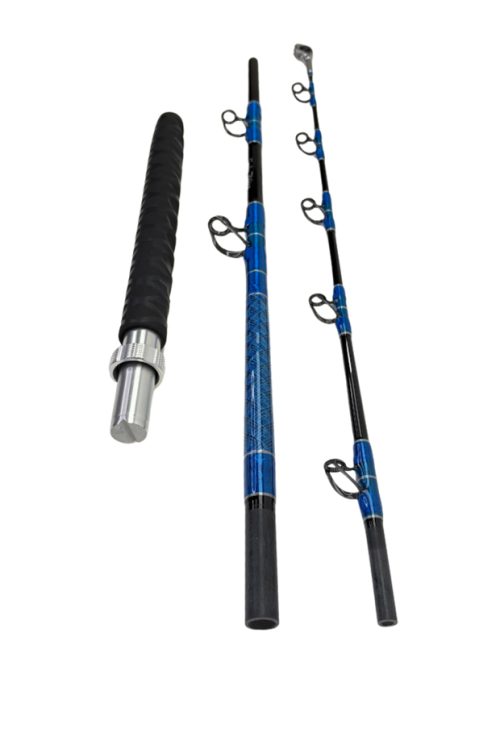
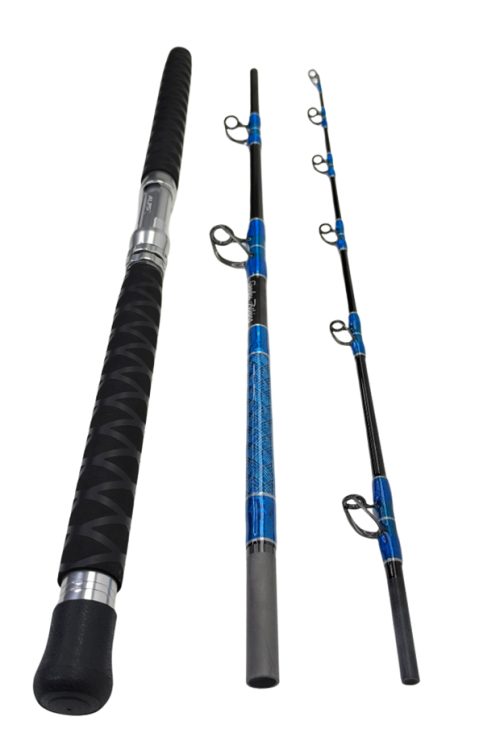
For dedicated offshore trolling, conventional equipment is generally our preference. Rods such as our Platinum Standup Trolling 6′ are designed around the conventional reel configurations commonly used for pulling baits and lures behind the boat.
For anglers putting together a dedicated trolling combination, our guide to offshore trolling rod classes, action and butt configurations explains why a 30-80 stand-up rod may be appropriate for one angler while a heavier 50-100 setup makes more sense for another.
For example, a 30-80 stand-up rod might be an excellent choice for one angler, while a heavier 50-100 setup could be more appropriate for someone targeting larger fish.
We don’t believe there’s one universal trolling combination that’s best for everyone.
The right choice depends on the species, region, and how the angler wants to fight the fish.
Deep Drop Fishing
Conventional rods are also our preference for deep dropping, particularly when electric reels are involved.
As we explain in our guide to matching deep drop fishing rods with electric reels, the reel’s size and capabilities, the amount of weight being fished, and the depth all influence the rod recommendation. A versatile 50-100 stand-up rod may work for some applications, while heavier deep dropping often calls for a dedicated rod.
A shorter dedicated deep drop rod can be especially useful because it makes reaching the line at the boat more manageable.
Depending on the electric reel and fishing conditions, a versatile 50-100 stand-up rod may also work well.
For heavier applications with larger electric reels, we’d look more closely at a dedicated deep drop rod.
The important thing is matching the rod to the reel and intended application.
Kite Fishing
Kite fishing is another technique where conventional equipment is commonly preferred.
These setups often involve specialized reel arrangements and rod configurations designed around managing the kite and its line.
Because the equipment serves a particular purpose, we’d generally recommend choosing a rod designed for that application rather than trying to make a general-purpose spinning rod do the same job.
Planer Fishing
For dedicated planer fishing, we’d also lean toward conventional equipment.
Planer setups create sustained pressure on the rod while trolling, so the rod needs enough backbone to handle that load.
At the same time, we like a rod with enough tip response to help the angler recognize when the planer trips.
This is a good example of why choosing a rod involves more than simply looking at its line rating.
The equipment needs to match the demands of the technique.
Where Spinning and Conventional Rods Both Perform Well
While some offshore techniques clearly favor one reel style, others give anglers considerably more flexibility.
Bottom fishing, live bait fishing and vertical jigging are three good examples.
In these situations, we’d spend less time debating spinning versus conventional and more time looking at the rod’s intended application, the reel being used and the angler’s personal preference.
Bottom Fishing
Both spinning and conventional rods can be excellent choices for bottom fishing.
A spinning combination can work well for anglers who prefer its handling characteristics, particularly when fishing with tackle appropriately matched to the target species and conditions.
Conventional equipment is equally capable and is often preferred by anglers who regularly fish heavier bottom rigs or want a particular reel configuration.
But neither style is automatically better for every bottom fishing situation.
If someone is targeting snapper with relatively moderate tackle, we might recommend a different combination than we would for an angler fishing heavy structure for grouper.
The species, depth, current and amount of weight being used all influence the recommendation.
We’d also consider how the angler prefers to fight fish.
Someone who is comfortable using spinning equipment may have no reason to switch to conventional gear if their current setup handles the application properly.
Live Bait Fishing
Live bait fishing is another technique where both rod styles can perform extremely well.
For anglers pitching live baits to fish near the surface, spinning equipment is often our first recommendation.
It’s convenient, easy to cast and well suited to situations where quickly delivering a bait matters.
But that doesn’t mean conventional equipment is the wrong choice for live bait fishing.
Depending on the target species, presentation and reel configuration, a conventional setup may be equally appropriate.
This is where personal preference becomes a significant factor.
We’d want to know whether the angler plans to cast, pitch or simply deploy baits from the boat.
Those details tell us more than asking which reel style is better in general.
Vertical Jigging
Vertical jigging is another application where either style can work.
Both spinning and conventional jigging combinations have advantages, and anglers develop strong preferences for each.
Some prefer the feel and handling of a spinning reel, while others like compact conventional jigging reels.
The important thing is using a rod designed for the jigging technique rather than assuming any offshore rod will perform the same way.
Slow pitch jigging is a good example of why rod design matters. As we explain in our guide to matching slow pitch jigging rods to jig weight and fishing conditions, the rod needs to work with the presentation rather than simply provide enough strength to lift a heavy fish.
Jig weight, depth, current and the intended presentation all influence the rod selection.
A properly matched spinning jigging combination can be highly effective, just as a conventional jigging setup can be.
We’d focus on the technique first, then determine which reel style makes the most sense.
How to Decide Between Spinning and Conventional Rods
Before deciding between spinning and conventional equipment, consider how the new combination fits into the rest of your offshore gear. Our guide to planning the fishing rods your boat actually needs can help you identify where a new rod adds versatility and where a more specialized combination makes sense.
What species are you targeting?
The size and behavior of the fish influence the rod power, reel size, line capacity and drag requirements.
How are you planning to fish?
Casting to mahi-mahi is very different from trolling offshore or retrieving a heavy deep drop rig.
The technique often determines which reel style we’d recommend.
What reel do you already own or plan to purchase?
This is especially important.
A spinning rod should be paired with an appropriate spinning reel, while a conventional rod should be matched to a conventional reel.
The guide configuration and intended rod design are different.
Will this rod serve one purpose or several?
Some anglers want a dedicated trolling, jigging or casting combination.
Others want something versatile enough to handle several techniques.
We’d approach those purchases differently.
Which style do you enjoy fishing?
Personal preference matters more than some anglers realize.
If both styles can handle the application properly, we’d rather recommend equipment you’re comfortable using.
There’s little benefit in buying a conventional combination simply because someone told you it’s more serious offshore tackle.
And there’s no reason to choose spinning gear for every application just because it’s what you’re familiar with.
The best choice is the one that matches the fishing and feels right in your hands.
Common Mistakes When Buying Offshore Spinning or Conventional Rods
Assuming Conventional Equipment Is Always Stronger
Conventional reels are available in configurations designed for demanding offshore applications, but that doesn’t mean every conventional combination is stronger than every spinning combination.
Modern offshore spinning equipment can handle powerful fish when properly matched.
The rod, reel, line, drag and intended application determine what the equipment can handle.
Comparing reel styles without considering those details doesn’t tell you much.
Using the Wrong Rod for Your Reel
Spinning and conventional rods aren’t interchangeable simply because a reel can be attached to the reel seat.
They’re built with different guide layouts and intended reel orientations.
Using the wrong combination can affect line management and rod performance.
We recommend starting with the reel style you intend to use and selecting a rod built for that configuration.
Choosing Equipment Based Only on the Target Species
Knowing what fish you’re targeting is important, but it doesn’t tell us everything.
Consider mahi-mahi.
An angler trolling for mahi-mahi may be best served by a conventional trolling combination.
Another angler casting lures to mahi-mahi around floating debris may prefer a spinning rod.
Same species, different techniques, different equipment.
That’s why we always ask how someone intends to fish.
Overlooking Rod Power and Action
Two rods designed for the same reel style can perform very differently. Understanding how fishing rod power and action affect performance is important because a rod’s strength and the way it bends under pressure are separate characteristics.
A spinning rod intended for casting lighter lures isn’t necessarily appropriate for heavy bottom fishing.
Likewise, a conventional trolling rod isn’t automatically a good choice for slow pitch jigging.
Rod power and action need to match the application.
Choosing spinning or conventional is only one part of the decision.
Buying One Rod and Expecting It to Do Everything
Versatility is useful, but every rod has limitations.
A good offshore spinning rod may handle several casting and live bait applications extremely well.
A conventional stand-up rod may be useful for trolling and certain bottom fishing situations.
But neither should automatically be expected to perform every offshore technique equally well.
We’d rather help an angler choose a versatile combination that makes sense than promise one rod can replace an entire offshore spread.
The Connley Advantage
At Connley Fishing, we build both spinning and conventional offshore fishing rods because we know anglers don’t all fish the same way.
Some of our customers spend most of their time trolling offshore.
Others regularly cast to mahi-mahi, pitch live baits, bottom fish or jig.
Many do a combination of those techniques.
That’s why we don’t approach rod selection with a blanket recommendation that one reel style is better.
We want to know what you’re targeting, how you’re fishing and which reel you plan to use.
For casting and pitching, we’re often going to recommend a spinning combination.
For dedicated trolling, deep dropping, kite fishing and planer fishing, conventional equipment is generally our preference.
For bottom fishing, live bait fishing and vertical jigging, both styles deserve consideration.
We also pay attention to the details beyond the reel type, including rod power, action, length and how the complete combination performs.
Our goal is to build a rod that works for the fishing you actually do, not simply sell you the equipment someone else prefers.
Final Thoughts
The spinning versus conventional debate doesn’t have one universal winner.
Both styles belong on offshore fishing boats, and both can be excellent choices when properly matched to the application.
Spinning rods are particularly useful for casting lures and pitching live baits.
Conventional rods are generally our preference for trolling, deep dropping, kite fishing and dedicated planer setups.
For bottom fishing, live bait fishing and vertical jigging, either style can be effective.
The real decision comes down to your target species, fishing technique, reel selection and personal preference.
If you’re putting together a new offshore combination and aren’t sure which direction to go, tell us how you plan to fish.
We’ll help you narrow down the rod and reel options that make the most sense.
Frequently Asked Questions
Are conventional fishing rods better than spinning rods for offshore fishing?
Not necessarily. Conventional rods are often preferred for specialized offshore techniques such as trolling, deep dropping, kite fishing and planer fishing. These applications commonly use conventional reels designed around the particular demands of the technique.
However, spinning rods can be excellent for casting artificial lures, pitching live baits and targeting powerful offshore fish. They’re also capable of handling certain bottom fishing and jigging applications.
The better choice depends on how you intend to fish. If you’re regularly trolling offshore, we’d generally recommend conventional equipment. If you’re casting to mahi-mahi or pitching baits to visible fish, spinning gear may be the more practical option.
We wouldn’t choose one style over the other without considering the target species, reel, rod power and intended application.
Can you catch big fish with a spinning rod?
Absolutely. Modern offshore spinning rods and reels are capable of handling powerful fish when the equipment is properly matched to the application.
The misconception that spinning rods are only for smaller fish comes partly from comparing light spinning equipment with much heavier conventional setups. That isn’t a meaningful comparison.
A heavy-duty offshore spinning combination is very different from a light rod designed for small inshore species.
We’d look at the rod’s power, the reel’s drag and line capacity, the target species and how the angler intends to fight the fish.
A properly matched spinning setup can be an excellent choice for demanding offshore casting and live bait applications.
The important thing is selecting equipment capable of handling the fish you’re targeting rather than assuming reel style alone determines strength.
Is spinning or conventional better for bottom fishing?
Both spinning and conventional equipment can perform extremely well for bottom fishing.
The recommendation depends on the species, depth, current, sinker weight and the angler’s preferred fishing style.
For example, someone targeting snapper with moderate tackle may be comfortable using a spinning combination. Another angler fishing heavier rigs around structure may prefer a conventional setup.
Neither preference is automatically wrong.
We’d also consider the reel’s line capacity, drag capability and how the rod behaves under load.
If both combinations are appropriate for the fishing conditions, personal preference can become the deciding factor.
At Connley Fishing, we’d rather match the rod and reel to your bottom fishing application than insist that every angler use the same equipment.
Why are conventional rods preferred for offshore trolling?
Conventional rods are generally preferred for offshore trolling because they’re designed to work with the conventional reels commonly used for that technique.
Those reels are available in configurations suited to trolling, including different line capacities, drag capabilities and sizes for various offshore applications.
The rod also needs to be selected appropriately.
A 30-80 stand-up rod might be a good choice for one angler, while another fishing heavier tackle for larger species may prefer a 50-100 combination.
Rod length, backbone, action and butt configuration all influence how the equipment performs.
We wouldn’t recommend a trolling rod based solely on whether it’s conventional.
The complete combination needs to make sense for the target species, region and fishing style.
Can I use a spinning rod for vertical jigging?
Yes. Spinning rods can be excellent for vertical jigging when they’re designed for the technique and paired with suitable reels.
Conventional jigging combinations are also highly effective, and many anglers prefer them.
The important thing is understanding what type of jigging you plan to do.
For example, slow pitch jigging uses rods designed to work with particular jig weights and presentations. A traditional heavy bottom fishing rod may not behave appropriately for that technique, even if it can handle the weight.
We’d consider the jig weight, depth, current and intended presentation before recommending equipment.
Once those details are established, we can determine whether a spinning or conventional combination better suits the angler’s preferences.
Should beginners start with spinning or conventional offshore rods?
For anglers who primarily want to cast lures or pitch baits, spinning equipment can be a practical starting point because it’s generally straightforward to cast and manage.
But that doesn’t mean every beginner should purchase a spinning rod.
Someone who plans to troll offshore regularly may be better served by a conventional trolling combination from the beginning.
Likewise, an angler interested in deep dropping with an electric reel should focus on equipment appropriate for that technique.
We’d start by identifying the fishing you expect to do most often.
From there, we’d consider your budget, reel preferences and whether you need one versatile combination or a more specialized setup.
Buying equipment suited to your actual fishing is more important than following a universal beginner recommendation.
Can I put a spinning reel on a conventional rod?
We don’t recommend it.
Spinning and conventional rods are designed around different reel positions and guide configurations.
A spinning reel hangs underneath the rod, while a conventional reel sits on top.
The rod’s guide arrangement and intended performance are built around those differences.
Even if a spinning reel can physically attach to a conventional rod’s reel seat, that doesn’t mean the combination will function as intended.
You may encounter problems with line management, guide alignment or overall performance.
For the best results, pair spinning reels with properly designed spinning rods and conventional reels with appropriately designed conventional rods.
If you’re investing in a quality offshore reel, it’s worth selecting a rod built to complement it.