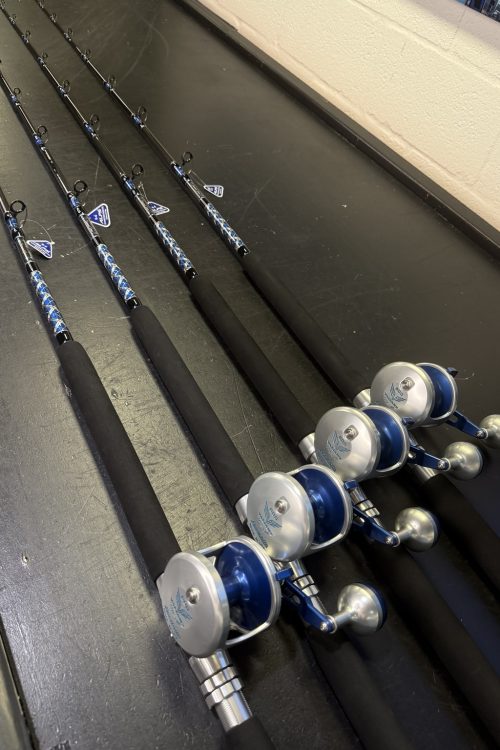

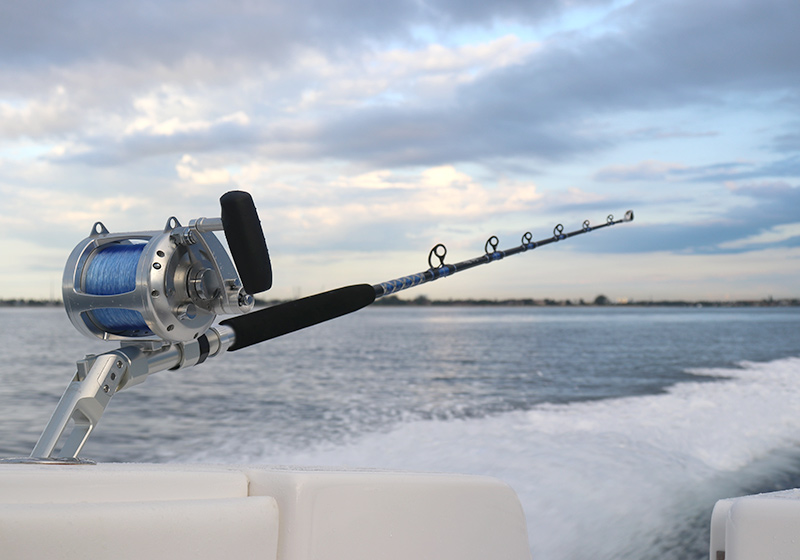
There’s a big difference between pulling a few baits offshore and having a trolling spread that’s properly dialed in.
Rod length, action, backbone, reel size and even the type of butt you choose all play a role in how your equipment performs. Some setups are built for lighter, everyday trolling, while others are designed to handle bigger fish and considerably more drag pressure. The challenge isn’t finding the strongest trolling rod on the market. It’s finding the right combination for the way you fish.
At Connley Fishing, we build trolling rods for anglers fishing everything from the waters off South Florida to the Bahamas, and one thing we’ve learned is that the right setup depends heavily on what you’re targeting and how you want to fight those fish.
A 30-80 stand-up rod might be exactly what one angler needs, while another would be better served with a heavier 50-100. Neither is automatically the better choice.
In this guide, we’ll break down the differences between offshore trolling rod classes, explain why length and action matter, compare straight, bent and adjustable butts, and share the combinations we’d recommend for different trolling applications.
What Makes a Good Offshore Trolling Rod?
A good offshore trolling rod needs to handle the demands of pulling baits or lures while giving the angler the strength and control to fight the fish that eats them.
But that doesn’t mean every trolling rod needs to be extremely stiff or heavy.
When we’re looking at an offshore trolling setup, a few things matter:
Rod class: The line and drag pressures the setup is intended to accommodate.
Length: How the rod fits your boat, trolling spread and fighting style.
Action: How the rod bends and responds under load.
Backbone: The strength needed to manage trolling pressure and fight fish.
Butt configuration: Whether a straight, bent or adjustable butt makes the most sense.
Reel compatibility: How the rod works with the reel, line capacity and drag you’ll be using.
These characteristics need to work together.
A rod can have an impressive line rating and still be a poor choice for your particular style of trolling.
That’s why we don’t recommend choosing equipment based on the numbers printed on the blank alone.
Understanding Offshore Trolling Rod Classes
You’ll commonly see offshore trolling rods described with ratings such as:
20-50
30-80
50-100
80-130
These numbers generally refer to a recommended line class or range, not the weight of fish the rod can catch.
They also don’t tell you everything about how the rod will feel.
Two rods with similar ratings can have different actions, different backbone and different applications.
At Connley, we’d start by asking what you’re targeting, where you’re fishing, what reel you’re using and how much drag you plan to fish.
Those answers help determine which rod class makes sense.
20-50 Trolling Rods
A 20-50 can make a lot of sense for lighter trolling applications where the angler doesn’t need an extremely heavy setup.
The advantage is that you can enjoy a more sporting fight without automatically stepping into equipment designed for much larger fish.
But that doesn’t mean a 20-50 is the right recommendation for every boat.
The fish you’re targeting, the line you’re using and your preferred drag pressure all matter.
30-80 Trolling Rods
For someone looking for a versatile South Florida trolling setup, this is a class we particularly like.
Our Platinum 30-80 Stand-Up offers a combination of backbone and versatility that works well for a wide range of trolling applications.
It’s also the rod we’d choose for the single versatile trolling combination we’ll discuss later in this guide.
A 30-80 can be a very useful middle ground for anglers who want substantial capability without automatically moving into a heavier setup.
50-100 Trolling Rods
When the target fish and fishing style call for more rod, a 50-100 becomes an attractive option.
This is a class we’d consider for heavier offshore trolling applications, including setups targeting bigger fish in South Florida and the Bahamas.
The added backbone can make sense when you’re pairing the rod with a larger conventional reel and planning to fish more drag.
But remember, a heavier rod changes the experience.
If you’re catching smaller fish on a heavy 50-100, you may end up bringing them in with very little fight.
That’s fine if it’s how you prefer to fish.
It just isn’t necessarily the most enjoyable choice for every angler.
80-130 Trolling Rods
At the heavier end of the spectrum, an 80-130 is intended for demanding offshore applications where the target fish, reel and drag requirements justify that class of equipment.
This isn’t something we’d recommend simply because someone wants the biggest rod available.
The rod needs to match the fishing.
For an angler targeting fish that require much heavier tackle, it may be appropriate.
For someone doing general South Florida trolling, it could be far more equipment than necessary.
The takeaway: Don’t buy a trolling rod based on the largest fish you could possibly hook. Choose it around the fishing you’re actually planning to do.
Why Rod Length Matters for Offshore Trolling
When we’re building a trolling rod, length is one of the first characteristics we consider.
For most trolling applications, we generally prefer a shorter rod with plenty of backbone.
Why?
Because trolling places a consistent load on the equipment, and the rod needs to manage that pressure without becoming excessively bent over.
You don’t want the rod looking like a U while you’re trolling.
That doesn’t mean the rod should have no action.
It still needs to bend and work properly.
But it should have enough strength to handle the demands of trolling and fighting fish.
Shorter Doesn't Mean Better for Every Technique
It’s important to remember that offshore fishing covers a lot of different applications.
A rod designed for trolling isn’t necessarily what we’d recommend for pitching a live bait, kite fishing or casting.
Those techniques place different demands on the rod.
That’s one reason we offer different rod styles rather than trying to make every offshore rod perform the same job.
For trolling, our preference generally leans toward shorter rods with sufficient backbone.
Why Trolling Rod Action and Backbone Matter
Some anglers look at a heavy trolling rod and assume that the stiffer it feels, the better it must be.
We don’t look at it that way.
Understanding how fishing rod power and action work together is important when choosing a trolling setup. You need enough backbone to handle the pressure of trolling and fighting fish, but the rod also needs to bend and respond appropriately for the application.
There’s a balance.
If a rod bends excessively under the normal load of trolling, it may not be the right choice for that application.
On the other hand, simply choosing the stiffest rod available doesn’t guarantee a better setup.
We want a rod that performs correctly for the intended reel, line and drag pressure.
That’s especially important as you move into heavier trolling equipment.
The amount of pressure you intend to put on a fish should make sense for the rod you’re using.
And if you consistently plan to fish heavy drag and put maximum pressure on large fish, choosing a rod built for that application is smarter than trying to push a lighter rod beyond what it was intended to handle.
Straight Butt vs. Bent Butt Trolling Rods
This is another decision that can significantly change how a trolling rod fishes.
And it’s one we discuss regularly with customers.
The three configurations we’d look at are:
Straight butt.
Bent butt.
Adjustable butt, such as a Winthrop Terminator.
Each has its place.
Straight Butt Trolling Rods
A straight butt is the most versatile configuration for general trolling.
It’s what we use for many of our everyday trolling setups, particularly when an angler may fight the fish standing up.
If you’re looking for a rod that can comfortably move between different fishing situations, a straight butt is often a practical choice.
You aren’t locking yourself into one particular rod angle or fighting arrangement.
That’s why straight butts remain popular for general-purpose offshore trolling.
Bent Butt Trolling Rods
A bent butt changes the angle of the rod and the way pressure is transferred through the setup.
This configuration is particularly useful when you’re fighting a fish from a rod holder or fighting chair.
The angle can provide better leverage in those situations.
That doesn’t make a bent butt universally better than a straight butt.
It makes it better suited to certain applications.
Before choosing one, we’d want to know how you intend to fish and fight the rod.
Winthrop Terminator Adjustable Butts
If the budget allows, this is the option we most often recommend.
A Winthrop Terminator adjustable butt gives you the ability to change the rod angle depending on how you’re fishing.
That added flexibility is valuable.
Instead of committing to one fixed configuration, you can adjust the setup for different situations.
For someone investing in a quality offshore trolling rod and wanting maximum versatility, we believe the adjustable butt is well worth considering.
It isn’t necessary for every angler.
But when someone asks us what we’d personally choose on a versatile trolling setup, the Winthrop is usually our recommendation.
Our Favorite All-Around South Florida Trolling Setup
If a customer came to us and said:
“I want one really good trolling rod and reel combination for South Florida. What would you buy?”
Our recommendation would be:
Connley Platinum 30-80 Stand-Up with a Winthrop adjustable butt, paired with a Shimano Talica 25II.
There’s a reason we like this combination.
The 30-80 gives you plenty of backbone while maintaining the versatility we want in an all-around trolling rod.
The Winthrop adjustable butt gives you additional flexibility in how the rod is positioned and fished.
And the Talica 25II is a strong match for the type of offshore trolling we’d use this combination for.
It’s a setup with substantial capability without automatically jumping into the heaviest equipment available.
For someone who wants a quality, versatile South Florida trolling combination, this is where we’d start.
That doesn’t mean it’s the perfect setup for every angler.
If you’re targeting much larger fish, fishing different waters or planning to use significantly heavier drag, our recommendation may change.
But for a versatile South Florida trolling outfit, it’s one of our favorite combinations.
How Would We Build a Four-to-Six-Rod Trolling Spread?
Putting together several trolling combinations takes a little more planning than choosing one versatile rod. If you’re building a balanced offshore rod spread, each setup should have a purpose based on the species you’re targeting and how you plan to fish.
For bigger offshore fish in South Florida and the Bahamas, one starting point we’d consider is:
Two Platinum 30-80 Stand-Up rods.
Four 50-100 Stand-Up rods.
That gives you a six-rod spread with a mixture of lighter and heavier setups.
The two 30-80s add versatility.
The four 50-100s give you additional heavier equipment for bigger offshore fish.
But we wouldn’t recommend that exact spread to everybody.
An angler targeting smaller fish with lighter trolling presentations may prefer a different balance.
Someone focusing on very large fish may need an entirely different combination.
The point isn’t that two 30-80s and four 50-100s represent a universal formula.
The point is to build a spread around your fishing, not somebody else’s.
How to Choose Trolling Rods for Your Fishing Style
Before investing in a new trolling setup, think about how you actually spend your time offshore.
We talk to anglers who troll regularly in South Florida, others who make frequent trips to the Bahamas, and some who only troll occasionally while heading between fishing spots.
Those situations don’t necessarily call for the same equipment. If you’re still deciding how to outfit your boat, our guide to choosing the right fishing rods for your boat is a good place to start before building a dedicated trolling spread.
The questions we’d ask are straightforward:
What species are you targeting? The fish you’re pursuing helps determine the rod class and reel capability you’ll need.
Where are you fishing? The type of trolling and target fish can change considerably between regions.
What reels are you using? Rod power, action and reel capability should complement each other.
How much drag do you plan to fish? A setup intended for heavier drag needs an appropriately matched rod.
How will you fight the fish? Standing up, using a rod holder or fishing from a fighting chair can influence the butt configuration.
Do you prefer lighter tackle or more pulling power? Some anglers enjoy a longer, more sporting fight, while others prefer heavier equipment.
Once we understand those answers, choosing a trolling rod becomes much easier.
The goal isn’t to sell you the most expensive or heaviest setup. It’s to put together something that makes sense for your fishing.
Why Your Trolling Reel Matters Just as Much as the Rod
It’s easy to focus on rod ratings when shopping for offshore trolling equipment.
But the reel is equally important.
A trolling rod and reel should work together as one system. That means considering the reel’s size, line capacity, drag capability and the pressure you intend to apply during a fight.
A large conventional reel capable of producing significant drag may not be a sensible match for a lighter trolling rod.
Likewise, pairing a small reel with a heavy stand-up rod doesn’t automatically create a balanced combination.
For example, two combinations we particularly like are:
Platinum 30-80 Stand-Up with Shimano Talica 25II
This is our preferred versatile South Florida trolling combination.
The rod offers the backbone we want for a wide range of applications, while the Talica 25II complements the overall setup.
Add a Winthrop adjustable butt, and you’ve got an excellent combination for anglers who value versatility.
Platinum 50-100 Stand-Up with Shimano Talica 50
This is a heavier offshore trolling combination.
The Platinum 50-100 has the backbone to match the size and capabilities of the Talica 50.
For someone fishing larger conventional reels and targeting bigger offshore fish, this is the type of balanced combination we’d look at.
The important lesson isn’t that everybody needs either of these specific reels.
It’s that rod power, reel size, line capacity and intended drag pressure should all make sense together.
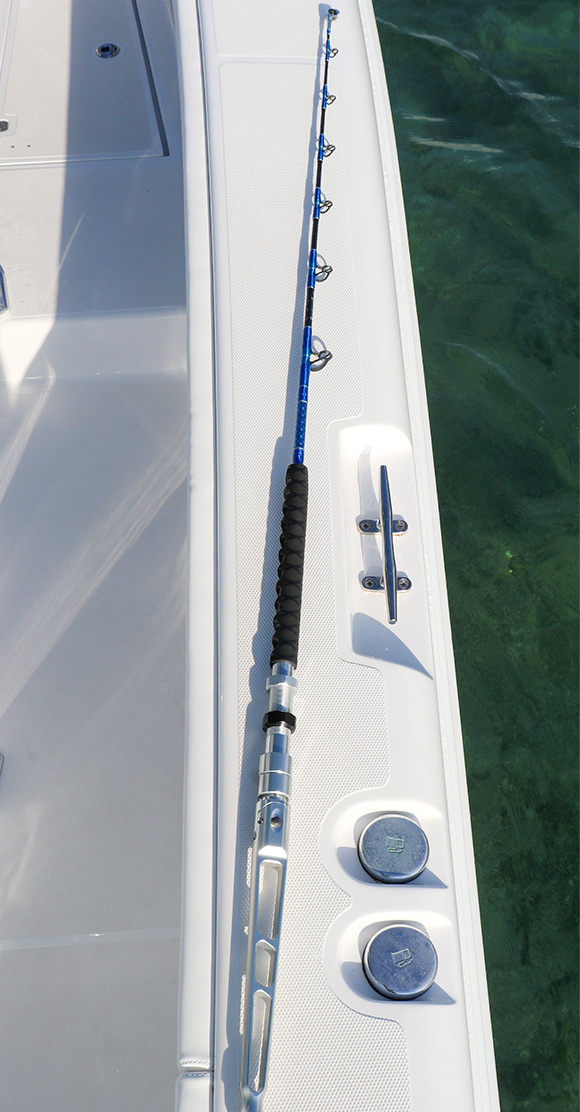
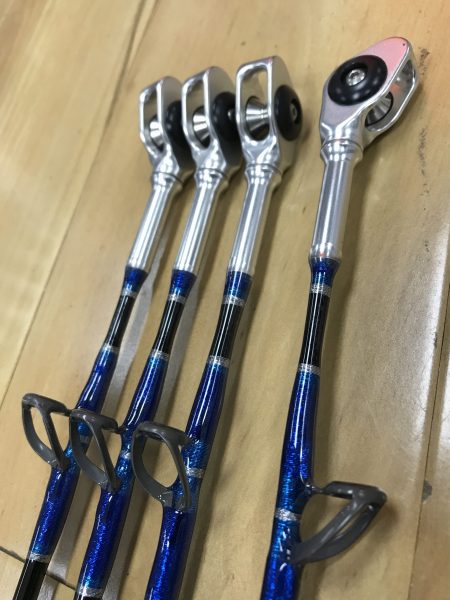
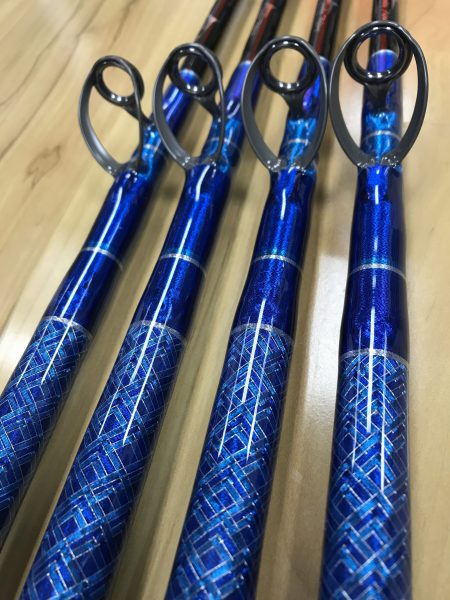
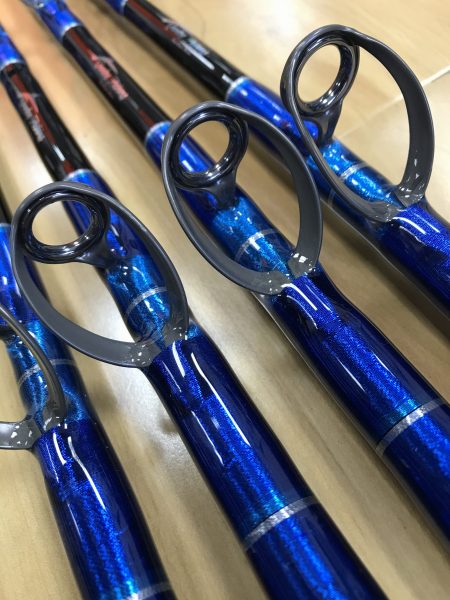
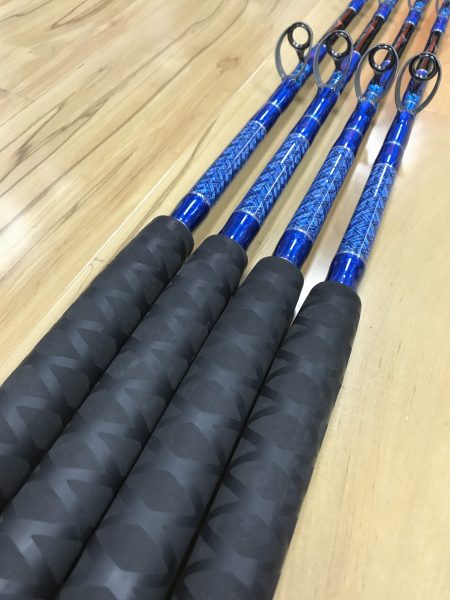
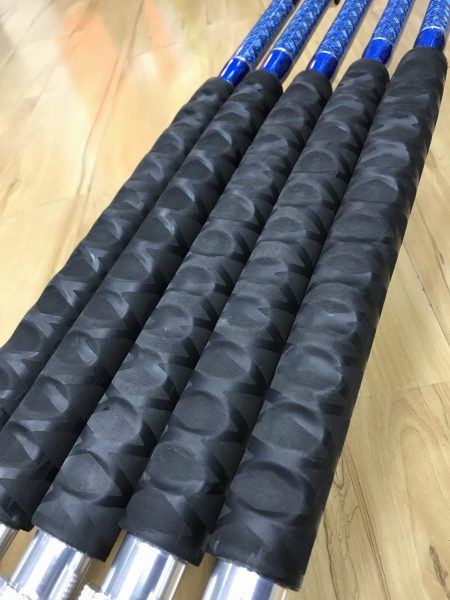
Platinum Standup Trolling 6′
$550.00 – $2,110.00Price range: $550.00 through $2,110.00
Introducing the toughest stand-up trolling rods made in America anywhere! The Calstar rod blanks are second to none and definitely exactly what you want and need when the fish of a lifetime is on the line!
Why Heavier Trolling Rods Aren't Always Better
One of the biggest misconceptions about offshore fishing equipment is that heavier automatically means better.
We understand why anglers think that way.
Nobody wants to hook a big fish and feel under-equipped.
But there’s another side to the equation.
If you’re fishing a heavy 50-100 setup and catching relatively small fish, you’re probably going to bring those fish to the boat with very little fight.
You lose some of the sportiness that makes offshore fishing enjoyable.
Now, if your goal is to apply more pressure to larger fish, that heavier setup might be exactly what you want.
That’s the beauty of having different rod classes available.
You can choose how you want to fish.
Some anglers prefer lighter tackle and a more sporting fight.
Others want the extra backbone to put significant pressure on fish.
Neither approach is automatically better.
We’d rather help you choose the equipment that matches your preferences than tell you that everybody should be trolling with the same rod.
Common Mistakes When Buying Offshore Trolling Rods
Choosing a Rod Based Only on Its Line Rating
A 30-80 or 50-100 rating is useful information, but it doesn’t tell the whole story.
Rod length, action, backbone and construction all influence how the equipment performs.
Consider the entire rod rather than focusing exclusively on the numbers.
Buying More Rod Than You Need
A heavier trolling rod isn’t automatically an upgrade.
If you’re primarily targeting fish that can be handled comfortably on lighter equipment, moving into a much heavier setup may take some of the enjoyment out of the fight.
Choose equipment around your actual fishing rather than the largest fish you can imagine catching.
Ignoring Butt Configuration
Straight, bent and adjustable butts aren’t interchangeable in every situation.
A straight butt offers excellent versatility, particularly for stand-up fishing.
A bent butt changes the rod angle and can improve leverage when fishing from a holder or chair.
An adjustable Winthrop Terminator offers additional flexibility.
Think about how you’ll use the rod before choosing the configuration.
Mismatching the Rod and Reel
A powerful conventional reel doesn’t belong on just any rod.
The rod needs to make sense for the reel’s capabilities and the drag pressure you intend to use.
We’d rather see you invest in a properly balanced combination than choose individual components simply because each one looks impressive on its own.
Copying Somebody Else's Trolling Spread
Just because another boat runs six heavy trolling rods doesn’t mean that’s what you need.
Their target species, location, fishing style and personal preferences may be completely different from yours.
Build your spread around your own fishing.
The Connley Advantage
At Connley Fishing, we build offshore rods for anglers who fish in different waters, target different species and have different preferences about how they want to fight fish.
That’s why we don’t believe there’s one perfect trolling rod for everybody.
We pay close attention to the rod’s length, action and backbone, along with the reel, line and drag pressure it’s going to be paired with.
We also help anglers choose the butt configuration that makes the most sense for their setup.
For someone looking for a versatile South Florida trolling combination, our recommendation is the Platinum 30-80 Stand-Up with a Winthrop adjustable butt and Shimano Talica 25II.
For heavier trolling applications, we also like our Platinum 50-100 Stand-Up paired with a Shimano Talica 50.
And for anglers building a more serious trolling spread targeting bigger fish in South Florida and the Bahamas, a combination of two 30-80s and four 50-100s can be a strong starting point.
But those are recommendations, not universal rules.
What matters most is understanding how you fish and building the equipment around that.
Final Thoughts
Choosing the best offshore trolling rods doesn’t have to be complicated, but it does require looking beyond the line rating.
Start with the fish you’re targeting and where you’re fishing.
Then consider the reel, line and drag pressure you intend to use.
Think about how you prefer to fight fish and whether a straight, bent or adjustable butt makes the most sense.
For many South Florida anglers, a versatile 30-80 stand-up setup is an excellent place to start.
For heavier offshore applications, a 50-100 may be the better choice.
And for anglers targeting much larger fish with heavier tackle, other rod classes may be appropriate.
The important thing is to choose equipment that matches your fishing rather than buying the heaviest rod available.
A properly matched trolling rod and reel should give you the strength, control and fishing experience you’re looking for.
That’s what we’re trying to accomplish every time we help someone build a setup.
Frequently Asked Questions
What is the best trolling rod for offshore fishing?
There isn’t one trolling rod that’s best for every offshore angler.
The right choice depends on the species you’re targeting, where you’re fishing, the reel and line you’re using, and how much drag you intend to apply.
For someone looking for a versatile South Florida trolling setup, we particularly like our Platinum 30-80 Stand-Up paired with a Shimano Talica 25II and Winthrop adjustable butt.
That combination provides a useful balance of backbone and versatility for a wide range of applications.
But an angler targeting much larger offshore fish may be better served by a heavier 50-100 or another appropriately matched setup.
We’d rather understand how you fish before making a recommendation than assume the same rod is right for everybody.
What is the difference between a 30-80 and 50-100 trolling rod?
The numbers generally refer to the rod’s recommended line class, but they don’t tell you everything about its performance.
A 30-80 can be an excellent choice for versatile offshore trolling where the angler wants substantial capability without automatically stepping into heavier equipment.
A 50-100 is generally more appropriate when the application calls for additional backbone and heavier tackle.
For example, we like our Platinum 30-80 Stand-Up with a Talica 25II as a versatile South Florida setup.
For heavier offshore trolling, our Platinum 50-100 paired with a Talica 50 is another combination we recommend.
Neither is automatically better.
The right choice depends on your target fish, reel, line, drag pressure and personal preferences.
Are shorter rods better for offshore trolling?
We generally prefer shorter trolling rods with plenty of backbone for most of our trolling applications.
The reason is that a trolling rod needs to manage consistent pressure while pulling baits or lures and still perform properly when a fish is hooked.
We don’t want the rod bent excessively under normal trolling loads.
However, that doesn’t mean every shorter rod is automatically a better trolling rod.
Action, backbone, construction and the intended reel all matter.
Different offshore techniques also call for different rod characteristics. A rod we’d choose for trolling may not be what we’d recommend for casting or pitching a live bait.
The best length is the one that makes sense for the specific trolling application and the way the rod will be used.
Should I choose a straight butt or bent butt trolling rod?
It depends on how you intend to fish and fight the rod.
A straight butt is generally our most versatile option for everyday trolling, particularly if you plan to fight fish standing up.
A bent butt changes the rod angle and can provide better leverage when fighting fish from a rod holder or fighting chair.
Neither configuration is universally better.
For anglers who want additional flexibility, we often recommend a Winthrop Terminator adjustable butt when the budget allows.
The adjustable design lets you change the angle depending on how you’re fishing.
Before making a recommendation, we’d want to know whether the rod will primarily be used for stand-up fishing, rod-holder applications or a fighting chair.
Is a Winthrop adjustable butt worth the money?
For anglers investing in a quality offshore trolling setup and looking for maximum versatility, we believe it can be well worth the upgrade.
A traditional straight butt is excellent for general trolling and stand-up fishing.
A bent butt can provide better leverage for certain rod-holder and fighting-chair applications.
The Winthrop Terminator gives you the ability to adjust the rod angle rather than committing to one fixed configuration.
That flexibility is why we frequently recommend it when the budget allows.
It’s also part of our favorite versatile South Florida trolling combination: a Platinum 30-80 Stand-Up with a Shimano Talica 25II.
That said, not every angler needs an adjustable butt.
If your fishing style is consistent and a straight or bent butt already meets your needs, a fixed configuration may be perfectly appropriate.
How many trolling rods should I have on my offshore boat?
There’s no universal number because the right spread depends on your boat, target species and style of fishing.
Someone who only trolls occasionally may not need a large dedicated trolling spread.
An angler who regularly targets bigger offshore fish may want several combinations with different capabilities.
For a more serious six-rod spread targeting larger fish in South Florida and the Bahamas, one starting point we’d consider is two 30-80 stand-up rods and four 50-100 stand-up rods.
That gives you a mixture of versatile and heavier setups.
But we wouldn’t recommend that arrangement to everybody.
The important thing is to choose a spread that supports the fishing you actually do rather than copying another boat’s equipment list.
Can I use the same trolling rods for South Florida and the Bahamas?
In many cases, yes, but the answer depends on what you’re targeting and how you’re trolling in each location.
A versatile trolling setup may work well across several offshore applications.
However, if you’re targeting significantly larger fish or planning to fish heavier drag in the Bahamas, you may benefit from stepping into a heavier rod class.
That’s why we like discussing the entire setup rather than simply asking where someone plans to fish.
For example, our Platinum 30-80 Stand-Up can be a versatile option for a wide range of South Florida trolling.
For heavier applications, we may recommend a Platinum 50-100.
The best choice depends on the species, reel, line and fishing style rather than the location alone.