
Just because a reel fits into a rod’s reel seat doesn’t mean it’s the right reel for that rod.
We’ve seen anglers put too much emphasis on reel size, line ratings, or maximum drag without considering how the entire combination will perform on the water. You can end up with a reel that’s unnecessarily heavy, doesn’t hold enough line, or simply isn’t suited to the fishing you’re doing.
And here’s something worth understanding: putting a bigger, more powerful reel on a rod doesn’t make the rod any stronger.
The best way to match a fishing reel to your rod is to start with your fishing technique, select the correct reel style, compare line capacity and rod ratings, and make sure the drag, balance, and overall configuration work together.
At Connley Fishing, we build rods for everything from casting live baits to trolling offshore and deep dropping with electric reels. There’s no single rod and reel combination that works best for every angler.
But there is a practical way to narrow down your options.
Start With How You Plan to Fish
Before we recommend a reel, we want to know what you’re going to do with it.
Are you casting to mahi-mahi around floating debris? Trolling for larger offshore species? Bottom fishing for snapper and grouper? Or putting together a dedicated deep drop combination?
Those are very different applications, and each places different demands on your equipment.
Take mahi-mahi fishing, for example.
One angler might spend most of the day trolling with conventional rods. Another might prefer to cast artificial lures or pitch live baits when fish appear near the boat.
They’re targeting the same species, but we wouldn’t necessarily recommend the same equipment.
We also want to know what line you’re planning to use, how much capacity you need, and whether you’ll be holding the rod or fishing it from a rod holder.
If you’re building an entire offshore spread, it’s worth thinking about what rods you actually need for your boat before purchasing another combination.
Sometimes a versatile rod fills an important gap. Other times, a dedicated setup makes considerably more sense.
Match the Reel Style to the Rod
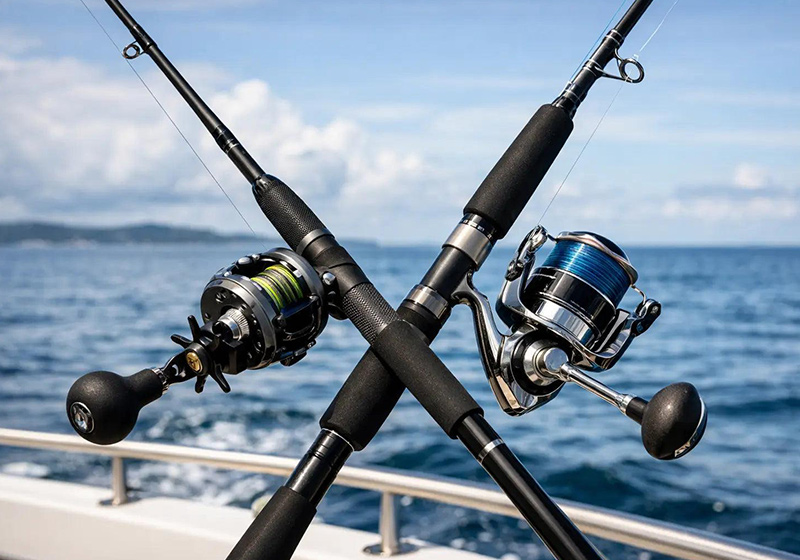
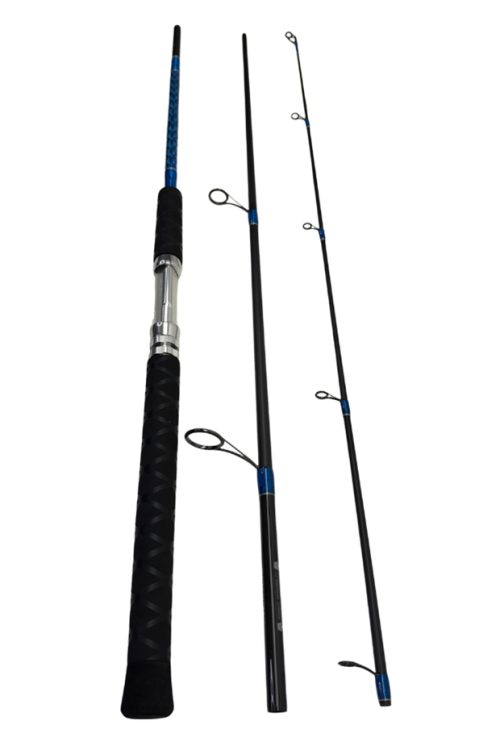
The first decision is straightforward: spinning reels belong on spinning rods, and conventional reels belong on conventional rods.
They aren’t interchangeable simply because you can physically attach either reel to a reel seat.
Spinning Rods and Reels
A spinning reel hangs underneath the rod and releases line in coils from a fixed spool.
Spinning rods are designed with guide configurations that accommodate how the line leaves the reel.
For offshore fishing, we particularly like spinning equipment for casting artificial lures, pitching live baits, and situations where you need to deliver a bait quickly.
A good offshore spinning combination can also handle demanding fishing applications when the rod and reel are properly matched.
Conventional Rods and Reels
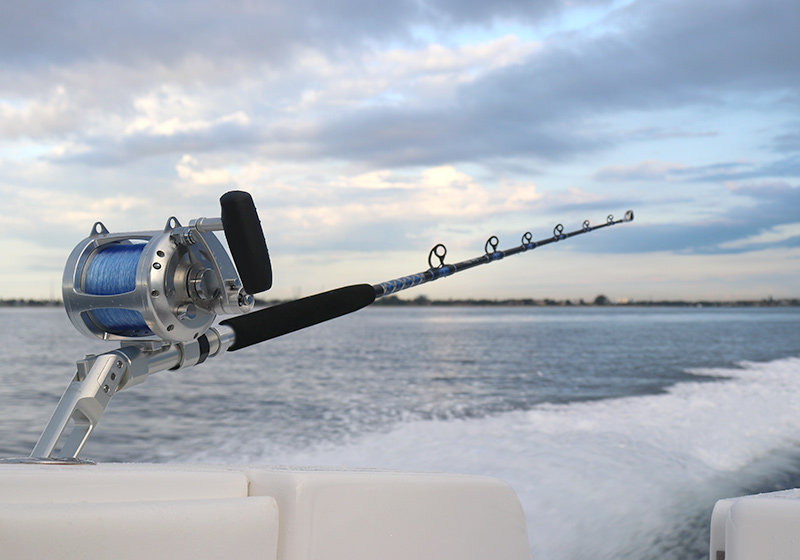
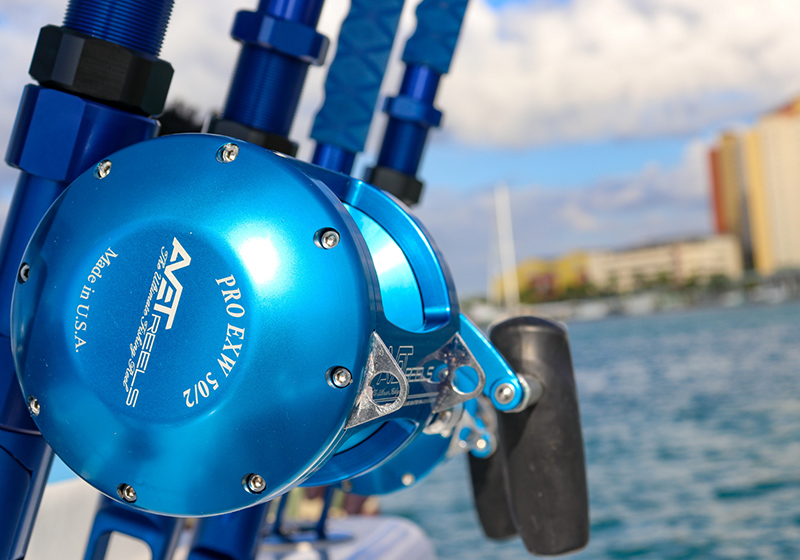
Conventional reels sit on top of the rod, with line coming off a revolving spool.
These combinations are especially popular for trolling, deep dropping, kite fishing, planer fishing, and certain bottom fishing applications.
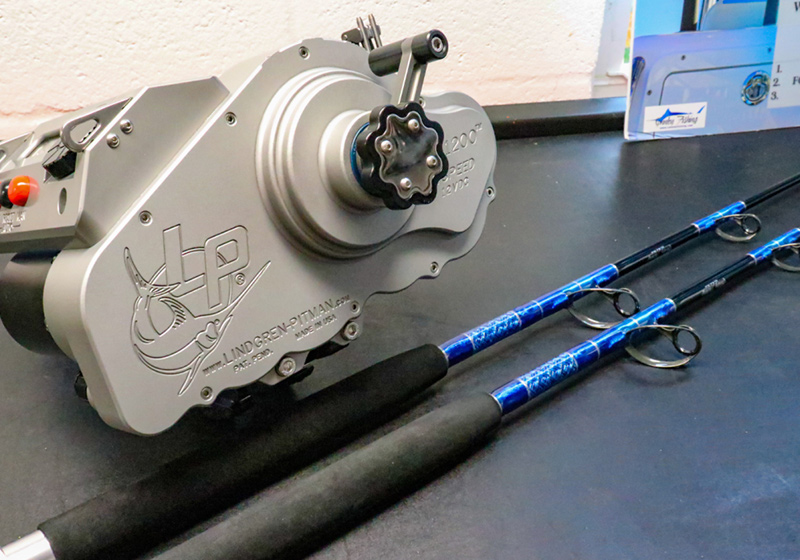
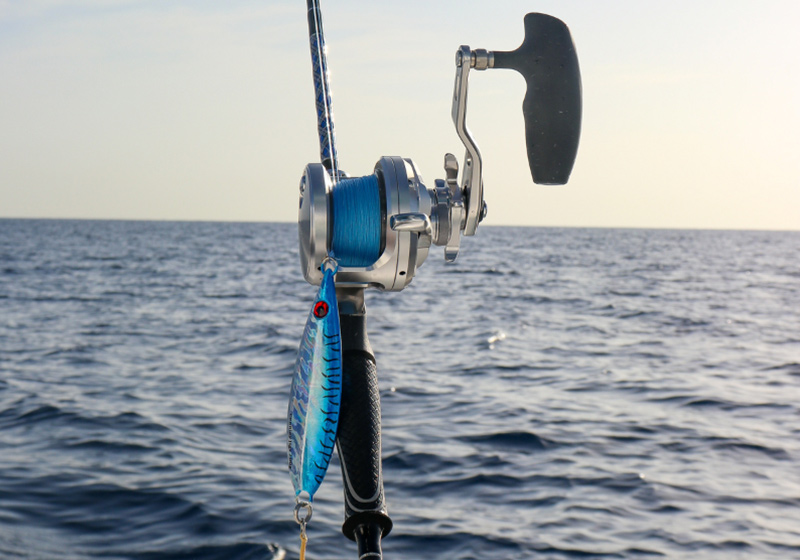
Conventional reels are available in many sizes and configurations, from compact jigging reels to large trolling reels and electric reels.
If you’re still deciding which style makes sense, our guide to spinning vs. conventional rods for offshore fishing explains where each performs best.
The important thing is to decide how you’ll fish before selecting the reel.
Understand Your Fishing Rod's Line Rating
One of the most common questions we hear involves the numbers printed on a fishing rod.
What does 15-40, 20-50, or 30-80 actually mean?
These numbers generally describe a recommended line class, often expressed in pounds of monofilament line. They’re useful for understanding the rod’s intended application, but they don’t tell the entire story.
For example, a 30-80 rod isn’t designed to withstand 80 pounds of drag simply because 80 is the upper number printed on the blank.
That number also doesn’t mean you should attempt to lift an 80-pound fish directly out of the water with the rod.
Rod power, action, construction, and the way the rod is loaded all influence its performance.
Two rods with the same line rating can behave very differently.
That’s why understanding fishing rod power vs. action is just as important as reading the line rating.
What Changes When You're Fishing Braid?
Braided line introduces another consideration because it’s considerably thinner than monofilament of similar breaking strength.
That allows anglers to carry more line on a reel, which can be useful for offshore fishing.
However, the thinner diameter doesn’t mean you can ignore the rod’s limitations.
For example, our Black Magic Power 5 Stand-Up 30-80# 6′ lists suggested line ranges of 30-80# monofilament and 65-100# braid.
Those are separate recommendations for different line types, not an indication that the rod becomes stronger when you spool it with braid.
Your drag settings still need to account for the rod, reel, line, leader, knots, and fishing conditions.
A stronger line doesn’t automatically make the entire combination stronger.
How to Determine the Right Fishing Reel Size
Reel size is important, but we wouldn’t select a reel based on its size number alone.
A 10,000-size spinning reel from one manufacturer doesn’t necessarily have the same line capacity, weight, or dimensions as a 10,000-size reel from another manufacturer.
The same principle applies to conventional reels.
Instead of relying entirely on the model number, look at the reel’s published capacity for the actual line you intend to use.
You also need to consider how much line will be on the spool once you’ve accounted for backing, topshots, and the amount of line required for your fishing technique.
Line Capacity Matters More Than You Think
Imagine you’re deep dropping several hundred feet below the boat.
You need enough line to reach the bottom, account for the effects of current, and still have sufficient reserve.
Now compare that with an angler casting lures to mahi-mahi near the surface.
Both anglers need appropriate line capacity, but their requirements are different.
A reel that barely holds enough line for your intended application leaves little room for changing conditions or a fish making a long run.
On the other hand, choosing a much larger reel than necessary can add weight and make a handheld rod uncomfortable to fish.
We want enough capacity for the job without making the combination unnecessarily bulky.
Real Offshore Rod and Reel Combinations
Here are a few examples from our lineup that show how different applications influence reel selection.
Platinum 700L Spinning 15-40# 7′
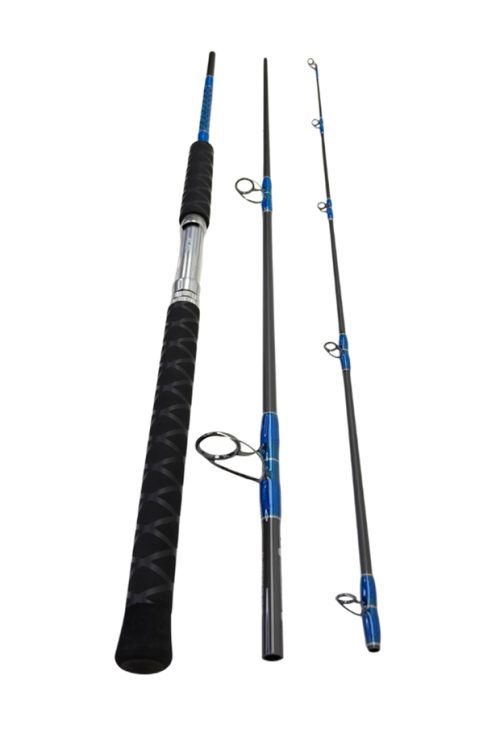
Our Platinum 700L Spinning Rod is designed for mid-sized offshore spinning reels.
Available reel options include the Shimano Saragosa 10,000 and TwinPower 10,000.
It’s a combination we’d consider for pitching baits to mahi-mahi and live bait fishing for sailfish or kingfish.
Platinum 700M Spinning 7′
For anglers looking at larger spinning reels and more demanding offshore applications, our Platinum 700M Spinning Rod offers options that include 14,000-size Shimano Saragosa and TwinPower reels.
The larger reel options reflect the different demands of the intended fishing.
Diamond Kingfish 20-50# 7′
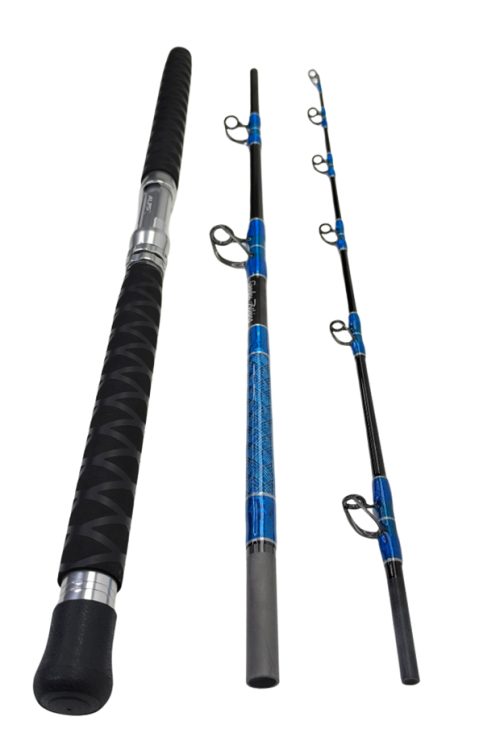
Our Diamond Kingfish Rod is a conventional setup with reel options including the Shimano Talica 16, Shimano Speedmaster 16, Accurate 600 Valiant, and Avet LXG2.
This is a good example of why conventional reel selection isn’t limited to one manufacturer or model.
Platinum 700H Conventional 30-80#
Our Platinum 700H Conventional Rod is designed for demanding offshore applications, including pitching live baits to larger gamefish.
Available reel options include the Shimano Talica 20II and Avet HXW.
One combination we like is a Talica with 80# braid, but the final recommendation still depends on the angler and how the equipment will be used.
These are examples of available configurations, not universal prescriptions. If you already own a suitable reel, you may not need to purchase another one.
Match Your Drag Settings to the Entire Combination
Maximum drag is one of the most misunderstood reel specifications.
Just because a reel can produce a certain amount of drag doesn’t mean you should fish it at that setting.
We care more about how smoothly and consistently the reel performs at the pressure you’re actually going to use.
A commonly referenced starting point is setting strike drag at approximately 25% to one-third of the line’s rated breaking strength. However, that isn’t a universal setting for every rod, reel, or fishing technique.
As explained in Sport Fishing Magazine’s guide to setting reel drag, drag pressure can increase as line leaves the spool because the effective spool diameter becomes smaller.
The fishing application also matters.
Trying to keep a grouper from reaching structure is a different situation from allowing a pelagic fish to make a long run offshore.
We recommend following the reel manufacturer’s guidance and checking drag with a scale rather than guessing by pulling line off the reel by hand.
Most importantly, consider the entire combination.
Your rod, line, leader, knots, and terminal tackle all have limitations. The reel’s maximum drag specification doesn’t override them.
Don't Overlook Balance, Reel Seats, and Butt Configuration
Even when the rod and reel ratings appear compatible, the finished combination still needs to feel right.
A reel should fit securely in the rod’s reel seat without movement or forcing the hardware.
But physical fit is only the beginning.
Think about how you’ll actually handle the equipment.
If you’re casting all day, an unnecessarily heavy reel can make a noticeable difference. The weight and balance of the combination matter because you’re holding and working the rod repeatedly.
For stand-up fishing and trolling, butt configuration becomes another important consideration.
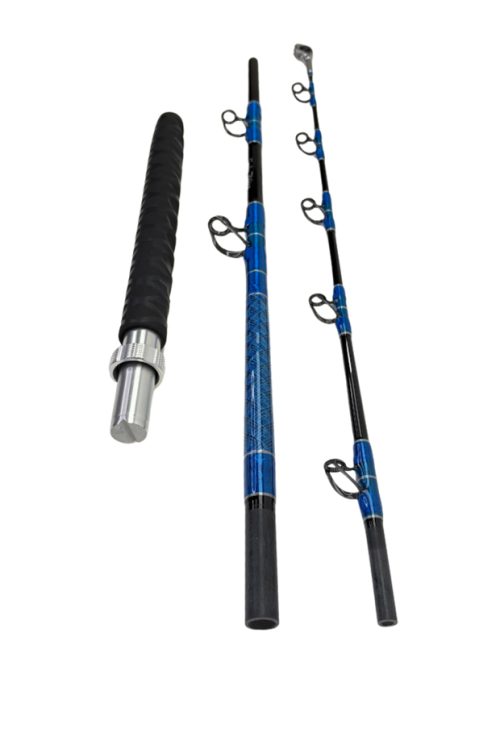
Our Platinum Standup Trolling 6′ is offered in several rod classes and butt configurations, with reel options that include the Shimano Talica 25II and Talica 50II.
We wouldn’t recommend the same configuration for every angler.
How you fight fish, whether the rod spends time in a holder, and the equipment already aboard your boat all influence the decision.
The right combination should work comfortably for the way you fish, not just look good on paper.
Common Mistakes When Matching Fishing Rods and Reels
Buying a Bigger Reel Than You Need
It’s tempting to buy the biggest reel you can afford because you might hook a larger fish someday.
But a bigger reel can add unnecessary weight and throw off the balance of your rod.
It also doesn’t add backbone to the rod itself.
We’d rather recommend a reel with the capacity and performance you actually need than an oversized model that makes the combination less enjoyable to fish.
Confusing Line Rating With Drag Capacity
A rod rated 30-80 doesn’t mean you should fish 80 pounds of drag.
The line rating helps identify the rod’s intended line class. Your drag settings need to account for the entire outfit and the demands of your fishing technique.
Improperly Testing a Rod's Strength
We’ve seen anglers put unnecessary stress on fishing rods by placing the butt on the ground and pulling the tip into an extreme bend.
That’s not an appropriate way to evaluate a rod’s strength.
This type of loading can cause high sticking, which places excessive stress on a relatively small section of the blank.
If you want to check drag, use the proper equipment and procedures. Don’t try to prove how strong your rod is by bending it beyond its intended working angle.
Should You Buy a Rod and Reel Combo or Build Your Own?
This depends on what equipment you already own and how specific your fishing needs are.
When a Rod and Reel Combo Makes Sense
If you’re starting from scratch, a properly matched combo can simplify the purchasing process.
Instead of comparing dozens of rods and reels independently, you can begin with combinations designed around particular fishing applications.
Our rod and reel combos include options for spinning, conventional, trolling, and electric reel applications.
Always review the specific product configuration to understand what’s included.
When Buying Just the Rod Makes Sense
If you already own a quality reel that’s appropriate for your fishing, you may only need a rod that complements it.
We’d want to know the exact reel model, line you plan to use, and intended application before recommending a match.
If you’re shopping for a reel first, you can also explore our reel selection and build the combination from there.
When a Custom Rod Is Worth Considering
A custom build becomes especially useful when you have specific preferences or equipment requirements that aren’t addressed by a standard configuration.
Maybe you want a particular guide arrangement, butt configuration, or a rod designed around a reel you already own.
Or perhaps you’re outfitting an entire boat and want the combinations to work together.
Our custom fishing rods allow us to approach those decisions around the angler’s needs.
For specialized electric reel applications, our guide to deep drop fishing rods also explains why reel size and fishing conditions can justify a dedicated setup.
The Connley Advantage
At Connley Fishing, we don’t believe the best rod and reel combination is necessarily the most expensive or the heaviest setup available.
We want to know what you’re targeting, how you’re fishing, and what equipment you already have.
Sometimes the answer is one of our existing rod and reel combinations. Other times, it makes more sense to match a new rod to a reel you already own.
And when the application calls for something more specific, we can discuss a custom build.
What matters is putting together equipment that works as a complete system.
A great reel on the wrong rod isn’t a great combination. Neither is a premium rod paired with a reel that doesn’t have the capacity or configuration for the job.
We’d rather get those details right from the beginning.
Final Thoughts
Matching a fishing reel to your rod doesn’t need to be complicated, but it does require looking beyond reel size and rod ratings.
Start with how you plan to fish. Make sure you’re pairing the correct reel style with the rod, compare line capacity for the line you’re actually using, and select drag settings appropriate for the entire combination.
Then consider the details that affect how the equipment feels and performs, including weight, balance, reel seat fit, and butt configuration.
If you’re not sure which reel belongs on a particular rod, contact Connley Fishing and tell us what you’re using and how you plan to fish.
We’ll help you narrow down the options, whether that means an existing combination, a rod for your current reel, or a custom build.
You can also explore our selection of offshore fishing rods to compare available configurations.
Frequently Asked Questions
What size reel should I put on a 30-80 rod?
There isn’t one reel size that works for every 30-80 fishing rod. The right match depends on the rod’s design, whether you’re using spinning or conventional equipment, and what you’re targeting. A 30-80 rod used for offshore trolling may call for a different reel than one used for pitching live baits to larger gamefish.
We’d start by looking at the reel’s line capacity, the type and strength of line you plan to use, and how much drag your fishing application requires. Reel size numbers aren’t standardized across manufacturers, so comparing a Shimano reel with an Accurate or Avet based solely on the model number doesn’t tell you enough. The actual specifications matter.
For example, our Platinum 700H Conventional 30-80# is offered with reel options including the Shimano Talica 20II and Avet HXW. Those are useful starting points for that particular rod, but we would still want to know how you intend to fish before recommending a combination.
Can I put a bigger reel on a lighter rod?
You can sometimes use a larger reel on a lighter rod, provided it fits securely and the combination remains practical for the intended application. However, just because the reel fits doesn’t mean it’s the best choice. An oversized reel can add unnecessary weight, affect the rod’s balance, and make the equipment uncomfortable to use, particularly when you’re casting or working a bait throughout the day.
More importantly, a bigger reel doesn’t increase the rod’s power. You might gain additional line capacity or have access to greater drag capability, but the rod still has its original limitations. We’d rather match the reel to what the rod was designed to do than recommend something unnecessarily large simply because it offers higher specifications.
How much drag should I use on my fishing reel?
A commonly used starting point is approximately 25% to one-third of your line’s rated breaking strength. For example, with 30-pound line, that works out to roughly 7.5 to 10 pounds of drag. However, this is only a general starting point, not a universal recommendation for every offshore fishing situation.
The correct setting depends on several factors, including the rod’s capabilities, reel design, line type, leader strength, knots, and the species you’re targeting. When fishing around heavy structure for grouper, you may need a different approach than when fighting a pelagic fish in open water. You also need to remember that drag pressure can increase as line leaves the reel and the effective spool diameter decreases.
We recommend following the reel manufacturer’s instructions and using a drag scale to establish an appropriate setting. Don’t assume that a reel capable of producing 40 pounds of maximum drag should be fished at that pressure. The goal is controlled, consistent pressure that the entire combination can handle safely.
Does a fishing rod's line rating apply to braided line?
Not necessarily. Fishing rod line ratings have traditionally been expressed using monofilament line, but many modern rods also provide separate recommendations for braid. Because braided line has a smaller diameter than monofilament at comparable breaking strengths, anglers can often fit considerably more line onto the same reel.
For example, our Black Magic Power 5 Stand-Up 30-80# lists suggested ranges of 30-80# monofilament and 65-100# braid. That doesn’t mean the rod becomes stronger when you switch to braid. It means the manufacturer provides different line recommendations for the two materials.
One thing we’d emphasize is that braid’s limited stretch changes how pressure is transmitted through the setup. Your rod, drag settings, leader, and knots all need to work together. Always follow the specifications for your particular rod rather than assuming that using heavier braid allows you to apply more drag.
Can I use a spinning reel on a conventional rod?
We don’t recommend it. Spinning and conventional fishing rods are designed with different reel positions and guide configurations. A spinning reel hangs underneath the rod and releases line in coils, while a conventional reel sits on top and feeds line from a revolving spool. Those differences influence how the rod is built and how line travels through its guides.
Even if you can physically attach a spinning reel to a conventional rod, the combination may experience poor line management, reduced casting performance, or other problems. For the best results, use a spinning reel with a properly designed spinning rod and a conventional reel with a conventional rod.
Is it better to buy a rod and reel combo or purchase them separately?
Both approaches make sense, depending on what equipment you already own and how specific your fishing needs are.
If you’re starting fresh, a properly matched rod and reel combo can simplify the process. You don’t have to spend as much time comparing reel sizes, rod ratings, and compatibility because the available combinations give you a starting point. This can be particularly helpful when outfitting a boat with several different setups for trolling, casting, and bottom fishing.
On the other hand, buying separately makes more sense when you already own a quality reel or want a particular configuration. At Connley Fishing, we can help you select a rod that complements your existing equipment or discuss a custom build when your fishing calls for something more specialized. The goal isn’t necessarily to buy everything new. It’s to make sure the rod and reel work together for the way you fish.