
Mention tuna fishing and many anglers immediately picture enormous conventional reels, roller guides, extremely heavy rods, and tackle designed to battle giant fish for hours.
That’s not the setup we’d choose for blackfin tuna in South Florida.
Blackfin are incredibly strong fish for their size, but targeting them doesn’t require the same equipment you’d bring to fight a giant yellowfin. In fact, going unnecessarily heavy can leave you fishing a cumbersome setup that isn’t well matched to the technique.
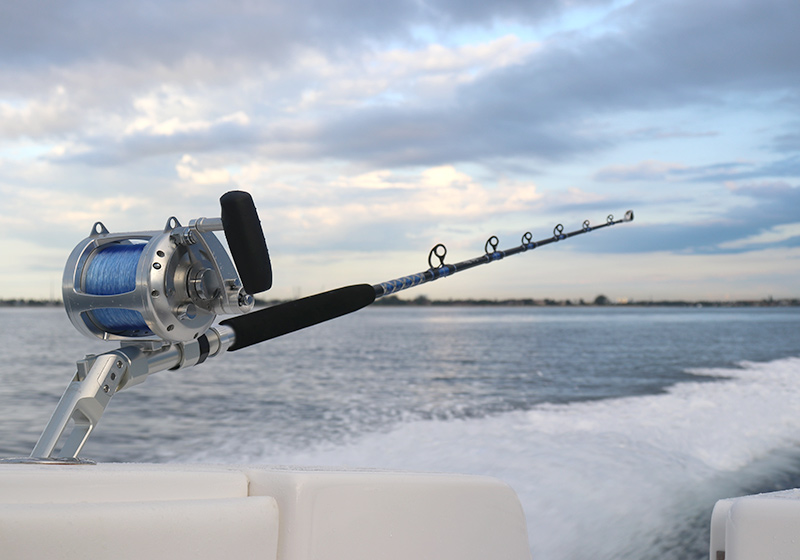
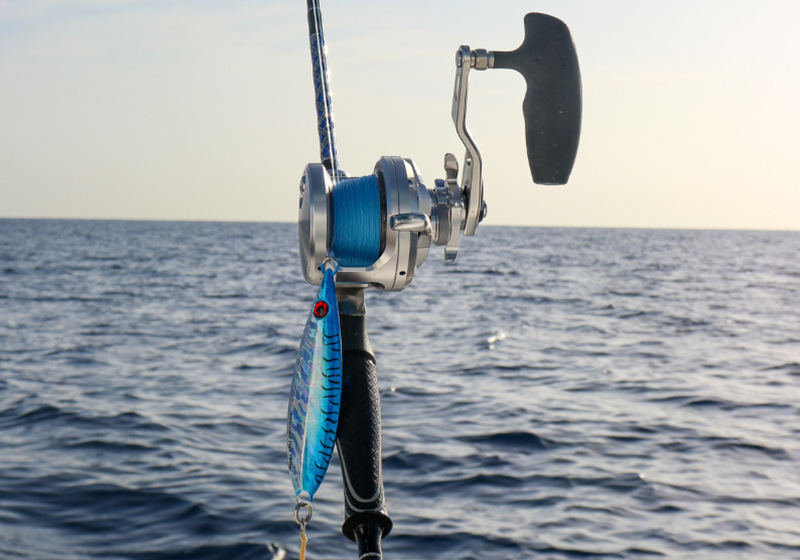
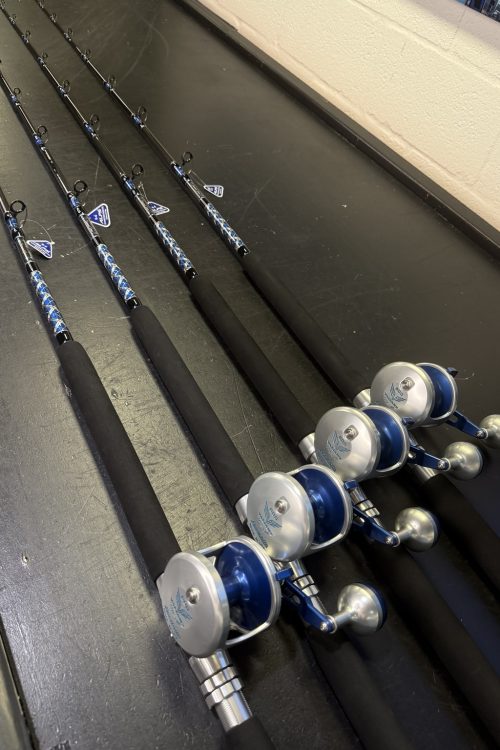
For the way we commonly target blackfin around South Florida, our go-to rod is the 7′ Platinum 700L Conventional.
It’s powerful enough to handle these hard-fighting tuna, but it still provides the action and versatility we want from an offshore rod.
More importantly, the rod matches the way we’re actually fishing.
That’s where choosing the best rod for blackfin tuna should begin.
How We Target Blackfin Tuna in South Florida
One of the most effective ways to target blackfin locally is dropping live bait deep in the water column.
Blackfin have excellent eyesight.
That makes presentation extremely important.
We commonly fish a heavy lead attached with a rubber band so the bait can be sent deep while keeping the weight separated from the fish when necessary.
The objective is to get the live bait down into the zone without creating an unnecessarily obvious presentation.
Blackfin can also be caught while:
- Drifting live bait.
- Trolling offshore.
- Fishing for other pelagic species.
- Working productive water where tuna have recently shown up.
That last point matters because anglers don’t always specifically set out to catch blackfin.
Plenty are caught while fishing for something else.
But when we’re deliberately targeting them with live bait down deep, conventional tackle is our preferred approach.
Why You Don't Need a Giant Tuna Rod for Blackfin
One of the biggest mistakes anglers make when shopping for tuna tackle is treating every tuna species the same.
They aren’t.
Someone hears the word “tuna” and immediately assumes they need:
- A massive conventional reel.
- 50- or 80-class tackle.
- Roller guides.
- An extremely heavy rod.
- The type of setup associated with giant yellowfin or other much larger tuna.
That’s unnecessary for the blackfin fishing we do.
If you’re targeting giant yellowfin, that’s a different conversation.
Even smaller yellowfin don’t automatically require the enormous equipment some anglers associate with tuna fishing.
For blackfin, we’d much rather have a properly matched 7-foot conventional setup that gives us enough power while remaining comfortable and versatile.
This is why buying deep sea fishing rods based solely on the species name printed on a product description can lead you in the wrong direction.
Match the equipment to the actual fish and technique.
Not the reputation of the broader fish family.
Why Conventional Tackle Works So Well for Blackfin
For our preferred live-bait technique, conventional tackle makes sense.
We’re dropping a bait deep with weight rather than relying primarily on casting. A conventional reel gives us excellent line control and works naturally with this style of fishing.
That doesn’t mean spinning rods can’t catch blackfin.
They absolutely can.
Blackfin are regularly caught on spinning equipment while anglers are drifting live bait, and plenty of those catches happen when the fisherman wasn’t specifically targeting tuna at all.
But if someone came into our shop and told us they were building a dedicated setup specifically to target South Florida blackfin using the technique we prefer, we’d point them toward a conventional rod.
Choose Conventional Tackle When:
- You’re specifically targeting blackfin.
- You’re dropping live bait deep.
- You’re fishing a weighted presentation.
- You want excellent line control.
- You’re building a dedicated blackfin setup.
Spinning Tackle Can Work When:
- You’re already drifting live bait.
- You’re casting to visible fish.
- Blackfin appear while targeting another species.
- You’re using an existing offshore spinning setup.
Both can catch the fish.
But for the way we deliberately target blackfin, conventional is our first choice.
What Line Class Should You Use for Blackfin Tuna?
For this setup, we recommend 30-pound monofilament.
Again, that’s considerably lighter than some anglers expect when they hear the word tuna.
But that’s the point.
You don’t need to overpower the entire setup simply because blackfin fight hard.
A properly matched rod, reel, drag system, and line allow the equipment to work together throughout the fight.
Going unnecessarily heavy can make the setup less enjoyable to fish without providing a meaningful advantage.
The objective isn’t to prove how much tackle you can bring offshore.
It’s to use enough tackle to catch the fish effectively.
Why the Platinum 700L Keeps Showing Up in Our Offshore Setups
If you’ve read some of our other rod guides, you’ve probably noticed the Platinum 700L Conventional appearing more than once.
There’s a reason.
It’s an extremely versatile rod.
The same characteristics that make it useful for blackfin also allow it to perform well for species including:
- Kingfish.
- Sailfish.
- Mutton snapper.
- Other offshore bottom fish.
That doesn’t mean every species should always be fished identically.
It means a properly designed all-purpose offshore rod can cross over between several techniques without becoming a compromise everywhere.
For someone building an offshore fishing rod collection gradually, that’s valuable.
Instead of filling the boat immediately with highly specialized rods, you can begin with quality multipurpose equipment and add technique-specific rods as your fishing evolves.
Is a Mahi Rod Good for Blackfin Tuna?
Not necessarily.
This question becomes difficult because there isn’t one universal “mahi setup.”
An angler may use a light spinning rod for pitching live baits to mahi. Another may be pulling trolling baits with a conventional setup. Both could reasonably say they own a mahi rod.
If your mahi setup consists primarily of spinning rods used for pitching baits or lighter trolling equipment, we’d add a dedicated conventional outfit for blackfin.
Our recommendation would be a 7-foot conventional rod in roughly the 15-50 class, such as the Platinum 700L Conventional.
That’s a substantially different tool from the lighter spinning equipment many anglers reach for when actively targeting mahi.
Rather than asking whether one rod can technically catch both fish, ask whether the rod is optimized for the technique you’re planning to use.
That’s a much better way to build an offshore arsenal.
Blackfin Tuna vs. Kingfish Rods
Blackfin and kingfish are a different story.
You can use very similar rods for both.
The 700L Conventional fits naturally into either style of fishing, which is another reason it makes so much sense as an all-purpose South Florida offshore rod.
Mahi fishing tends to create a greater separation because the equipment and techniques can be very different, particularly when you’re pitching baits on spinning gear.
This is exactly why we prefer building an offshore rod collection around applications rather than simply buying one rod for every species.
When two species require similar equipment, let the rod work for both.
When the technique changes significantly, add another tool.
When to Step Up to the Platinum 700M Conventional
The 700L is our first blackfin recommendation, but anglers wanting additional power can consider the Platinum 700M Conventional.
The decision should be based on the rest of your fishing, not fear that a blackfin automatically requires a heavier rod.
Consider the 700M when:
- You regularly fish heavier offshore applications.
- You want additional backbone from the rod.
- The setup will serve double duty for heavier bottom fishing.
- Your typical fishing extends beyond blackfin into larger or more demanding applications.
If blackfin are the primary target, we’d start with the 700L.
If you’re trying to build a setup that overlaps with heavier fishing, the 700M may give you the additional range you’re looking for.
Pay Attention When the Blackfin Show Up
Blackfin fishing around South Florida can turn on quickly.
One of the best pieces of advice we can give is to pay attention to what the local captains are catching.
When reports start coming in consistently that blackfin are around, don’t assume you’ve got months to get ready.
When these fish show up locally, they can arrive thick, and the bite may stay productive for the next two or three weeks.
That’s your window.
Get the boat ready.
Make sure the rods are rigged.
Have your live-bait setup prepared.
And go fishing while the opportunity is there.
Knowing when to fish can be every bit as important as knowing which rod to bring.
The Blackfin Tuna Setup We'd Build
If someone came into our shop specifically looking to build a South Florida blackfin setup, we’d keep it straightforward.
Our starting point would be:
- Rod: 7′ Platinum 700L Conventional
- Line: 30-pound monofilament
- Technique: Dropping live bait deep
- Presentation: Heavy lead attached with a rubber band
- Primary target: Blackfin tuna
The 700L gives us the combination we’re looking for: enough power to fight a blackfin effectively without turning the setup into something unnecessarily heavy.
That’s important because the rod is only one part of the equation.
The way you present the bait matters tremendously with blackfin. These fish have excellent eyesight, so we’re trying to get the live bait into the strike zone while keeping the heavy lead away from the fish.
You can own an incredible tuna rod and still struggle if the presentation isn’t right.
Common Mistakes When Choosing a Blackfin Tuna Rod
The biggest mistake we see is pretty simple: anglers hear “tuna” and immediately go too heavy.
Blackfin are powerful fish, but that doesn’t mean you need to approach them with equipment designed for giant yellowfin.
Some common mistakes include:
- Buying an oversized 50- or 80-class setup.
- Assuming roller guides are necessary.
- Choosing an extremely stiff rod simply because tuna are strong.
- Using equipment designed for much larger tuna species.
- Ignoring how the fish will actually be targeted.
- Buying a specialized tuna setup when a versatile conventional rod would perform better for their overall fishing.
- Confusing the equipment used for mahi with a dedicated blackfin setup.
The last point comes up often because many South Florida anglers already own rods they consider their “offshore rods.”
But offshore fishing rods aren’t interchangeable simply because they’re used beyond the inlet.
A spinning rod used to pitch live baits to mahi and a conventional rod used to send a weighted bait down to blackfin perform very different jobs.
Start with the technique.
Then choose the rod.
Don't Confuse Blackfin With Giant Yellowfin
This distinction deserves its own section because the word “tuna” covers fish that place dramatically different demands on tackle.
Giant yellowfin are a different animal.
If you’re deliberately targeting truly large yellowfin, then heavier tackle, larger reels, and specialized equipment can absolutely become necessary.
But applying that same logic automatically to blackfin leads to overkill.
For South Florida blackfin, we want a setup that gives us:
- Sufficient power.
- Good fish control.
- Appropriate line capacity.
- A rod that works with the fish during the fight.
- Equipment that’s comfortable to fish.
- Versatility for other offshore applications.
The objective is not to own the biggest tuna rod.
The objective is to own the right tuna rod.
The Connley Advantage
If you walked into our shop and told us you wanted to specifically target blackfin tuna in South Florida, we’d tell you not to let the word “tuna” convince you that you need a massive setup.
Our first recommendation would be the 7′ Platinum 700L Conventional with 30-pound mono.
For the way we commonly target blackfin, we’d drop a live bait deep using a heavy lead attached with a rubber band. Blackfin have excellent eyesight, so presentation matters. We want the bait down where the fish are without leaving that heavy lead right next to it.
We’d also tell you to pay attention to what’s happening locally.
When the captains start consistently reporting blackfin, get ready to fish. When these fish show up around South Florida, they can be here thick for two or three weeks. That’s when you want your boat fueled, your live bait ready, and your tackle already rigged.
Don’t wait until everyone stops talking about them to decide it’s time to go tuna fishing.
Final Thoughts
The best rod for blackfin tuna isn’t the biggest tuna rod you can fit into a rod holder.
For the way we target blackfin around South Florida, our first choice is the 7′ Platinum 700L Conventional.
It gives us enough power for these hard-fighting fish while maintaining the action, length, and versatility we want from a quality offshore conventional rod.
Pair the setup with 30-pound monofilament and match your presentation to the fish.
If you’re dropping live bait deep, think about what the blackfin sees. Keep the presentation clean, get the bait into the right part of the water column, and don’t assume heavier tackle automatically gives you an advantage.
If your offshore fishing extends into heavier applications and you want additional backbone, the Platinum 700M Conventional gives you another option.
But don’t buy it because you’re afraid the 700L isn’t a “tuna rod.”
Buy it because your overall fishing actually calls for more power.
That’s the distinction we want anglers to understand.
Choose offshore fishing rods according to the fish, technique, depth, and application. Don’t choose them based on assumptions created by a species name.
Blackfin tuna fight hard.
Bring enough rod to win the fight, but don’t bring twice as much rod as you need.
Frequently Asked Questions
What is the best rod for blackfin tuna?
For the way we commonly target blackfin tuna in South Florida, our first recommendation is the 7′ Platinum 700L Conventional. It provides enough backbone to handle a hard-fighting blackfin while maintaining the responsive action and versatility we want from an all-purpose offshore rod.
Blackfin don’t require the extremely heavy tackle associated with giant yellowfin tuna. A properly matched conventional setup allows anglers to fight these fish effectively without carrying unnecessary weight and stiffness. If your fishing also includes heavier offshore or bottom-fishing applications and you want additional power, the Platinum 700M Conventional is another option, but we’d start with the 700L for a dedicated blackfin setup.
Do I need a heavy tuna rod for blackfin?
No. One of the biggest misconceptions about blackfin fishing is that the word “tuna” automatically means you need 50- or 80-class equipment, large reels, roller guides, and extremely heavy deep sea fishing rods.
That type of equipment has a place when targeting giant tuna, but it isn’t necessary for the blackfin fishing we commonly do around South Florida. A 7-foot conventional rod with sufficient backbone gives you the control needed without overpowering the setup. Using appropriately matched equipment also makes the fight more enjoyable and gives you a rod that remains useful for several other offshore applications.
What line should I use for blackfin tuna?
For our preferred South Florida blackfin setup, we recommend 30-pound monofilament. It provides an effective balance for the fish and technique without unnecessarily overbuilding the outfit.
The important thing is to think of your equipment as a complete system. Your rod, reel, line, drag, leader, hooks, and bait presentation all need to work together. Simply increasing line strength doesn’t automatically improve your chances of catching fish. Blackfin have excellent eyesight, so presentation matters. Using appropriately matched tackle helps you maintain the balance between strength and a natural presentation.
Is spinning or conventional tackle better for blackfin tuna?
For deliberately targeting blackfin using the technique we prefer, conventional tackle gets our vote. We’re commonly dropping live bait deep with weight, and a conventional setup provides excellent line control for that presentation.
That doesn’t mean you can’t catch blackfin on spinning gear. Plenty are caught on offshore spinning rods while anglers drift live bait or target other species. If blackfin suddenly appear while you’re already fishing a spinning setup, there’s no reason you can’t catch one. But if you’re walking into the shop specifically asking us to build a blackfin outfit, we’d start with a conventional rod such as the Platinum 700L.
Can I use my mahi rod for blackfin tuna?
Maybe, but it depends entirely on what you call your mahi rod.
Many anglers use lighter spinning rods to pitch live baits to mahi. Others use conventional trolling outfits. Those are very different setups even though both may spend their lives targeting mahi.
If your mahi setup consists primarily of lighter spinning gear, we’d add a dedicated conventional rod for blackfin. A 7-foot conventional rod in roughly the 15-50 class, such as the Platinum 700L Conventional, gives you a very different tool for dropping weighted live baits. Rather than asking whether one rod can technically land both species, think about whether it’s designed for the technique you’re actually using.
Can I use the same rod for blackfin tuna and kingfish?
Yes. Blackfin and kingfish are two species where there can be substantial crossover in rod selection. A versatile conventional rod such as the Platinum 700L can perform very well for both.
That’s one reason we don’t believe every species automatically requires a dedicated rod. If two types of fishing place similar demands on your equipment, a quality multipurpose rod can handle both jobs. We’d rather see an angler invest in fewer high-quality offshore fishing rods that match several real applications than fill the boat with inexpensive rods that each supposedly target one species.
When is the best time to target blackfin tuna in South Florida?
Rather than focusing only on a date on the calendar, pay close attention to what’s happening on the water. When local captains begin consistently reporting blackfin catches, that’s a strong signal that it’s time to get your equipment ready.
When blackfin move through South Florida waters, they can show up in significant numbers and provide excellent fishing for the next two or three weeks. That’s why current local fishing activity matters. Have your conventional setup rigged, make sure you’re ready to secure quality live bait, and take advantage of the bite while the fish are around instead of assuming the opportunity will last indefinitely.