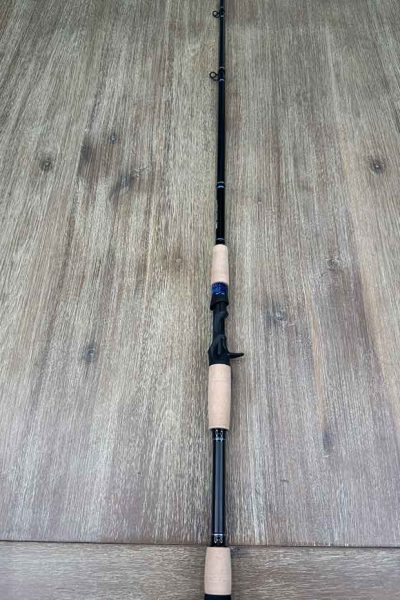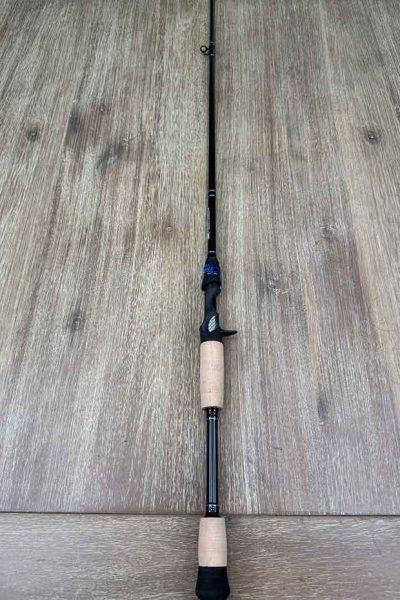

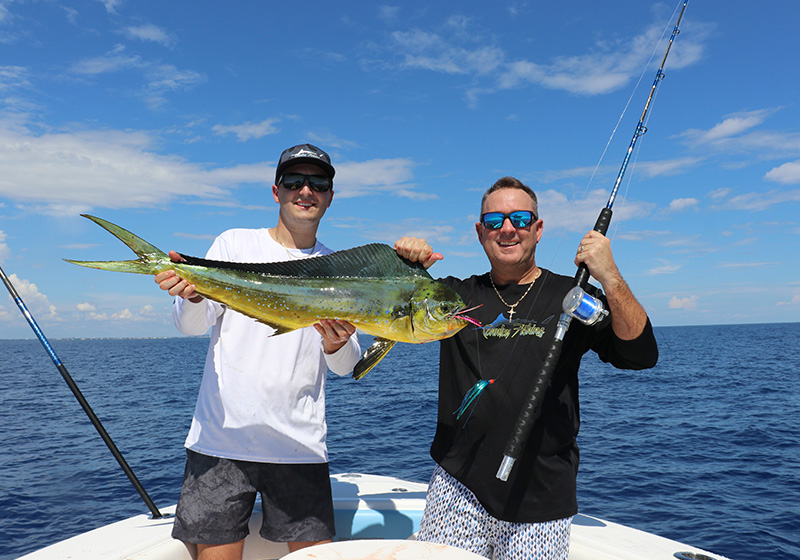
Ask ten offshore anglers what the best rod for mahi fishing is and you’re likely to get ten different answers.
That’s because there isn’t one perfect setup.
Successful mahi fishing is all about being prepared for how the fish behave once you find them. One minute you’re trolling weed lines looking for a bite. The next, an entire school of dolphin is swimming behind the boat, and everyone is scrambling to get a bait in the water.
The anglers who consistently fill the cooler aren’t necessarily using the most expensive equipment. They’re using the right equipment, already rigged, and ready before the action starts.
At Connley Fishing, we don’t recommend building your mahi setup around a single rod. We recommend building a complete spread that allows you to troll efficiently, react quickly, and capitalize on every opportunity once a school appears.
In this guide, we’ll explain how experienced South Florida anglers approach mahi fishing, which rods we recommend for each technique, and the mistakes that often cost anglers their best chance at a limit.
Why There Isn't One 'Best' Mahi Rod
One of the biggest misconceptions in offshore fishing is that one rod can do everything.
The reality is that mahi are caught using several different techniques throughout the same trip. The rod that’s perfect for trolling isn’t necessarily the rod you’ll want in your hands once a school is following the boat.
Experienced anglers don’t ask:
“What’s the best mahi rod?”
Instead, they ask:
“What rods should already be rigged when the mahi show up?”
That small shift in thinking makes a tremendous difference.
A complete mahi setup allows you to:
- Cover water efficiently while trolling.
- Transition instantly from trolling to pitching live bait.
- Keep multiple anglers fishing during a hot bite.
- Spend more time catching fish instead of changing hooks or tying leaders.
- Stay prepared for both schoolie mahi and larger bull dolphin.
Thinking beyond a single rod gives you the flexibility to adapt to whatever the day brings.
How Experienced South Florida Anglers Catch Mahi
Although mahi can be caught using several techniques, most successful trips in South Florida revolve around two proven methods.
The first is trolling.
Crews spend their time covering water while looking for signs of life such as weed lines, floating debris, birds, bait, and current edges.
Once the first fish is hooked, everything changes.
Rather than simply landing that fish, experienced anglers immediately begin pitching live bait to the followers swimming behind it. This is where some of the fastest and most exciting fishing of the entire season takes place.
The best crews understand that finding the fish is only half the battle. What happens during the next few minutes determines whether you catch one mahi or an entire school.
Signs You're Fishing Productive Mahi Water
While there’s never a guarantee offshore, we always pay close attention to areas that show signs of life, including:
- Long, well-defined weed lines
- Floating debris or logs
- Color changes in the water
- Current edges
- Diving birds
- Flying fish
- Surface bait activity
One piece of advice we regularly share with customers fishing South Florida is not to stop at every small patch of floating grass during the run offshore.
Yes, mahi can certainly be caught in shallower water.
However, we generally prefer continuing offshore before slowing down to fish. Once we’re in 500 feet of water or deeper, the odds of finding quality schools often improve significantly.
That simple adjustment can make a huge difference over the course of a season.
Technique #1: Trolling Weed Lines and Current Edges
Before you can pitch baits to a school of mahi, you first have to find them.
That’s where trolling shines.
A properly spread trolling pattern allows anglers to cover large areas of water while presenting multiple baits at different distances behind the boat.
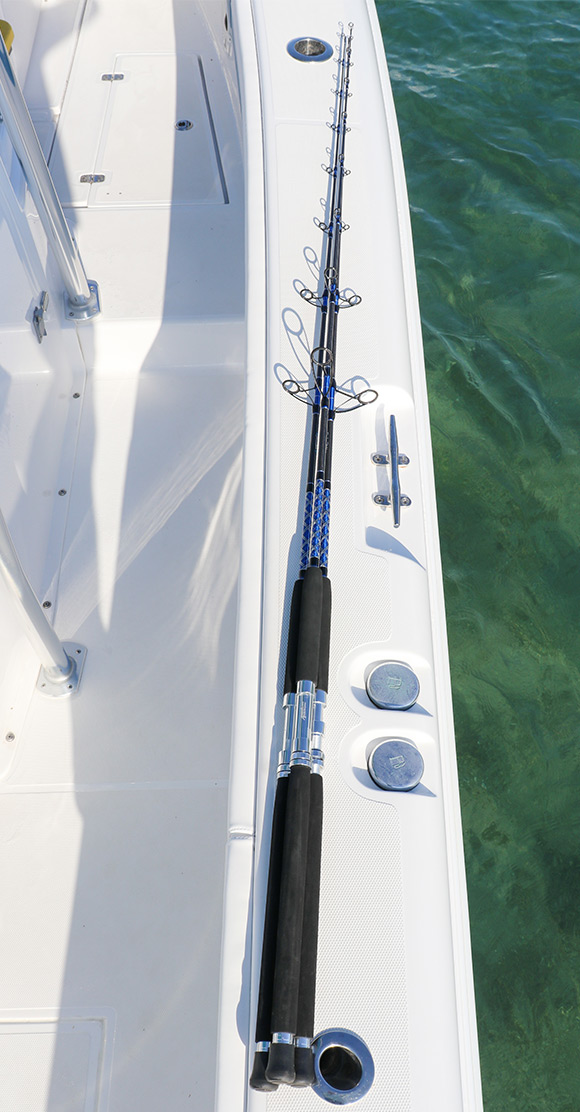
For most South Florida trips, we recommend fishing at least four trolling rods.
This gives your crew enough coverage to locate fish while maintaining a manageable spread that can be cleared quickly after a hookup.
Why a 20 to 50 Trolling Rod Is Our Go-To Recommendation
For anglers fishing South Florida, a dedicated 20 to 50 class trolling rod is difficult to beat.
It offers an excellent balance of:
- Lifting power.
- Comfortable fish-fighting performance.
- Versatility for average-sized mahi.
- Plenty of strength for mixed offshore species.
If you’re fishing destinations known for consistently larger bull mahi, such as the Bahamas, stepping up to a 30 to 80 class trolling rod can provide additional power when needed.
The key is matching your tackle to the fish you’re most likely to encounter instead of automatically choosing the heaviest equipment available.
Remember, your trolling rods have one primary job.
Find the fish.
Once one rod bends over, it’s time for the next phase of the trip.
Technique #2: Pitching Live Bait to a School
This is where experienced mahi anglers separate themselves from everyone else.
Picture this.
You’re trolling a clean weed line when one of the rods suddenly folds over.
As the fish gets closer to the boat, you notice several more mahi swimming right behind it.
Most anglers immediately focus on landing that first fish.
Experienced crews do the exact opposite.
While one angler keeps steady pressure on the hooked mahi, everyone else is already grabbing dedicated pitch rods.
Live bait immediately goes into the water.
The followers eat.
Another rod bends.
Then another.
The goal isn’t simply catching the first mahi.
The goal is keeping the entire school interested for as long as possible.
Everything happens incredibly fast.
That’s why preparation is far more important than rod power.
If you’re still searching for hooks, tying leaders, or rigging another rod while the school is swimming behind the boat, you’ve already lost valuable opportunities.
The crews that consistently limit out already have every pitch rod rigged, baited, and ready before the first trolling rod ever gets bit.
The Best Pitch Rods for Mahi Fishing
Once a school of mahi is behind the boat, your trolling rods have done their job.
Now it’s time for your pitch rods to take over.
This is where preparation separates experienced offshore crews from everyone else.
At Connley Fishing, we recommend having multiple pitch rods rigged before the first trolling rod ever gets bit. Every second counts during a mahi frenzy, and stopping to tie a hook or rig another bait can cost you several fish.
7' Diamond Series Sniper Spinning Rod
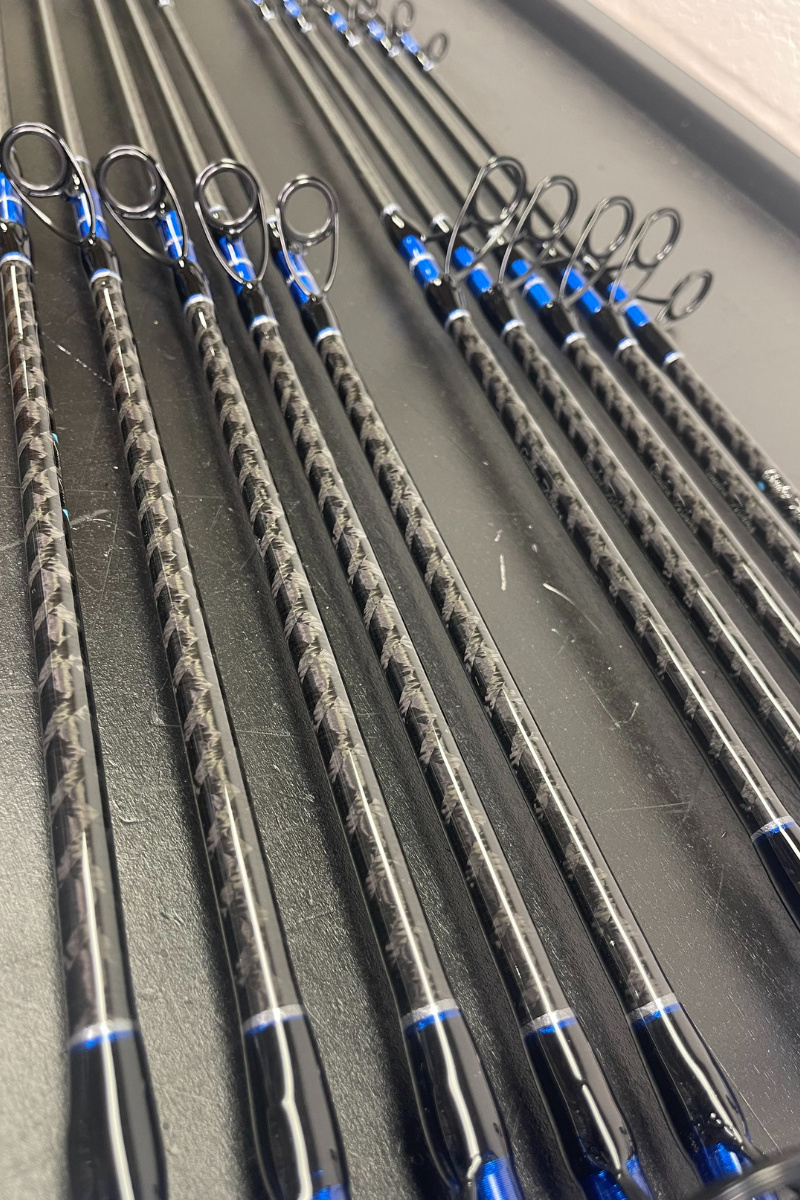
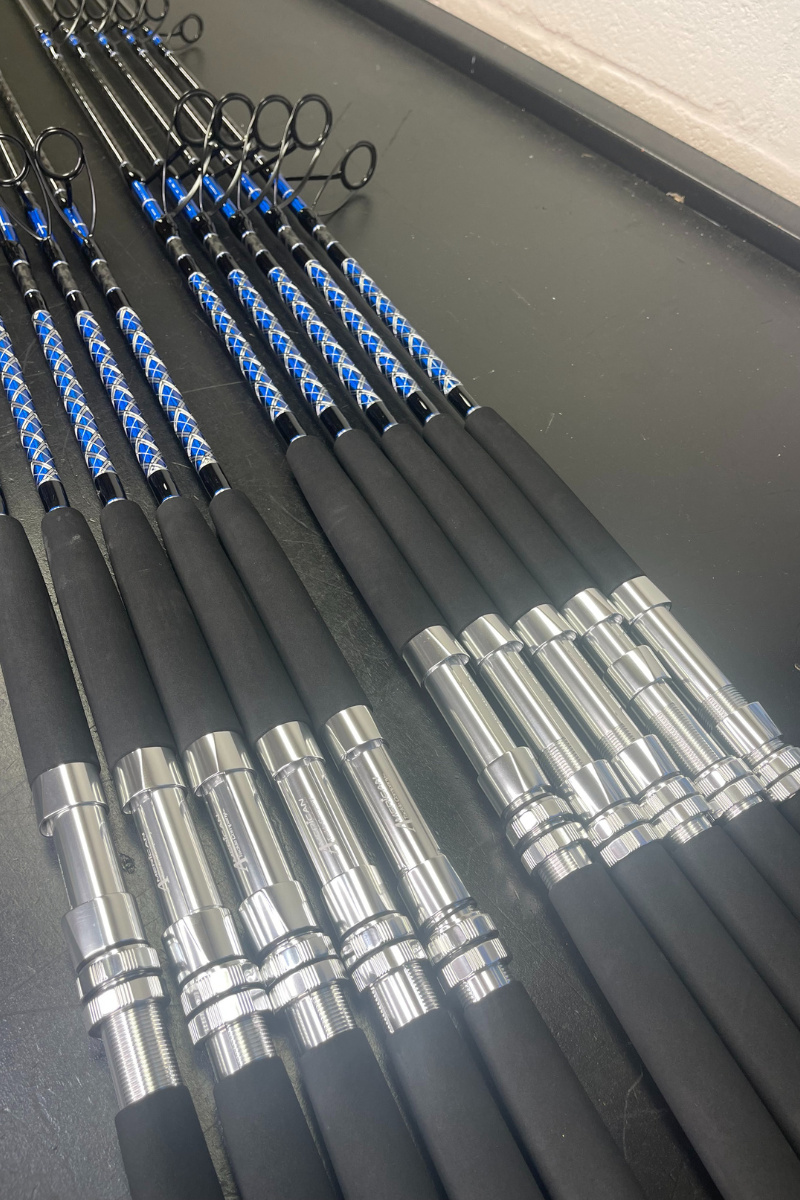
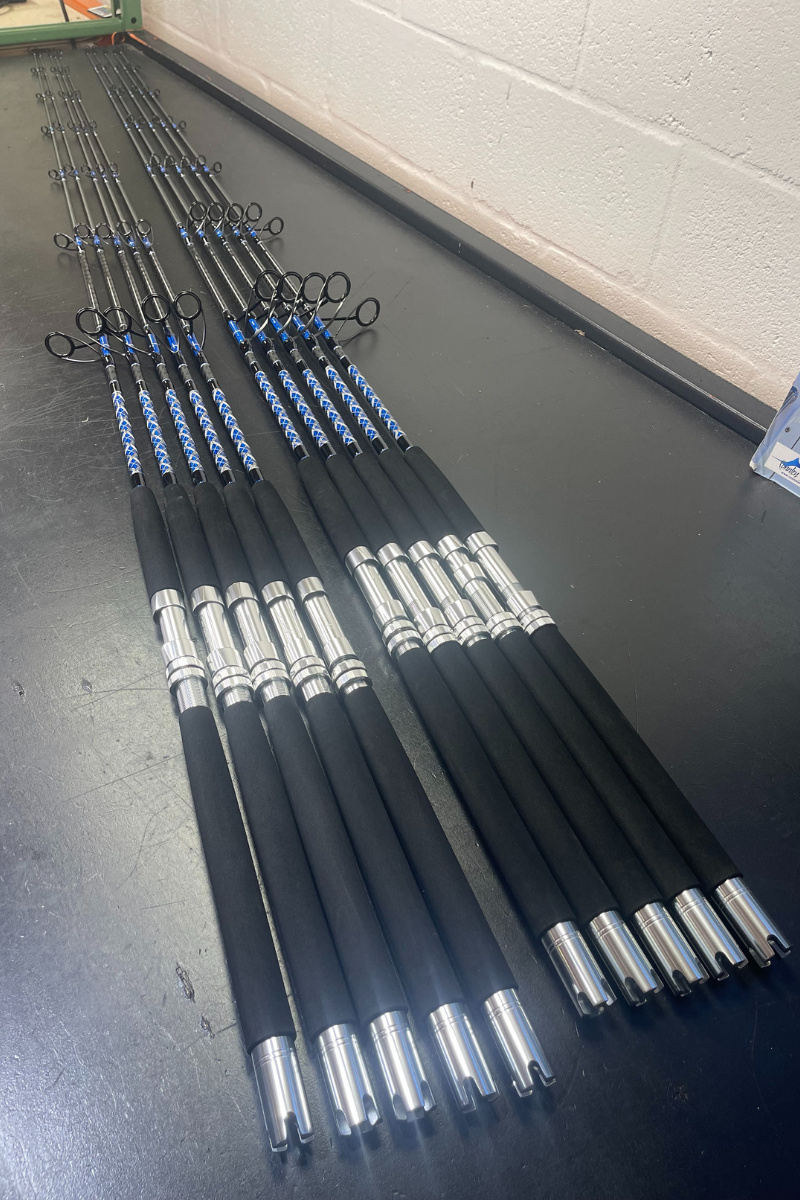
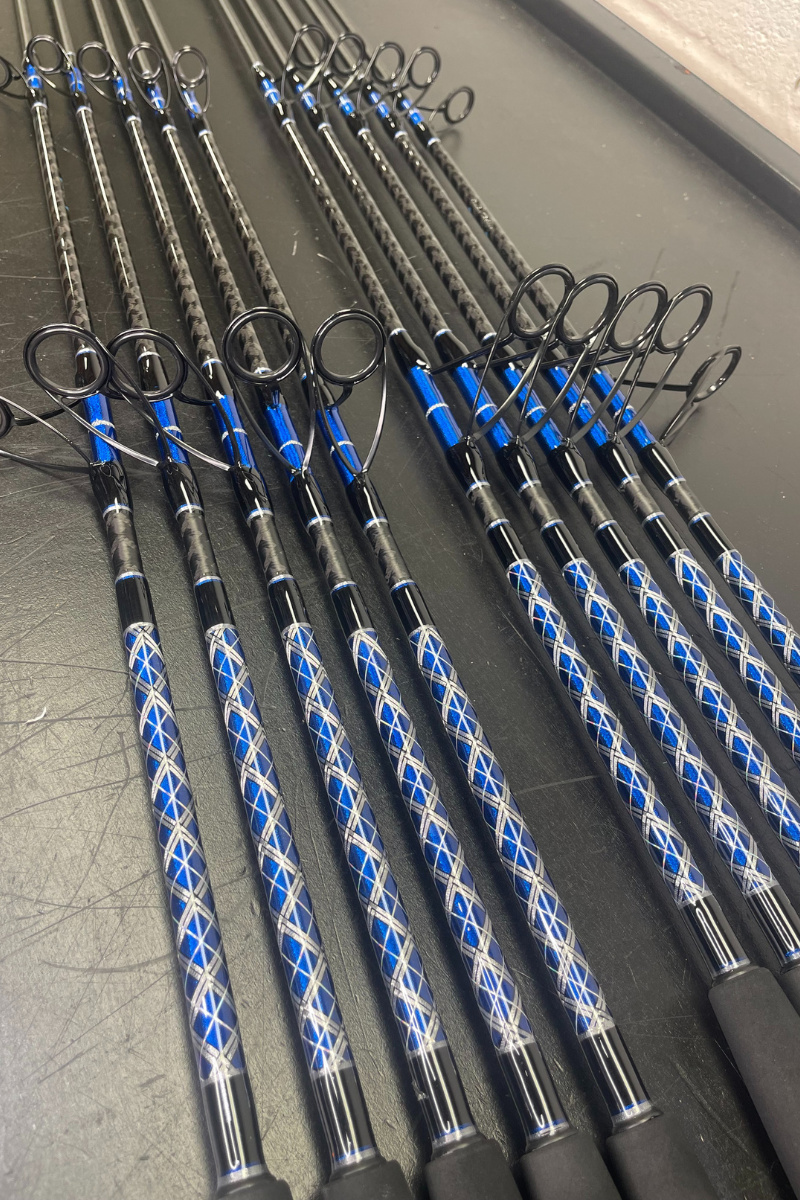
The 7′ Diamond Series Sniper is one of our favorite dedicated pitch rods for mahi.
Its lightweight design makes it easy to cast live bait accurately while providing the backbone needed to handle larger dolphin when they show up.
This rod excels when pitching:
- Pilchards
- Goggle-eye
- Threadfin herring
- Squid
If your primary goal is building a dedicated South Florida mahi setup, this is one of the first rods we’d recommend.
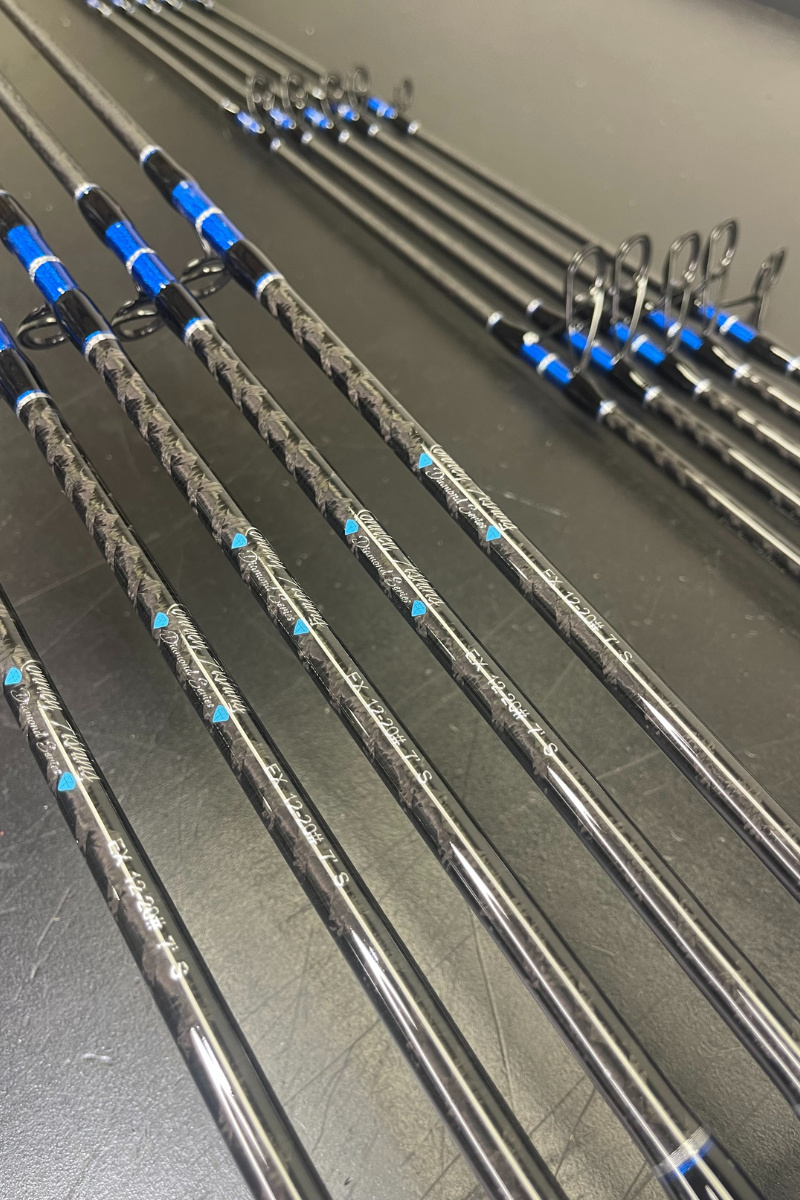
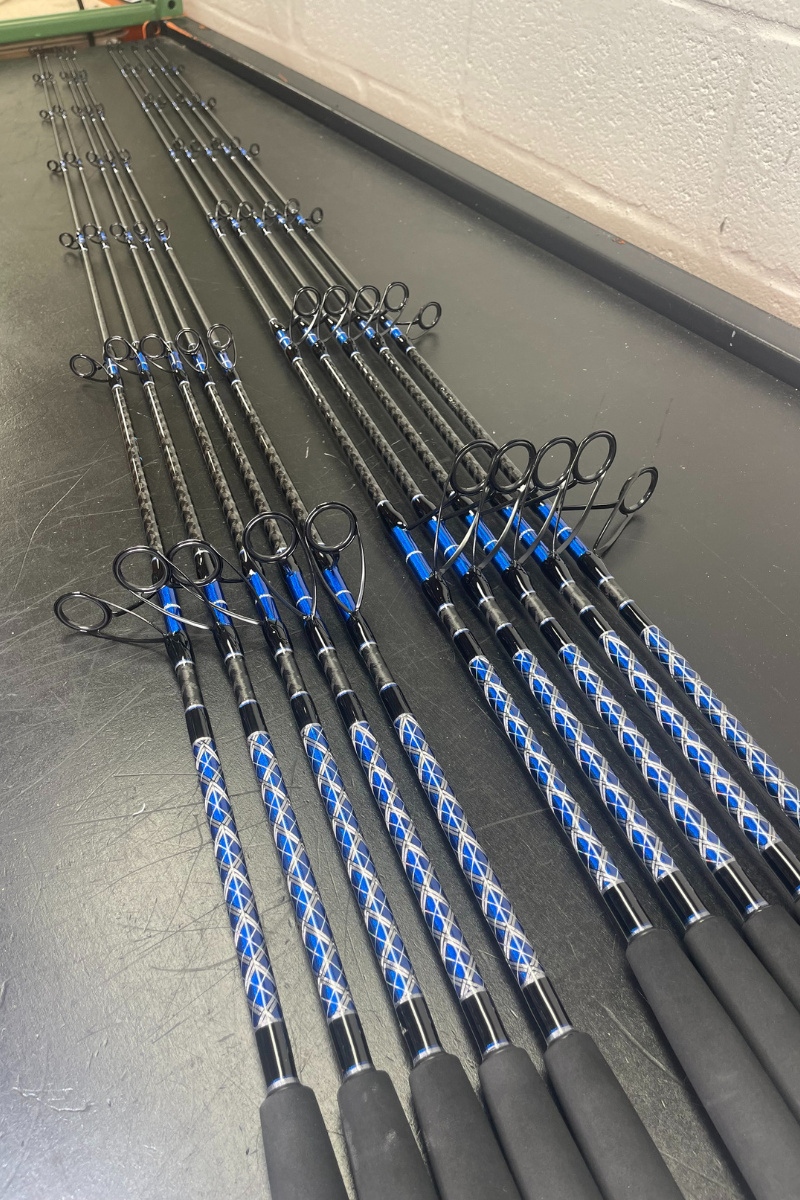
Diamond Sniper Spin 7′
$400.00 – $735.00Price range: $400.00 through $735.004% OFF
We are super excited to introduce the new SNIPER spinning rods to our lineup!
We have two power options to cover everything you'll come across. These new rods are the perfect 'in-between' rods that fill a nice gap that we desperately need. They fall right in the middle...slightly stiffer than our light inshore cork series rods, and not anywhere near as big and bulky as our heavy-duty fiberglass offshore spinning rods. The #12-20 is great for tossing lures for Snook/Tarpon. I like the Saragosa 6000 on this. The 20-30 has more power in the tip section which we love for tossing large, live croakers to hungry snook in the inlet. There are so many uses for this amazing Rod. From throwing lures to Snook/Tarpon…. Or pitching live baits to Mahi, even bottom fishing for Snapper…This #20-30 will get the job done! I like the Saragosa 8000 on this one.
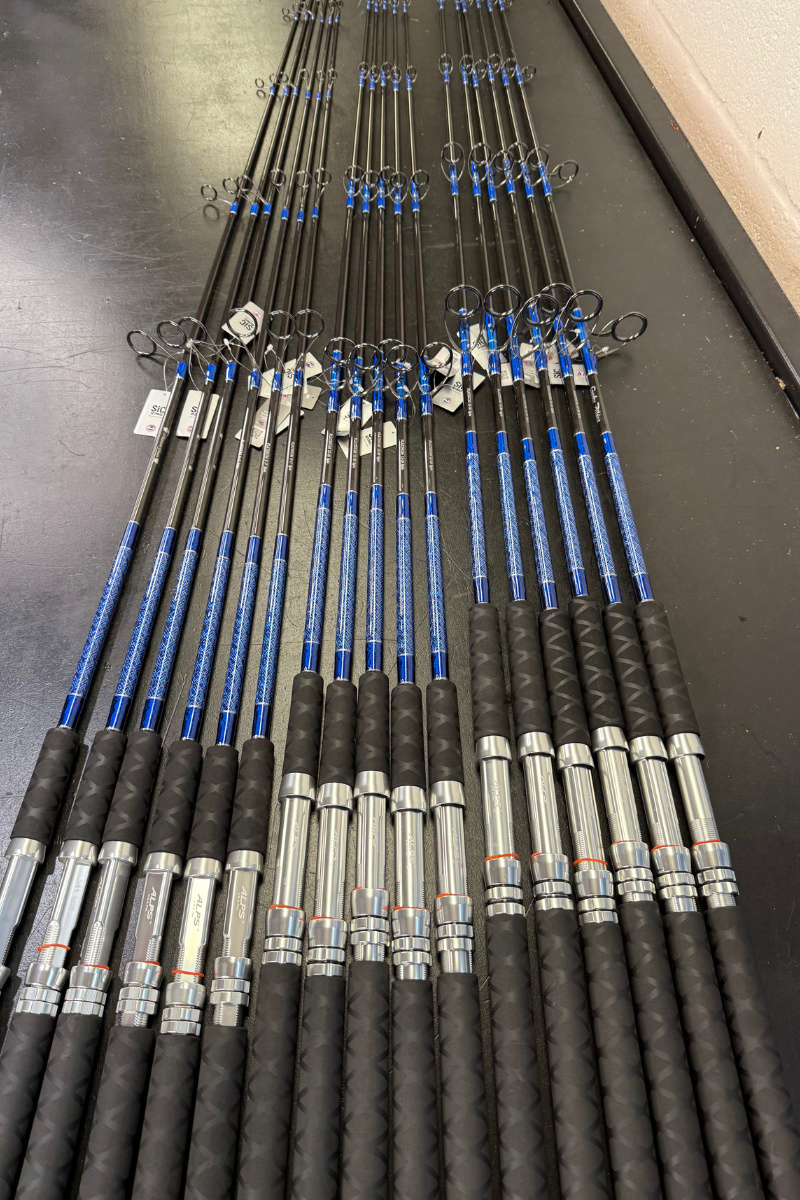
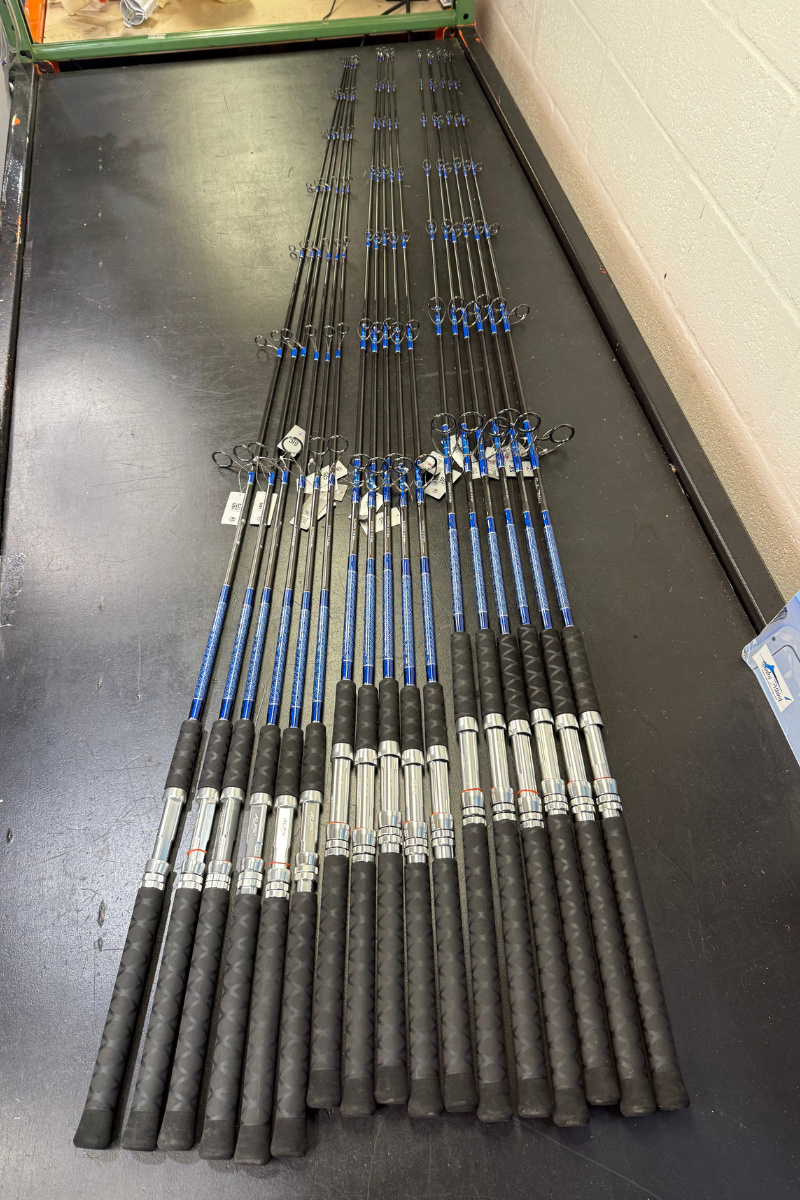
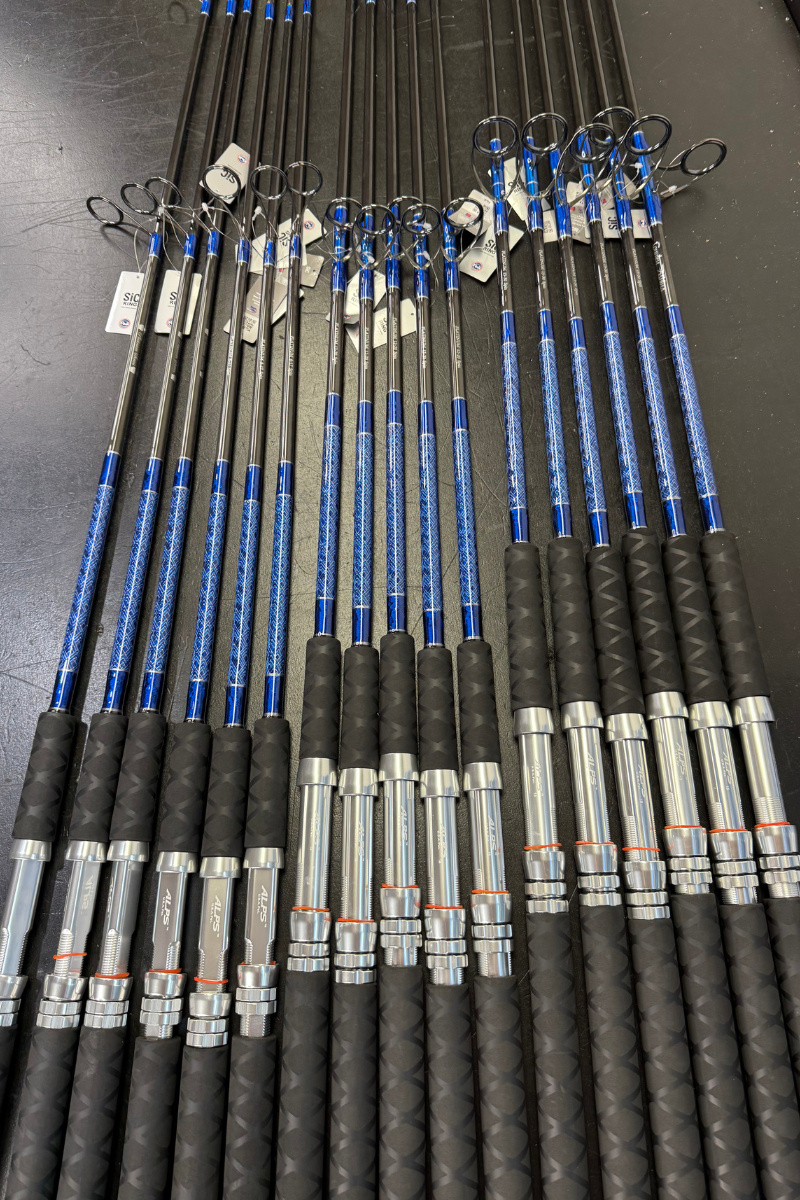
7' Platinum Inshore 15 to 30
Don’t let the “Inshore” name fool you.
The Platinum Inshore 15-30 has become a favorite for anglers who want a lightweight pitch rod capable of handling schoolie mahi while still having enough power when a larger fish shows up.
Its responsive tip makes repeated casts effortless during an active bite, while the strong backbone gives anglers confidence once the fight begins.
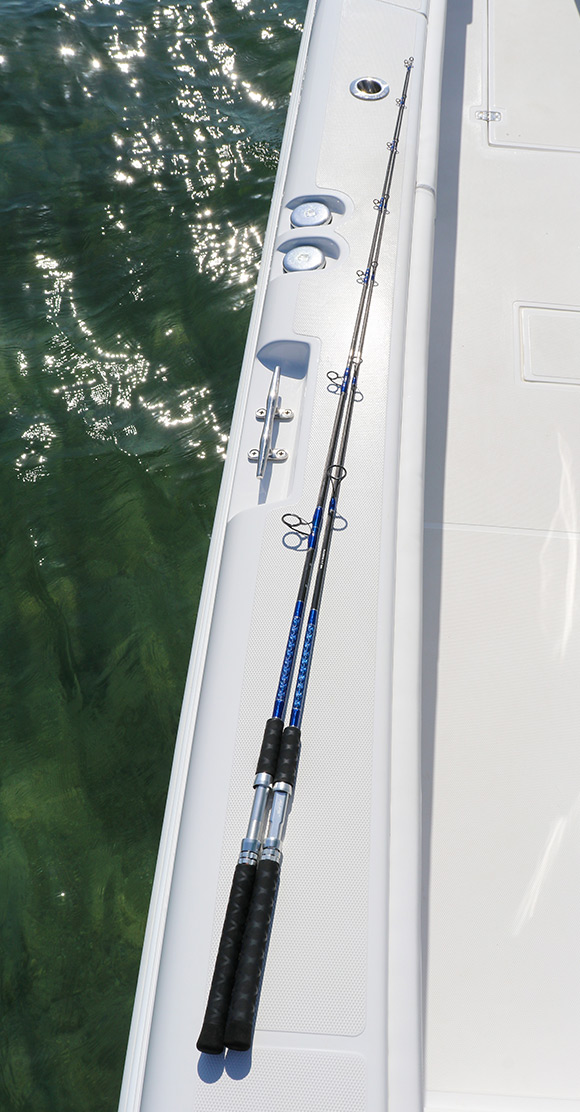
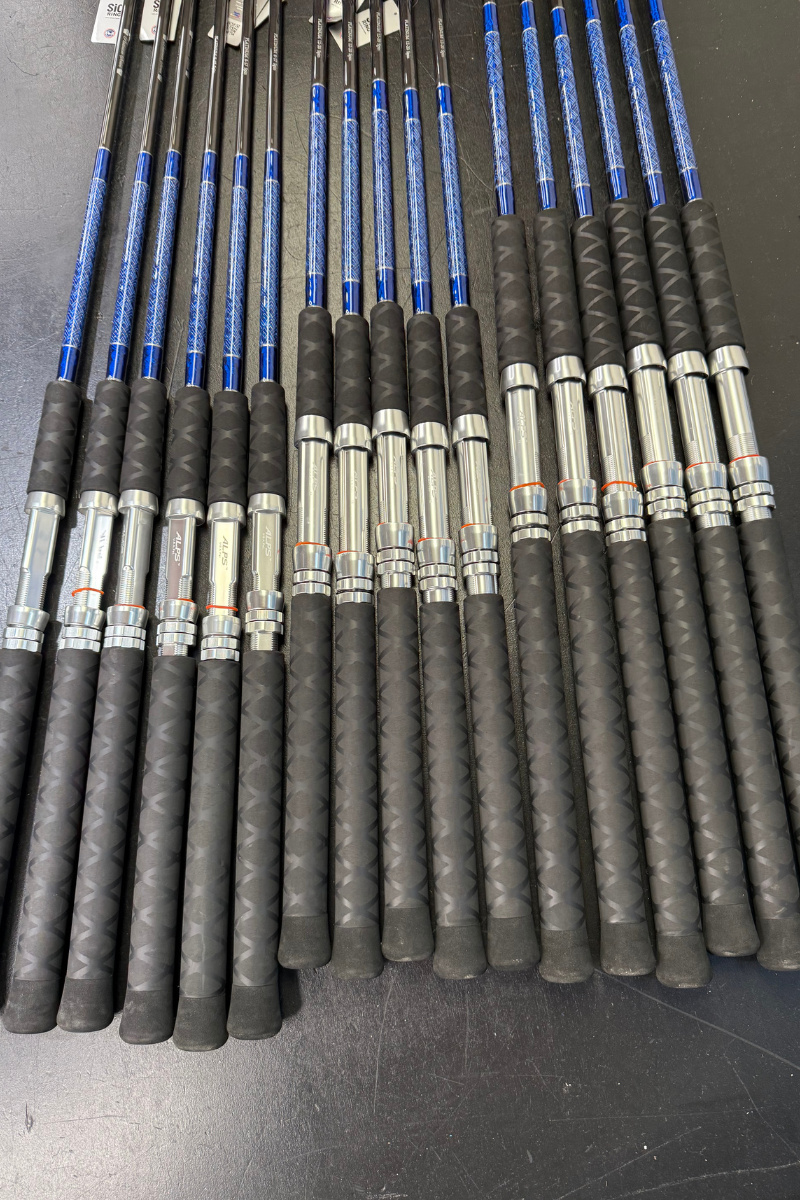
Platinum Graphite Spinning 7′
$500.00 – $810.00Price range: $500.00 through $810.004% OFF
Our NEW Platinum Series lightweight, graphite spinning rods come in 3 different sizes covering all the bases for your inshore fishing needs.
All made with Fuji carbide guides, which will last you a lifetime! Our handmade X grips are super durable and made to stand up to rigorous saltwater conditions.
3 different choices in light 8-17 for casting small half ounce Lures, the medium 12-20 is the perfect yellowtail, snapper rod, and the medium heavy 15-30 has just enough power to pitch live baits to Mahi offshore, but still light enough for Snook & Tarpon fishing in the inlet.
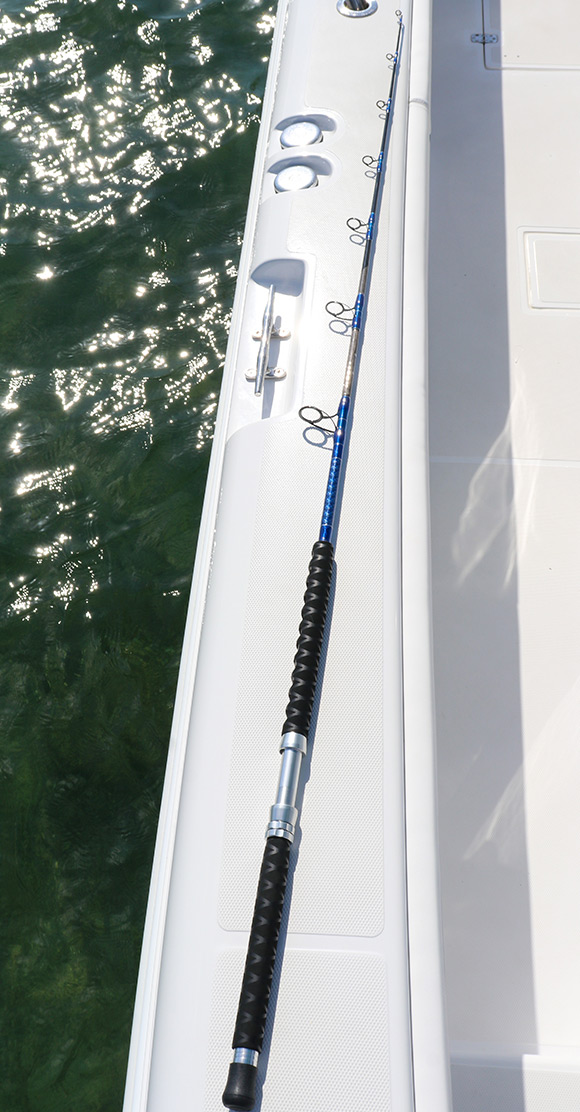
Platinum 700XL
The Platinum 700XL is another outstanding option for anglers who want a versatile spinning setup.
It casts exceptionally well, offers plenty of lifting power, and is equally comfortable pitching live bait around floating debris or weed lines.
Many crews like carrying several different pitch rods already rigged with different bait presentations, allowing them to react instantly instead of wasting time changing leaders.
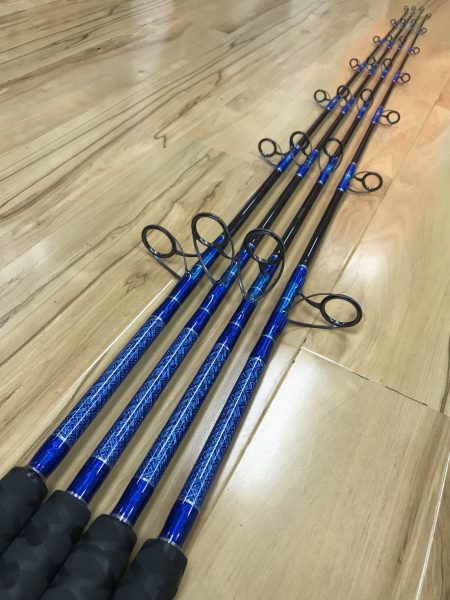
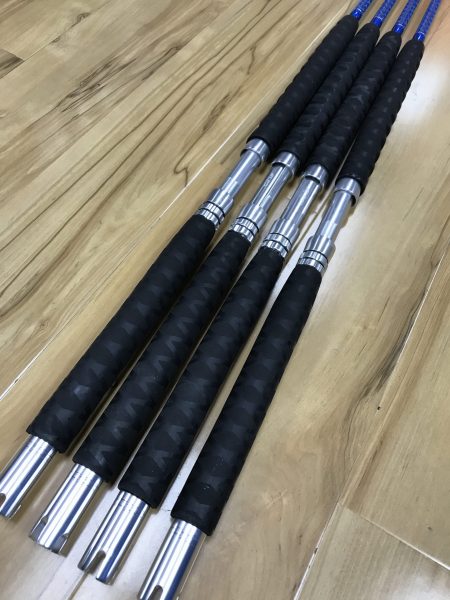
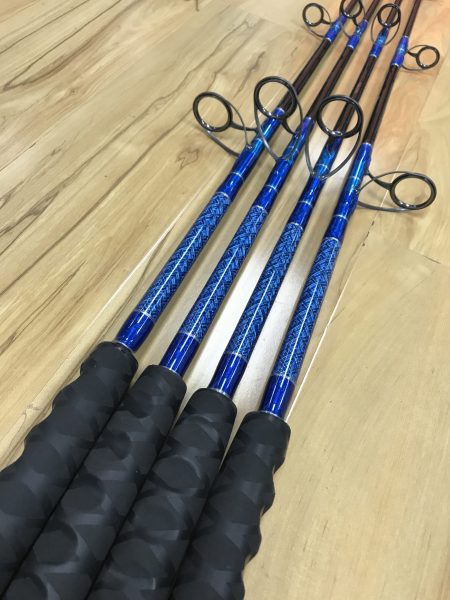
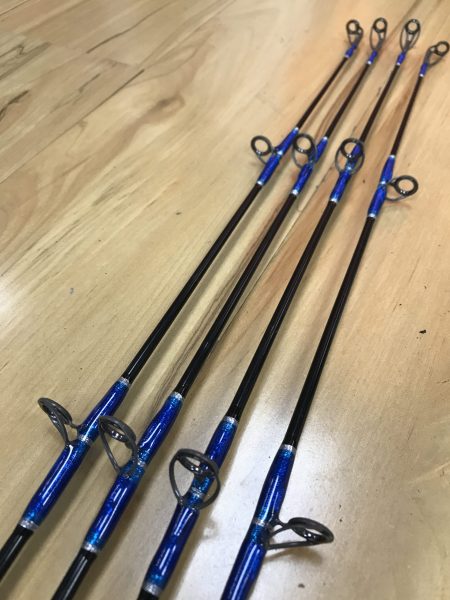
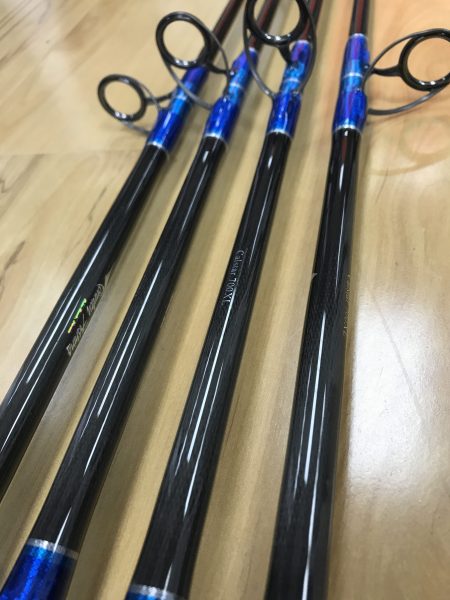
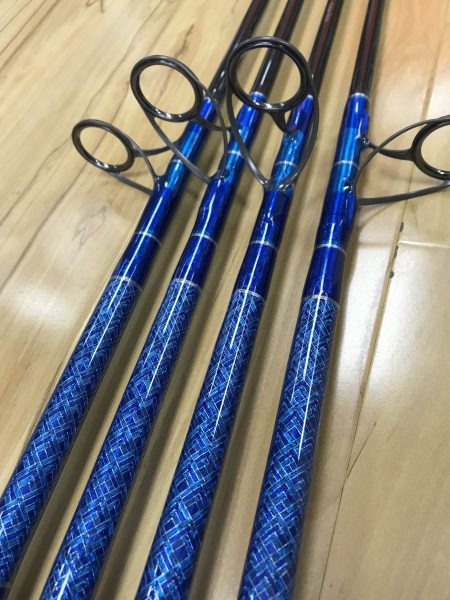
Platinum 700XL Spinning 10-25# 7′
$550.00 – $885.00Price range: $550.00 through $885.003% OFF
The 7’ Calstar Grafighter 700XL spinning rod is the ideal rod for fishing your mid-sized spinning reels with 20# mono or 50# braided lines. This rod has an extra soft tip section that bends smoothly to feel the bite but has plenty of power to land Sailfish, Mahi, Kingfish and so much more! This is a perfect spinning rod for pitching baits to schooling Mahi. We also love using this rod for live bait fishing for Sailfish and Kings.
When a Heavier Spinning Rod Makes Sense
There are situations where a heavier spinning rod simply makes more sense.
If you’re:
- Specifically targeting large bull mahi
- Fishing areas known for bigger fish, such as the Bahamas
- Fishing mixed offshore trips where larger pelagics are common
- Using one rod for multiple offshore species
A heavier setup like the Connley Sailfish Spin Rod becomes an excellent option.
It provides additional lifting power when larger fish stay deep or when you simply need more backbone.
For the average South Florida mahi trip, however, it’s more rod than most anglers need.
That’s why we typically recommend dedicated pitch rods first and heavier spinning rods only when the situation calls for them.
Why Speed Matters More Than Rod Power
Ask experienced mahi anglers what wins more fish.
Very few will answer:
“More drag.”
Instead, they’ll tell you one word.
Speed.
One of the biggest mistakes we see is anglers bringing only one or two pitch rods.
The first mahi swallows the hook.
Now someone has to:
- Cut the leader.
- Find another hook.
- Tie another knot.
- Rebait the rod.
Meanwhile, the school that was swimming behind the boat has already disappeared.
The opportunity is over.
The crews that consistently limit out operate differently.
Before leaving the dock:
- Every pitch rod is rigged.
- Every drag is checked.
- Every bait is ready.
- Every angler knows which rod they’re grabbing.
Preparation catches more fish than expensive equipment ever will.
A Real Mahi Frenzy
Picture a typical summer morning offshore. Your crew is trolling four rods down a clean weed line in 700 feet of water.
Suddenly the long rigger snaps down.
The reel starts screaming. As the fish gets closer to the boat, bright flashes of green, blue, and yellow appear beneath the surface. The hooked mahi isn’t alone. An entire school is following it.
Nobody rushes to pull that first fish into the boat. Instead, one angler keeps steady pressure on the fish while everyone else grabs pre-rigged pitch rods. A live pilchard hits the water. Almost instantly another rod bends. Then another.
One fish comes over the rail while another bait immediately goes back into the water. One mahi swallows a hook. No problem. That rod gets laid down, and another fully rigged outfit is already in someone’s hands.
Nobody is searching for hooks. Nobody is tying knots. Nobody is wondering which rod to use. Everything was prepared before the first bite ever happened. Within minutes, what started as a single trolling bite has turned into a cooler full of mahi. That’s how experienced offshore crews consistently capitalize on a mahi frenzy.
Build Your Boat Around Opportunity
Many anglers make the mistake of investing all their money into one premium rod.
We look at things differently.
A successful mahi setup isn’t built around one rod.
It’s built around creating opportunities.
For a typical South Florida trip, we’d recommend:
Trolling Spread
- Four dedicated trolling rods.
- 20-50 class rods for most local conditions.
- 30-80 class rods when targeting larger bull mahi or fishing destinations with consistently bigger fish.
Pitch Rod Setup
- Four to eight dedicated spinning rods.
- Multiple rods rigged before leaving the dock.
- Live bait ready at all times.
- Different bait presentations prepared in advance.
When the fish show up, there shouldn’t be any scrambling.
Every rod should already be ready.
That’s the difference between catching one mahi and making the most of every opportunity the ocean gives you.
Final Thoughts
The best rods for mahi fishing aren’t determined by a single model, power rating, or price tag. The right setup is a collection of rods that supports the way successful offshore crews actually fish.
Your trolling rods help you cover water and locate fish. Your pitch rods allow you to take advantage of the school once it appears. Both matter, but the pitch rods are often what turn one trolling bite into a memorable day offshore.
For most South Florida mahi trips, a well-prepared boat should carry:
- Four dedicated trolling rods.
- Four to eight pre-rigged pitch rods.
- Live bait that can be deployed immediately.
- Extra leaders, hooks, and terminal tackle within reach.
- At least one heavier spinning setup when larger fish or mixed offshore species are possible.
The biggest mistake isn’t choosing a rod that’s slightly too light or too heavy. It’s failing to have enough rods rigged and ready when the opportunity arrives.
A school of mahi may stay behind the boat for several minutes, or it may disappear almost immediately. You don’t control how long the fish remain interested. You do control how prepared your crew is when they show up.
Build your mahi setup around speed, flexibility, and opportunity. That will help you catch more fish than trying to force every offshore technique onto one rod.
At Connley Fishing, we build rods for the way serious anglers actually fish. Whether you’re putting together a complete mahi spread or adding dedicated pitch rods to your current setup, choosing the right combination will make your boat more efficient when the bite turns on.
Frequently Asked Questions
What is the best rod for mahi fishing?
There isn’t one rod that is best for every part of mahi fishing. The right choice depends on whether you’re trolling to locate fish, pitching live bait to a school, casting around floating debris, or targeting a large bull mahi.
For trolling, a 20 to 50 class rod is a strong all-around option for most South Florida anglers. It provides enough power for quality dolphin while remaining comfortable during a long day offshore. Once fish appear behind the boat, a lighter and more responsive spinning rod is usually the better tool. A dedicated pitch rod allows you to cast live bait accurately and react quickly without fighting the weight and stiffness of a trolling setup.
The most effective mahi arsenal includes both. Your trolling rods find the fish, while your pitch rods help you capitalize on the school.
How many rods should I bring for mahi fishing?
For a dedicated South Florida mahi trip, we generally recommend four trolling rods and four to eight pitch rods. That may sound like a lot, but the extra pitch rods serve an important purpose.
During an active bite, rods can quickly become unavailable. A fish may swallow the hook, a leader may become damaged, or a line may tangle with another angler. Instead of stopping to retie while the school is still behind the boat, you can set that rod aside and immediately grab another fully rigged setup.
The exact number will depend on your boat size, storage space, and number of anglers. The main goal is to have enough rods ready that nobody has to stop fishing during the most productive part of the encounter.
What rod power is best for pitching live bait to mahi?
The best pitch rod should have a responsive tip for casting live bait and enough backbone to control a quality dolphin near the boat. It shouldn’t be so heavy that it makes casting small baits difficult or wears the angler out during a fast bite.
A medium-heavy spinning rod in the general 15 to 30 pound range works well for many South Florida mahi situations. Rods such as the Diamond Series Sniper, Platinum Inshore 15-30, and Platinum 700XL provide the balance of casting performance, sensitivity, and lifting power needed for this style of fishing.
Heavier spinning rods still have a place, especially when targeting giant bulls or fishing offshore areas where larger pelagic species may eat the same bait. For ordinary schoolie mahi fishing, however, a lighter dedicated pitch rod is usually faster and more enjoyable to use.
Can I use an inshore rod for mahi fishing?
Certain inshore rods can be excellent for pitching live bait to mahi, provided they have the proper construction, line rating, and backbone. The word “inshore” on the rod doesn’t automatically mean it is unsuitable for offshore fishing.
For example, the Platinum Inshore 15-30 works well as a mahi pitch rod because it is light enough for repeated casting but strong enough to handle schoolie dolphin and many larger fish. The key is understanding the rod’s limitations. An inshore-style setup should not be treated like a heavy trolling rod or used to aggressively high-stick a fish next to the boat.
Match the drag pressure and leader system to the rod. Fight the fish with the rod at a safe angle, and allow the reel’s drag to do its job. Used correctly, the right inshore rod can be one of the most productive tools on a mahi trip.
Do I need a heavy spinning rod for bull mahi?
You don’t always need a heavy spinning rod for bull mahi, but it can be useful when large fish are a realistic possibility. A well-built medium-heavy pitch rod can land a substantial dolphin when paired with the right reel, line, drag setting, and angler technique.
A heavier rod becomes more valuable when you’re specifically targeting large bulls, fishing in the Bahamas, using bigger baits, or taking a mixed offshore trip where sailfish, tuna, cobia, or other powerful species could eat. In those situations, a setup such as the Sailfish Spin offers additional lifting power and a greater margin for error.
For most South Florida mahi trips, we would prioritize several versatile pitch rods before adding multiple heavy spinning outfits. One heavier setup can complement the spread without making every rod unnecessarily powerful.
Why should the first hooked mahi stay in the water?
A hooked mahi can help keep the rest of the school close to the boat. Dolphin are highly social fish, and followers will often remain near a struggling member of the school. This gives the rest of the crew time to pitch live bait and hook additional fish.
The angler fighting the first mahi should maintain steady pressure without rushing the fish into the boat. Meanwhile, the other anglers should begin pitching baits immediately. Once additional fish are hooked and the school is actively feeding, the crew can start landing fish in an organized sequence.
This technique doesn’t guarantee that the school will stay, but it often extends the opportunity. Pulling the first fish into the boat too quickly can remove the visual and behavioral trigger that was helping keep the followers interested.
How far offshore should I go before looking for mahi?
Mahi can be found at many depths, and conditions change throughout the season. Fish may occasionally be caught surprisingly close to shore. However, South Florida anglers often waste valuable time stopping at every scattered patch of grass before reaching more productive water.
As a general strategy, we prefer covering ground until reaching approximately 500 feet of water before investigating most minor weed patches. From there, pay attention to defined weed lines, current edges, floating debris, birds, flying fish, bait activity, and clean water boundaries.
Depth alone doesn’t locate mahi. The goal is to combine depth with signs of life. A small patch of grass in lifeless water may not deserve much attention, while a well-defined edge with bait and birds can be worth slowing down for immediately.