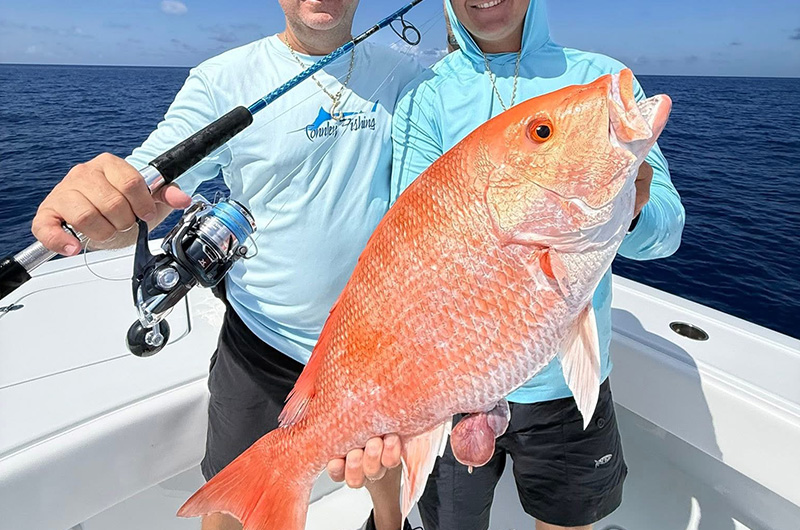

A grouper bite can go from exciting to over in a matter of seconds.
The fish eats.
You feel the rod load.
And before you have time to think about what just happened, that grouper is already trying to get back into the reef, wreck, ledge, or hole it came from.
If it turns its head and reaches structure, you may be done.
That’s what makes choosing the best rod for grouper fishing different from selecting a rod for many other offshore species. You’re not looking for a rod designed primarily to absorb long runs or protect extremely light line. You need enough sensitivity to recognize the bite, but once that fish eats, you need power and control immediately.
Around South Florida, some of the grouper our customers most commonly target include:
- Gag grouper
- Black grouper
- Red grouper
- Snowy grouper
They may be found around natural reefs, ledges, wrecks, and deeper bottom structure, and the exact equipment you need changes with the depth and caliber of fish you’re targeting.
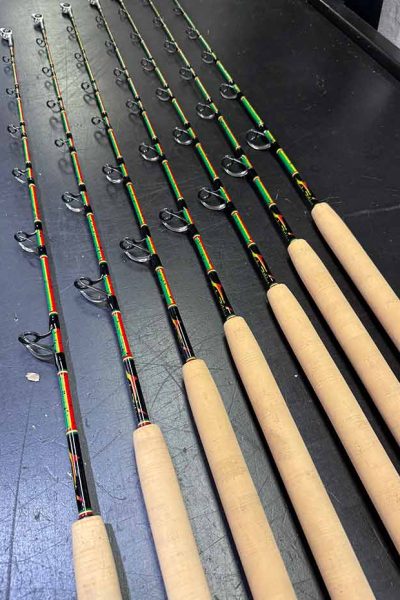
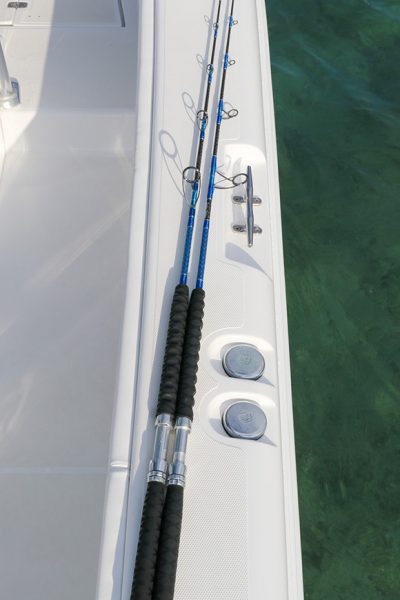
For most grouper fishing, our go-to conventional rod is the 7′ Platinum 700M Conventional. When conditions get heavier and the fish get bigger, we step up from there.
Here’s how we choose the right setup.
Why Grouper Require a Different Kind of Fishing Rod
Think about the way a sailfish fights compared with a grouper.
A sailfish has room to run. You’re fighting it through open water and allowing the drag, rod, and reel to work together.
A grouper has a completely different plan.
Its first instinct after eating your bait is to turn around and get back into structure.
That means the first few moments of the fight matter enormously.
A good grouper rod needs to provide:
- Enough sensitivity to recognize the bite.
- Serious power through the middle and lower sections of the blank.
- Enough stiffness toward the tip to apply immediate pressure.
- Sufficient length to help control and maneuver the fish.
- The strength to fish heavier drag when necessary.
- Enough durability for repeated bottom fishing around heavy structure.
This is one situation where an overly soft offshore fishing rod can work against you.
We still want enough action to feel what’s happening at the bait, but we can’t have the entire rod folding over when we’re trying to force a grouper away from its home.
The Best All-Around Rod for Grouper Fishing
For most grouper fishing, our first recommendation is the 7′ Platinum 700M Conventional.
The reason comes down to balance.
The 700M still has enough sensitivity in the tip to let you see and feel the bite, but once the fish is hooked, there’s enough power through the rod to start moving it away from structure.
That’s exactly what we want from an all-around grouper rod.
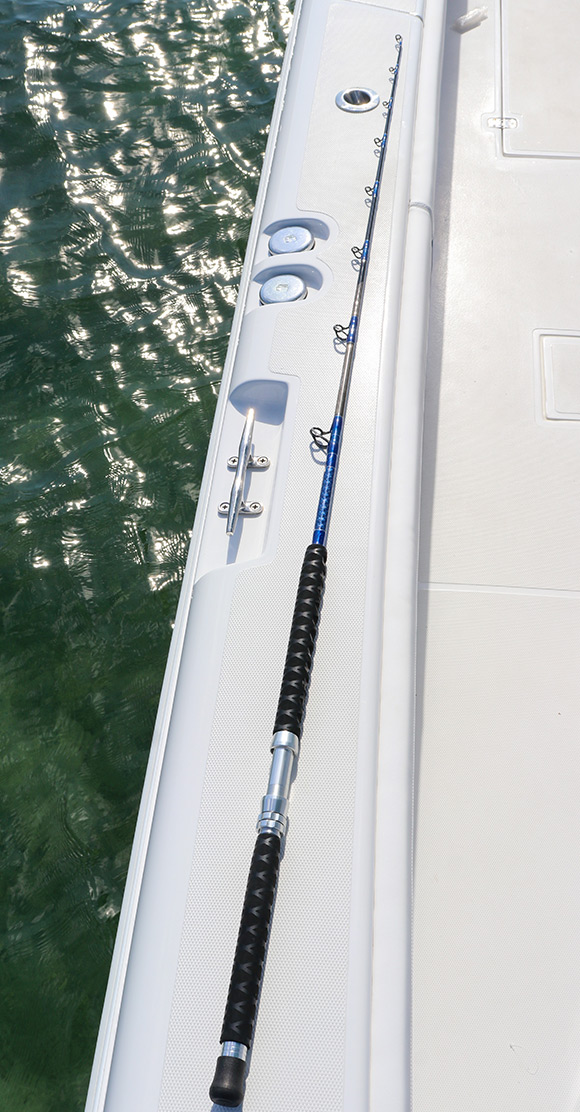
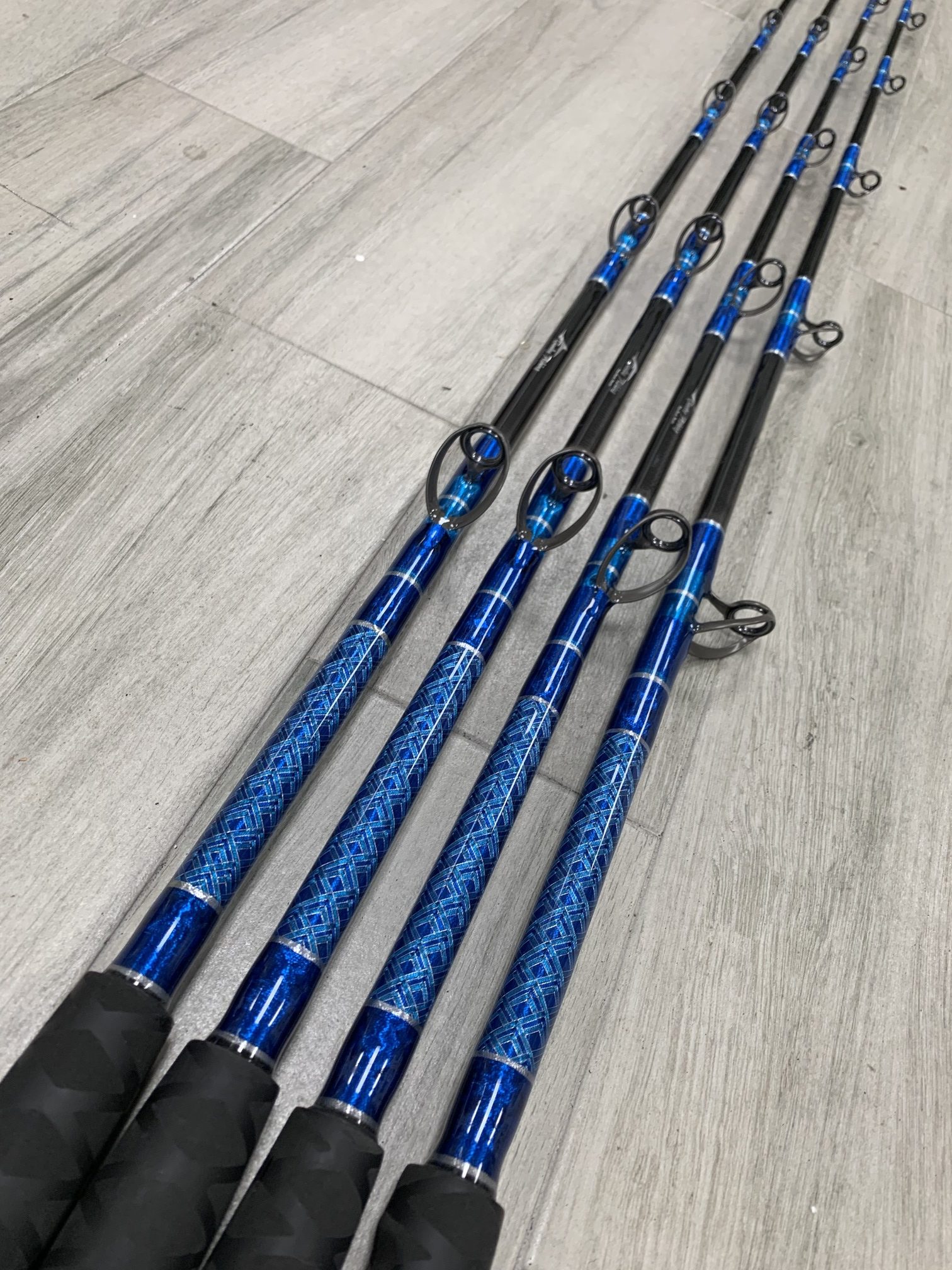
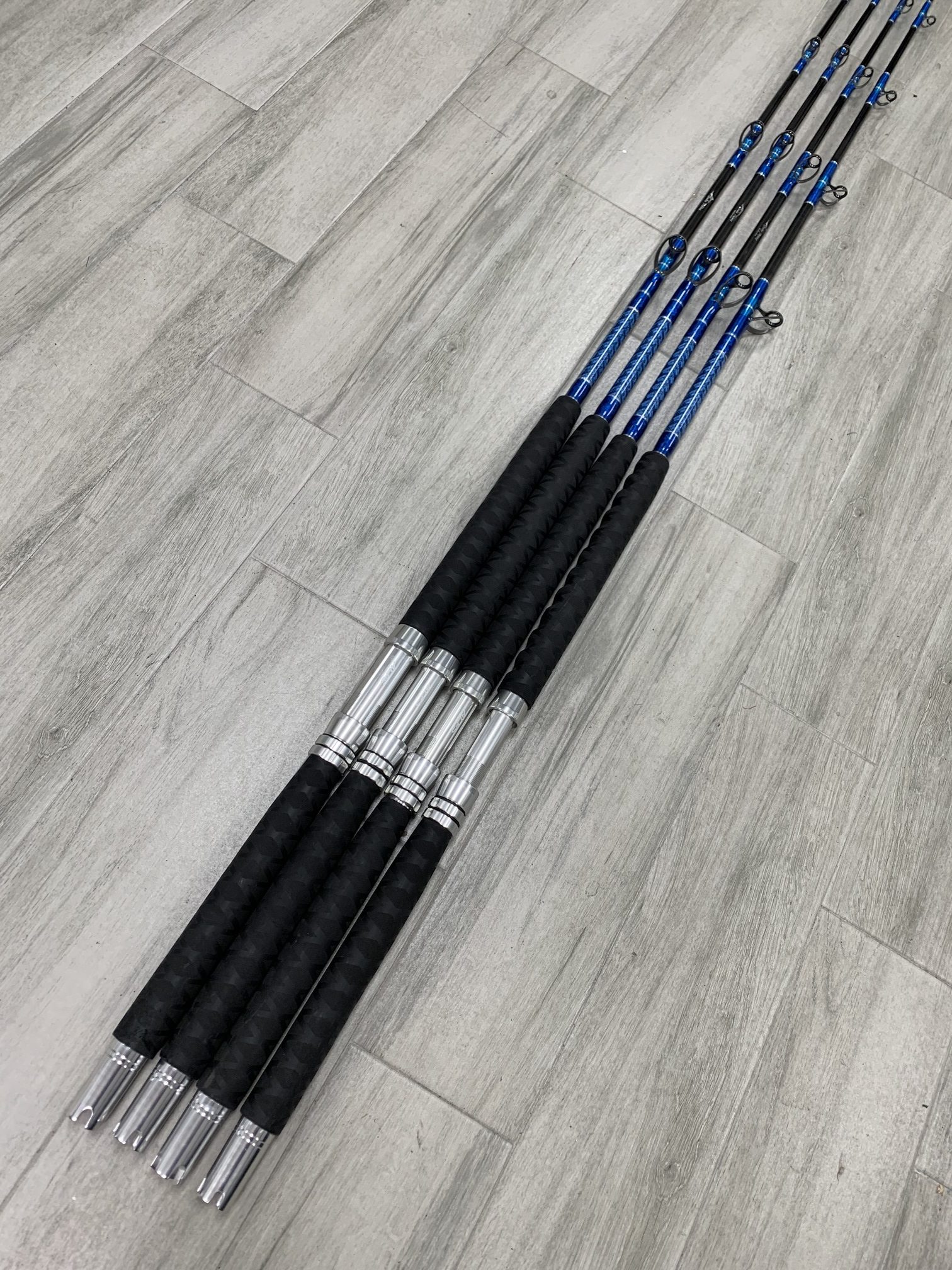
Platinum 700M Kingfish Conventional 20-50# 7′
$550.00 – $1,110.00Price range: $550.00 through $1,110.004% OFF
Easily the most All-Purpose and Best Quality custom rod we offer!! We designed these rods for offshore live bait fishing for Sailfish, Kingfish, Mahi, and Blackfin……. But soon enough our bottom fishing guys discovered them and they LOVE them for Mutton Snapper fishing, Grouper fishing, Shark, and pulling up those big bruiser Amberjack that protect the reefs! Easily the most all-around rod you can put on the boat. We even troll Ballyhoo with this for Sails and White Marlin.
Why We Like the Platinum 700M Conventional
- Seven-foot length provides excellent control.
- Responsive enough to detect the bite.
- Powerful enough to move grouper away from structure.
- Works well around reefs, wrecks, and natural ledges.
- Versatile enough for other offshore bottom-fishing applications.
- Strong without feeling like an unnecessarily short, stiff broomstick.
That last point is important.
Grouper fishing requires power, but that doesn’t mean the shortest and stiffest deep sea fishing rod you can find is automatically the best choice.
Length matters too.
Why Rod Length Matters for Grouper Fishing
Short, extremely stiff rods certainly look powerful.
But power isn’t the only consideration.
A seven-foot grouper rod gives the angler additional leverage for controlling the fish and maneuvering it during the fight. That becomes particularly valuable when you need to change the direction of pressure or work a fish around the boat.
An excessively short rod can make that more difficult.
We’re looking for a rod that gives us:
- Strong lifting power.
- Control over the fish’s direction.
- Enough length to maneuver effectively.
- A tip that doesn’t collapse under heavy pressure.
For our everyday grouper fishing, seven feet provides an excellent combination.
When we step into substantially heavier applications, however, the equation changes.
When to Step Up to a Heavier Grouper Rod
As you move into deeper water, your equipment needs change quickly.
You’re often fishing:
- Larger baits.
- Heavier sinkers.
- Stronger current.
- Greater depths.
- Bigger grouper.
- Heavier drag settings.
That’s when we’d start looking at something like the 6’6″ Platinum 700H Conventional.
This isn’t simply about buying a more powerful rod because bigger numbers sound better.
It’s about matching the entire setup to the fishing situation.
A heavier rod becomes useful when the weight you’re dropping, the depth you’re fishing, and the fish you’re targeting begin exceeding what your everyday grouper setup was designed to handle.
Start With the 700M When:
- You’re fishing typical reefs and wrecks.
- You’re targeting gag, black, or red grouper.
- You want a versatile grouper and bottom fishing rod.
- You value sensitivity along with serious power.
Consider the 700H When:
- You’re moving into heavier bottom-fishing applications.
- You’re using significantly larger baits and sinkers.
- You’re targeting bigger fish.
- You need additional power throughout the rod.
- Your fishing consistently pushes beyond the comfortable range of the 700M.
The best grouper rod isn’t the heaviest one available.
It’s the rod that gives you enough power to win the first few seconds of the fight without making the rest of your fishing unnecessarily difficult.
How to Fight a Grouper Before It Gets You Rocked Up
Once a grouper eats, hesitation is your enemy.
You need to start winding and get that fish moving away from the bottom immediately.
The biggest mistake is allowing the grouper to turn its head.
Once it turns toward the structure, the fish has the advantage.
A grouper’s natural reaction is to head straight back toward the nearest hole, ledge, wreck, or reef. If it reaches that structure, your line can become buried or cut, and suddenly what felt like a great fish feels like you’re attached to the bottom.
When the Bite Happens:
- Come tight quickly.
- Keep winding.
- Apply sufficient drag.
- Don’t give the fish unnecessary line.
- Keep its head moving away from structure.
- Maintain pressure until you’ve created separation from the bottom.
This is exactly why rod selection matters.
A rod that bends too deeply throughout the entire blank may not give you the immediate control required to stop that first surge.
For grouper fishing, sensitivity gets you the bite.
Power gets the fish into the boat.
What to Do When a Grouper Rocks You Up
Eventually, it’s going to happen.
You hook a grouper, the fish gets its head turned, and suddenly you’re stuck.
Your first instinct may be to pull harder.
Sometimes that’s exactly the wrong thing to do.
One trick experienced grouper anglers use is putting the reel into free spool and removing the pressure from the fish.
Why?
A grouper that feels constant pressure has every reason to stay buried inside the structure. When that pressure suddenly disappears, the fish may relax and swim back out.
If it does, that’s your opportunity.
Engage the reel, come tight, and start winding immediately.
There’s another trick that sounds strange until you’ve seen it work.
Strum the Fishing Line
When you’re tight to a grouper that’s buried in structure, try strumming the fishing line like a guitar string.
The vibration travels down the line toward the fish and can irritate the grouper enough that it moves out of its hiding place.
Does it work every time?
No.
But when the alternative is breaking the line or giving up on the fish, it’s absolutely worth trying.
These little techniques are the kind of things experienced bottom fishermen learn after losing enough grouper to the rocks.
And they’re another reminder that catching grouper isn’t simply about owning the biggest rod on the boat.
It’s about knowing how to use the equipment when the fish gets the advantage.
The Ideal Grouper Rod and Reel Setup
If we were building one dedicated grouper setup for the type of fishing most of our customers do, we’d keep it simple:
- Rod: 7′ Platinum 700M Conventional
- Reel: Shimano Talica 20
- Budget-friendly reel option: Shimano SpeedMaster 20
- Primary use: Reefs, wrecks, natural ledges, and bottom structure
- Target species: Gag, black, red, and other grouper species
The 700M provides the balance we’re looking for. There’s enough sensitivity to recognize what’s happening at the bait, but once the fish eats, there’s enough power to apply serious pressure.
The Talica 20 complements that rod with the drag performance and strength needed for this style of fishing.
If you’re building your offshore fishing rod collection gradually, this is also a setup that earns its space on the boat because it isn’t limited exclusively to grouper.
Common Mistakes Anglers Make When Fishing for Grouper
Buying the right grouper rod only gets you so far. Once the fish eats, how you react matters just as much.
Some of the most common mistakes we see include:
- Fishing a rod that’s too soft for heavy structure.
- Using a short rod simply because it looks more powerful.
- Fishing insufficient drag.
- Hesitating after the bite.
- Allowing the fish to turn its head.
- Giving a hooked grouper unnecessary line.
- Pulling harder after a fish gets rocked up instead of changing tactics.
- Using tackle that’s too light for the depth, bait, and structure being fished.
The biggest mistake is usually giving the fish too much time.
With some offshore species, patience during the fight is an advantage.
With grouper, the beginning of the fight is often a race.
You need to get that fish away from structure before it has the opportunity to get comfortable.
Once you’ve created separation between the grouper and the bottom, you can settle into the fight. But those first few seconds demand commitment.
Why the Stiffest Grouper Rod Isn't Always the Best Grouper Rod
There’s an important distinction between power and stiffness.
A grouper rod needs power. There’s no argument there.
But that doesn’t mean we want a rod with absolutely no action.
You still need to know what’s happening at the bait. You still want the blank to work during the fight. And unless you’re fishing an extremely specialized application, you probably don’t want to spend an entire day holding something that feels like a telephone pole.
That’s why we like the Platinum 700M as an everyday grouper rod.
It maintains enough sensitivity in the tip to detect the bite while providing progressively more power as the rod loads.
When we need more, we move to the 700H.
That’s a better approach than automatically starting with the heaviest bottom fishing rod available.
Choose the rod according to:
- Water depth.
- Sinker weight.
- Bait size.
- Current.
- Structure.
- Expected fish size.
- Required drag pressure.
Those factors tell you how much rod you actually need.
The Connley Advantage
If you walked into our shop and asked us for one dedicated grouper setup, we’d put a 7′ Platinum 700M Conventional paired with a Shimano Talica 20 in your hands.
If you wanted to keep the reel cost down, we’d tell you to look at a Shimano SpeedMaster 20.
More importantly, we’d explain what happens after the bite.
Don’t let that grouper turn its head.
Get tight, keep winding, and apply enough drag to get the fish moving away from the bottom immediately. A grouper’s first instinct is to get back into the nearest hole, reef, ledge, or wreck. If you give it that opportunity, even the best deep sea fishing rod isn’t going to save you.
And if the fish does rock you up, don’t automatically pull harder.
Put the reel in free spool and give the fish zero pressure. Sometimes it will swim back out on its own. If that doesn’t work, try strumming the line like a guitar string. The vibration can irritate the fish enough to make it move.
Those little decisions are often what separate landing a grouper from telling everyone about the one that got away.
Final Thoughts
Choosing the best rod for grouper fishing comes down to understanding how these fish fight.
Grouper aren’t built around long, spectacular runs in open water. They eat, turn, and try to get back into structure as quickly as possible.
Your equipment needs to stop that from happening.
For most grouper fishing, our first recommendation is the 7′ Platinum 700M Conventional. It gives anglers the combination of sensitivity, length, backbone, and control needed around reefs, wrecks, and natural ledges.
When you’re fishing deeper water, dropping heavier lead and larger baits, or targeting substantially bigger fish, the 6’6″ Platinum 700H Conventional gives you another level of power.
But don’t choose your grouper rod based on power alone.
Think about the complete fishing situation:
- Where are you fishing?
- How deep are you?
- How much lead are you using?
- How large is the bait?
- What size grouper lives there?
- How much drag will you need to stop it?
Then choose the rod that gives you enough power to win the fight without using more equipment than the situation requires.
And when that bite finally comes, don’t hesitate.
Come tight, keep winding, and get that fish away from the bottom.
Frequently Asked Questions
What is the best rod for grouper fishing?
For most grouper fishing, our go-to recommendation is the 7′ Platinum 700M Conventional. It provides enough sensitivity in the tip to detect the bite while maintaining the backbone needed to apply serious pressure once a grouper is hooked.
The right rod can change as the fishing gets heavier. If you’re moving into deeper water, using larger baits and heavier sinkers, or targeting bigger grouper, stepping up to something like the 6’6″ Platinum 700H Conventional can make more sense. The goal isn’t to buy the heaviest grouper rod possible. It’s to match the rod’s power and action to the depth, structure, bait, and size of fish you’re realistically targeting.
What rod action is best for grouper?
A grouper rod needs considerably more stiffness and power than many live-bait offshore rods because you can’t allow the fish to turn and bury itself in structure. However, we still want enough sensitivity toward the tip to recognize the bite.
The ideal setup gives you sensitivity before the hookup and power immediately afterward. Once the rod loads, you want strong support through the blank so you can apply pressure and move the fish. An overly soft rod can bend too deeply and make it difficult to control that first surge, while an excessively stiff rod may sacrifice sensitivity and comfort unnecessarily.
Is a 7-foot rod good for grouper fishing?
Yes. For many grouper applications, we prefer a 7-foot rod because the additional length provides excellent control and helps anglers maneuver fish during the fight.
There’s a common assumption that grouper rods need to be extremely short and stiff because shorter rods look powerful. But length has advantages. A seven-foot rod gives you more ability to control the direction of pressure and work a fish around the boat while still delivering substantial lifting power when the blank is designed correctly. That’s one reason the 7′ Platinum 700M Conventional is our everyday grouper recommendation.
How much drag do you need for grouper fishing?
There isn’t one drag setting that’s correct for every grouper setup. The appropriate amount depends on your line, leader, hooks, reel, rod, fish size, and the structure you’re fishing.
What matters is having enough drag to prevent the grouper from immediately turning its head and returning to structure. This isn’t usually a situation where you want to let the fish take a long first run. Once a grouper eats, you need to get tight and begin moving it away from the bottom. Your entire setup should be matched so you can apply that pressure without exceeding the limits of your line, knots, or rod.
What should I do if a grouper gets into the rocks?
If a grouper gets rocked up, pulling harder isn’t always the best solution. One technique we use is putting the reel into free spool and completely removing pressure from the fish.
A grouper that’s buried in structure may stay there while it feels constant pressure. When the pressure disappears, it may eventually swim back out. If you feel the fish move, engage the reel, come tight, and start winding immediately. Another technique is to strum the tight fishing line like a guitar string. The vibration travels down the line and can sometimes irritate the grouper enough to encourage it to leave the structure. Neither technique is guaranteed, but both can give you another opportunity when brute force isn’t working.
Do I need a heavy deep sea fishing rod for grouper?
You need enough power for the grouper you’re targeting, but that doesn’t automatically mean buying the heaviest deep sea fishing rod available.
For typical reef, wreck, and ledge fishing, a balanced conventional rod such as the Platinum 700M provides substantial power while retaining the sensitivity needed for bottom fishing. Heavier equipment becomes more appropriate as depth, sinker weight, bait size, current, and fish size increase. Choosing excessive power can make the rod less comfortable and versatile without providing a meaningful advantage for the fishing you’re actually doing.
What reel should I pair with a grouper rod?
For a dedicated 7′ Platinum 700M Conventional grouper setup, our preferred pairing is a Shimano Talica 20. It provides the strength and drag performance needed to put immediate pressure on grouper around heavy structure.
For anglers looking for a more budget-conscious option, the Shimano SpeedMaster 20 is another excellent pairing. Whichever reel you choose, don’t evaluate it independently from the rest of your setup. Rod power, reel drag, line strength, leader, knots, and hooks all need to work together. Grouper fishing puts tremendous pressure on the entire system, and the weakest component is usually where the fight ends.